
What Is Acrylic Roofing Resin? Properties, Performance, and Uses
TL;DR Acrylic resin Summary
Acrylic resin is a synthetic polymer used in roofing materials for its strong adhesion, UV resistance, and flexibility. Because it forms a durable, weather-resistant coating, it helps extend roof lifespan and maintain performance in varying climates. Proper surface preparation is critical, as poor adhesion or application can lead to premature coating failure and costly repairs.
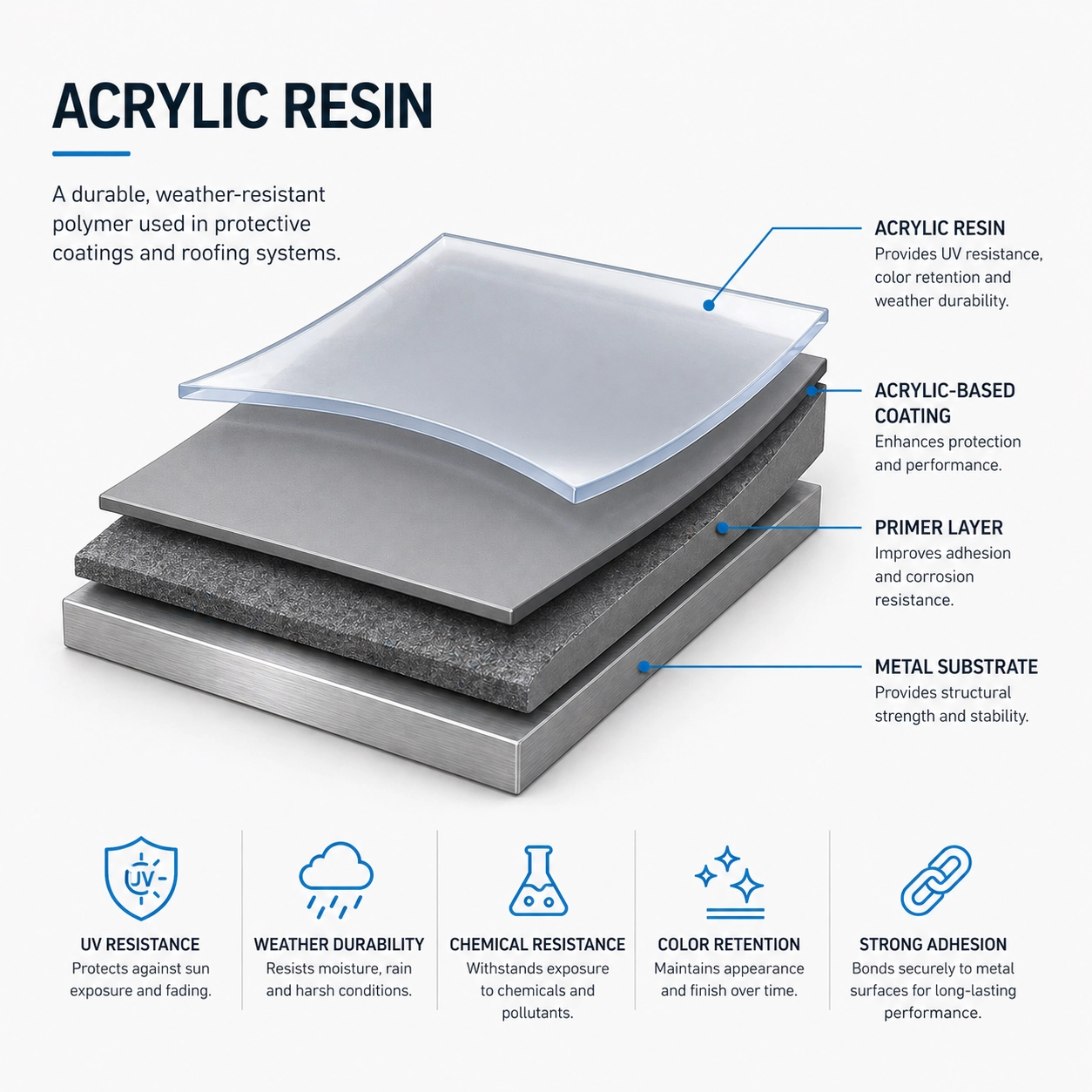
How Acrylic Roofing Resin Enhances Durability, Waterproofing, and Cost Efficiency in Roofing Systems
Acrylic resin is a synthetic polymer material widely used in roofing systems as a key component of liquid-applied membranes and coatings. Composed of acrylic acid derivatives, this resin forms a flexible, durable film when cured, providing a seamless protective layer over various roof geometries, including low-slope and flat roofs. Its molecular structure allows it to adhere effectively to substrates such as concrete, metal, and existing roofing membranes, ensuring compatibility with complex roof details like ridges, eaves, and parapets.
Functionally, acrylic resin enhances roof performance by delivering excellent UV resistance, weatherproofing, and flexibility. It accommodates thermal expansion and contraction, reducing the risk of cracking or delamination at joints and transitions. The resin’s water-shedding properties help maintain effective drainage across roof slopes, minimizing ponding and promoting efficient runoff. Additionally, its resistance to wind uplift and environmental degradation supports long-term structural integrity, especially in climates with variable precipitation and temperature extremes.
Acrylic resin is commonly applied in restoration and maintenance of commercial and industrial roofs, particularly where lightweight, seamless waterproofing is required. Its adaptability to irregular surfaces and ability to extend the service life of existing roofing assemblies make it a preferred choice for both retrofit and new construction projects.
How Acrylic Roofing Resin Is Evaluated for Roofing Performance
Acrylic roofing resin is evaluated for roofing performance based on its durability, weather resistance, adhesion, and long-term service life under real-world conditions. Roofing professionals assess acrylic resin roof coatings by examining their ability to withstand UV exposure, ponding water, temperature fluctuations, and physical wear, which are critical for flat roofs and low-slope applications. Laboratory testing may include accelerated weathering, tensile strength, elongation, and water permeability to determine how well the acrylic resin maintains its protective qualities over time.
In practice, the benefits of acrylic resin roof coatings—such as ease of application, reflectivity, and cost-effectiveness—are weighed against potential problems like susceptibility to ponding water or premature degradation in harsh climates. Comparisons such as acrylic resin vs silicone roof coating focus on differences in water resistance, flexibility, and maintenance requirements. Roofing professionals also consider compatibility with existing substrates, installation conditions, and manufacturer specifications to ensure optimal performance and longevity. Ultimately, the evaluation of acrylic roofing resin centers on its proven ability to deliver reliable waterproofing, energy efficiency, and cost-effective protection for a variety of roofing systems.
Overview & Key Considerations
What Is Acrylic resin
Why Acrylic resin Matters
Benefits of Acrylic resin
UV RESISTANCE
Acrylic resin provides strong ultraviolet resistance, helping roofing membranes maintain color stability and surface integrity over time.
FLEXIBLE APPLICATION
Acrylic resin can be applied to various substrates, allowing compatibility with different roofing materials and complex roof geometries.
WEATHERPROOFING PERFORMANCE
Acrylic resin forms a seamless, water-resistant barrier that protects roofing systems from rain, wind, and environmental contaminants.
LIGHTWEIGHT FORMULATION
Acrylic resin coatings add minimal weight to existing roof structures, reducing structural load concerns during installation or retrofit projects.
Limitations of Acrylic resin
UV DEGRADATION RISK
Acrylic resin roofing materials are susceptible to gradual breakdown and chalking when exposed to prolonged ultraviolet radiation.
COLD WEATHER BRITTLENESS
Acrylic resin can become brittle and prone to cracking under low-temperature conditions, limiting its use in cold climates.
CHEMICAL SENSITIVITY
Acrylic resin is vulnerable to damage from certain solvents and industrial chemicals, restricting its application in chemically aggressive environments.
LIMITED PONDING WATER RESISTANCE
Acrylic resin coatings can lose adhesion or blister when subjected to continuous ponding water, especially on low-slope roofs.
Common Acrylic resin Problems
UV DEGRADATION CRACKING
Prolonged ultraviolet exposure can cause acrylic resin roofing materials to embrittle and develop surface cracking, leading to premature failure.
CHEMICAL INCOMPATIBILITY DAMAGE
Acrylic resin may react adversely with certain roofing substrates or sealants, resulting in adhesion loss and localized membrane breakdown.
THERMAL CYCLING FATIGUE
Repeated expansion and contraction from temperature fluctuations can induce stress fractures and delamination in acrylic resin coatings.
MOISTURE INGRESS UNDER FILM
Improper curing or application over damp surfaces allows trapped moisture beneath acrylic resin, promoting blistering and substrate deterioration.
Acrylic resin Quick Facts
Use Cases for Acrylic resin
UV-RESISTANT COATINGS
Acrylic resin is ideal for roof coatings in regions with intense sunlight, providing long-term resistance to ultraviolet degradation.
FLEXIBLE MEMBRANE REPAIRS
Acrylic resin is used to patch and restore flexible roofing membranes where movement and thermal cycling are frequent.
LOW-SLOPE ROOF PROTECTION
Acrylic resin coatings are applied to low-slope commercial roofs to create seamless, water-resistant barriers that withstand ponding water.
LIGHTWEIGHT RETROFITS
Acrylic resin is selected for reroofing projects where additional weight must be minimized without sacrificing weatherproofing performance.