
What Is Abrasion Resistance? Definition, Measurement, and Roofing Impact
TL;DR Abrasion resistance Summary
Abrasion resistance is a material’s ability to withstand surface wear caused by friction, scraping, or repeated contact. High abrasion resistance matters because it directly affects a roofing material’s durability and long-term performance, especially in areas exposed to foot traffic, wind-blown debris, or harsh weather. Low abrasion resistance increases the risk of premature surface damage, leading to leaks, costly repairs, or reduced service life.
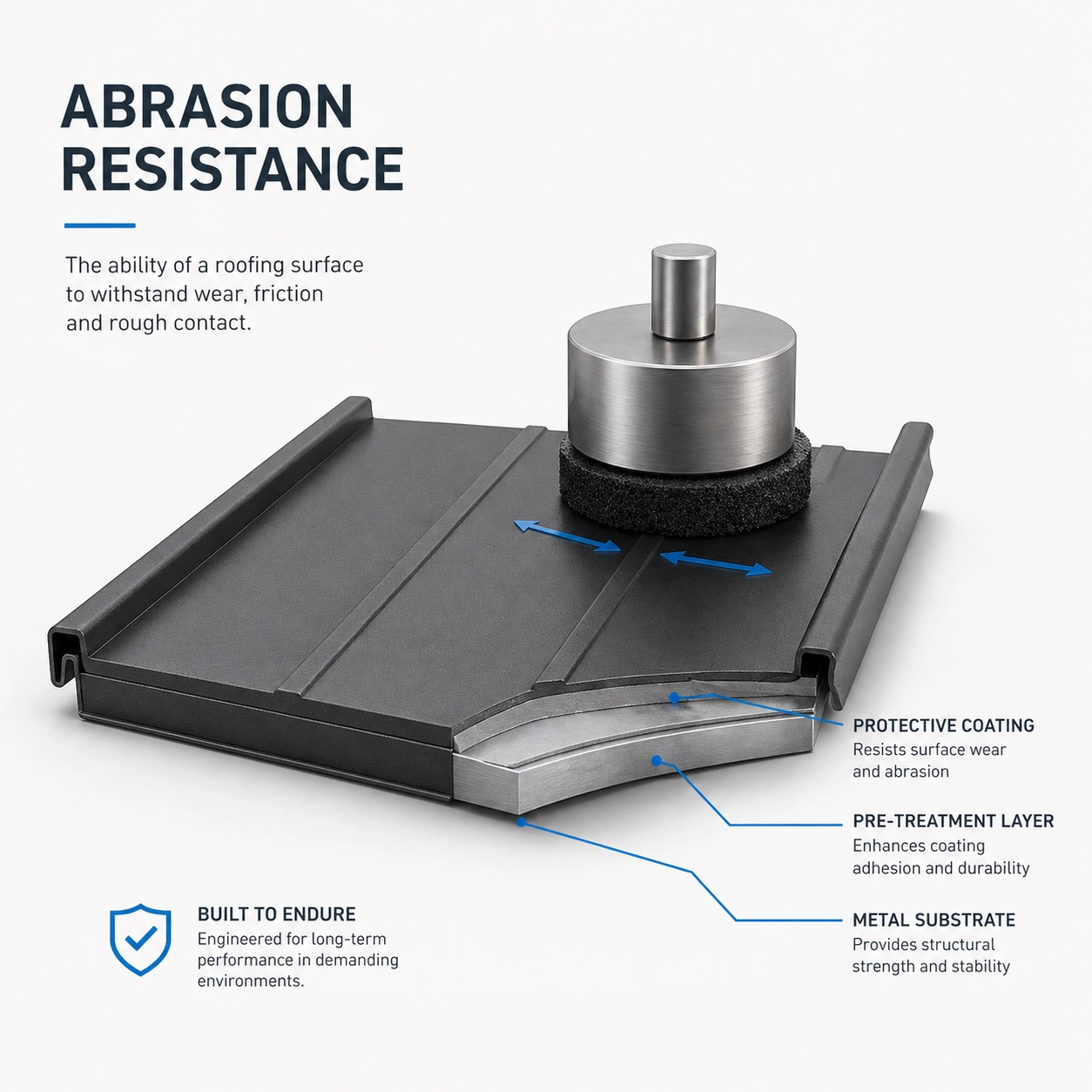
How Abrasion Resistance Enhances Roof Durability and Reduces Long-Term Maintenance Risks
Abrasion resistance is the ability of a roofing material or system to withstand surface wear caused by mechanical action, such as foot traffic, wind-driven debris, or contact with overhanging branches. In roofing applications, abrasion resistance is a critical performance characteristic that affects the longevity and durability of surfaces exposed to repeated friction or impact, particularly on low-slope roofs, walkways, or areas near eaves and ridges where maintenance access is frequent.
The structure and geometry of a roof—such as its pitch, slope, and the arrangement of valleys and ridges—can influence the degree of abrasion a surface experiences. Materials with high abrasion resistance, like certain modified bitumen membranes, metal panels, or high-density coatings, are engineered to maintain their protective properties and surface integrity despite ongoing exposure to abrasive forces. This resistance helps prevent premature loss of waterproofing, granule displacement, or surface degradation, which can compromise water drainage, snow shedding, and wind resistance.
Abrasion resistance is especially important in climates with frequent storms, high winds, or heavy maintenance requirements, and is a key consideration for roofing systems designed for high-traffic areas or where equipment is installed near the roof surface. Selecting materials with appropriate abrasion resistance ensures the roof maintains its structural efficiency and functional performance over time.
How Abrasion Resistance Is Measured in Roofing Materials
Abrasion resistance in roofing materials is measured through standardized laboratory tests that simulate the wear and tear a roof surface may experience from foot traffic, wind-driven debris, and other mechanical actions. Common abrasion resistance testing methods include the Taber Abrasion Test (ASTM D4060) and similar protocols, where a sample is subjected to controlled abrasion under specified conditions, and the resulting material loss or surface change is quantified. These tests provide objective data on how well a roofing product can withstand surface wear, which is critical for evaluating its long-term durability and performance, especially in high-traffic or extreme weather environments.
Roofing professionals also assess abrasion resistance performance by examining field samples and monitoring real-world roof exposure over time. High abrasion resistance is particularly important for roof coatings and membranes installed in areas prone to hail, windborne particles, or maintenance foot traffic, as it helps maintain waterproofing integrity and aesthetic appearance. When evaluating abrasion resistance vs impact resistance, it is important to note that abrasion resistance focuses on surface wear, while impact resistance addresses the material’s ability to withstand sudden force or blows. Understanding how abrasion resistance is measured allows specifiers and building owners to select roofing materials that offer proven benefits in terms of longevity, reduced maintenance, and reliable protection in demanding conditions.
Overview & Key Considerations
What Is Abrasion resistance
Why Abrasion resistance Matters
Benefits of Abrasion resistance
SURFACE DURABILITY
Abrasion resistance enhances a roofing material’s ability to withstand mechanical wear from foot traffic, debris, and maintenance activities.
LONG-TERM WEATHERING
High abrasion resistance reduces surface degradation from wind-driven particles, extending the roof’s effective service life.
MAINTAINED WATERPROOFING
Preserved surface integrity from abrasion resistance helps prevent micro-cracks that could compromise waterproofing performance.
CONSISTENT ENERGY PERFORMANCE
Abrasion-resistant surfaces retain reflective or emissive coatings longer, supporting stable thermal and energy efficiency over time.
Limitations of Abrasion resistance
SURFACE-SPECIFIC VARIABILITY
Abrasion resistance values can differ significantly depending on surface texture, coating type, and substrate composition.
ENVIRONMENTAL DEPENDENCY
Performance may decline under extreme temperatures, UV exposure, or chemical contaminants not accounted for in standard tests.
INCOMPLETE DAMAGE COVERAGE
High abrasion resistance does not protect against other forms of wear such as impact, puncture, or chemical degradation.
MEASUREMENT LIMITATIONS
Standardized abrasion tests may not accurately replicate real-world conditions or long-term exposure scenarios on roofs.
Common Abrasion resistance Problems
PREMATURE SURFACE WEAR
Low abrasion resistance leads to rapid surface degradation under foot traffic, causing early membrane exposure and reduced service life.
GRANULE LOSS ACCELERATION
Insufficient abrasion resistance in roofing materials results in accelerated granule loss, increasing UV exposure and thermal aging.
MEMBRANE PUNCTURE RISK
Poor abrasion resistance increases vulnerability to punctures from debris or maintenance activities, compromising waterproofing integrity.
COATING FAILURE UNDER STRESS
Inadequate abrasion resistance causes protective coatings to erode during wind-driven rain or hail, exposing substrates to moisture intrusion.
Abrasion resistance Quick Facts
Use Cases for Abrasion resistance
HIGH-TRAFFIC ROOF AREAS
Abrasion resistance is critical for roofing surfaces exposed to frequent foot traffic, such as rooftop walkways or maintenance paths.
HAIL AND DEBRIS IMPACT
Roofs in regions prone to hailstorms or wind-driven debris require high abrasion resistance to minimize surface wear and material loss.
SOLAR PANEL INSTALLATION
Abrasion resistance is important beneath solar panel mounts, where repeated movement or vibration can degrade less durable roofing materials.
CODE COMPLIANCE TESTING
Abrasion resistance is evaluated during product testing to ensure roofing materials meet minimum durability standards set by building codes.