
What Is Aged R-Value? Definition, Measurement, and Roofing Impact
TL;DR Aged R-value Summary
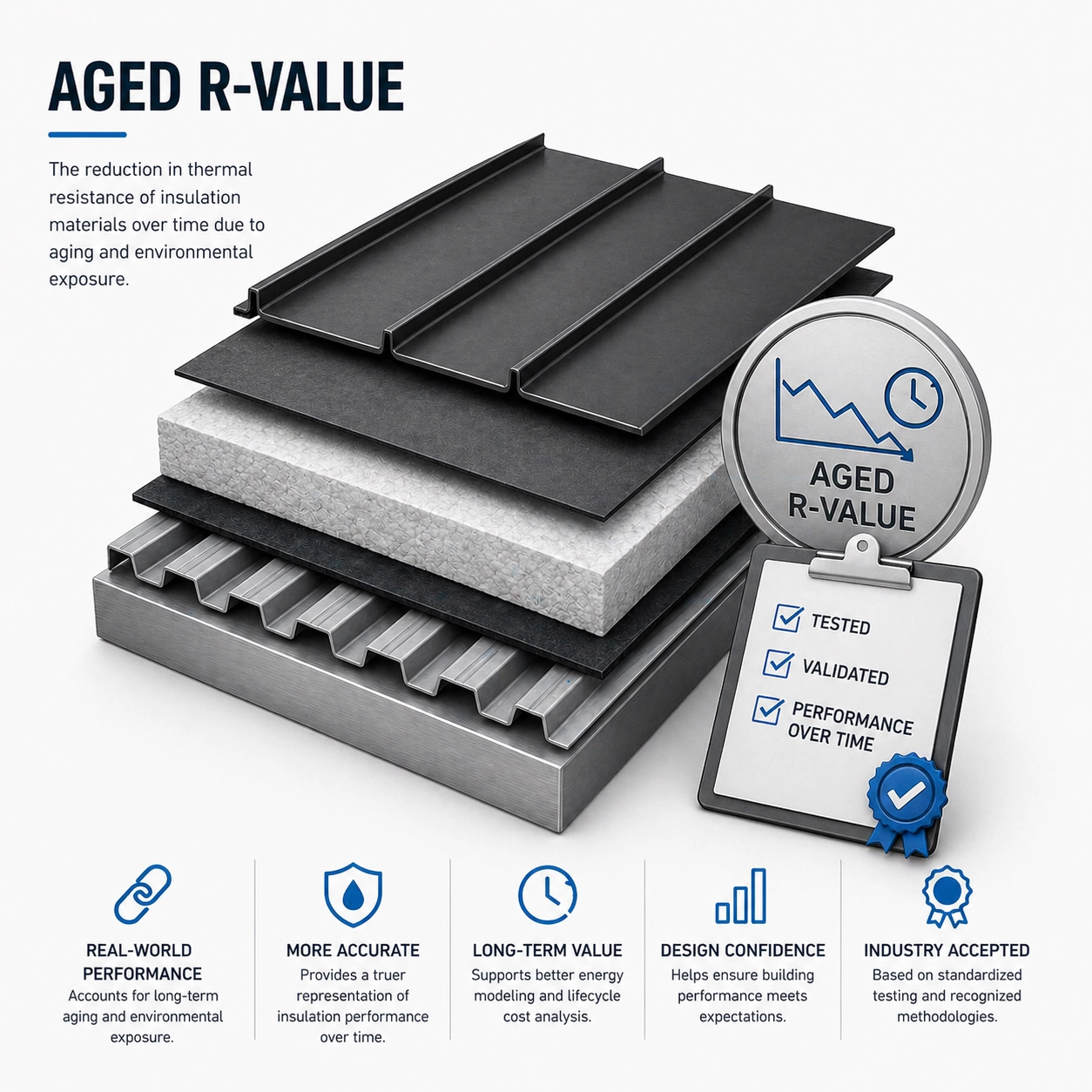
Aged R-value is the thermal resistance of insulation measured after it has been exposed to real-world conditions over time, reflecting any loss in performance due to aging. This matters because insulation materials can lose effectiveness as gases escape or materials degrade, reducing energy efficiency and increasing heating or cooling costs. When selecting insulation, relying on aged R-value rather than initial R-value ensures more accurate long-term performance predictions and risk management.
How Aged R-Value Influences Roofing Insulation Performance and Long-Term Energy Efficiency
Aged R-value is a measure of a roofing insulation material’s thermal resistance after it has been exposed to real-world conditions over a specified period, typically five years. Unlike initial R-value, which reflects laboratory performance immediately after manufacture, aged R-value accounts for factors such as thermal drift, moisture absorption, and changes in material structure that occur as insulation weathers on a roof assembly. This metric is critical for evaluating long-term energy efficiency, especially in low-slope and flat roof systems where continuous insulation is installed above the deck and exposed to temperature fluctuations, UV radiation, and potential moisture ingress at the ridge, eaves, and roof penetrations.
The function of aged R-value is to provide a realistic assessment of how well a roofing system will resist heat flow over its service life, directly impacting building energy performance and occupant comfort. It is particularly relevant for materials like polyisocyanurate and extruded polystyrene, which may experience a reduction in R-value due to off-gassing or environmental exposure. Specifying insulation based on aged R-value ensures compliance with energy codes and helps designers select materials that maintain effective thermal performance across the roof pitch, slopes, and drainage planes, supporting structural efficiency and long-term durability.
How Aged R-Value Is Measured in Roofing Materials
Aged R-value is measured by evaluating the thermal resistance of roofing insulation after it has been exposed to real-world conditions over a specified period, typically five years. This process involves subjecting insulation samples to controlled laboratory aging protocols, such as ASTM C1289 for polyisocyanurate or ASTM C518 for general insulation materials, which simulate the effects of time, temperature, and moisture on thermal performance. The aged R-value is then determined by testing the insulation’s ability to resist heat flow after this exposure, providing a more accurate representation of long-term performance compared to initial R-value measurements taken immediately after manufacture.
Roofing professionals assess aged R-value to predict how insulation will perform throughout the service life of a roof, especially in climates with significant temperature fluctuations or moisture exposure. Factors affecting aged R-value include insulation type, manufacturing process, installation quality, and environmental conditions such as humidity and UV exposure. Understanding the difference between aged R-value vs initial R-value is critical for specifying insulation that maintains energy efficiency and meets code requirements over time.
In practice, verifying aged R-value helps ensure that roofing systems deliver reliable thermal performance, reduce energy costs, and comply with building standards. Professionals may reference manufacturer data, third-party certifications, or independent lab results to confirm aged R-value for different climates and applications, supporting informed material selection and long-term roof durability.
Overview & Key Considerations
What Is Aged R-value
Why Aged R-value Matters
Benefits of Aged R-value
ENERGY EFFICIENCY PREDICTION
Aged R-value provides a realistic measure of long-term insulation performance, supporting accurate energy modeling and cost forecasting.
MOISTURE CONTROL INSIGHT
Understanding aged R-value helps evaluate insulation’s ability to resist thermal degradation from moisture exposure over time.
PRODUCT COMPARISON ACCURACY
Aged R-value enables objective comparison of insulation products based on actual, in-service thermal resistance rather than initial laboratory values.
DURABILITY ASSESSMENT
Aged R-value reflects insulation’s sustained thermal performance, informing decisions about long-term roof system durability and lifecycle value.
Limitations of Aged R-value
ENVIRONMENTAL DEPENDENCY
Aged R-value varies significantly with real-world exposure to UV, moisture, and temperature cycles, limiting its universal applicability.
MEASUREMENT INCONSISTENCY
Field-measured aged R-values can differ from laboratory results due to installation quality, air movement, and localized conditions.
INCOMPLETE PERFORMANCE SCOPE
Aged R-value does not account for thermal bridging, air leakage, or moisture intrusion, which can reduce actual insulation performance.
TIMEFRAME VARIABILITY
The rate and extent of R-value degradation depend on insulation type, making standardized aging periods potentially misleading for comparisons.
Common Aged R-value Problems
THERMAL PERFORMANCE LOSS
Aged R-value decline leads to increased heat transfer, reducing energy efficiency and elevating long-term heating and cooling costs.
CONDENSATION RISK INCREASE
Underestimated aged R-value can result in interior surface temperatures dropping below dew point, causing persistent condensation and moisture damage.
CODE COMPLIANCE FAILURE
Failure to account for aged R-value may result in assemblies not meeting minimum insulation requirements, risking inspection failure or legal noncompliance.
PREMATURE ROOF DEGRADATION
Accelerated R-value loss exposes roofing assemblies to greater thermal cycling, increasing the likelihood of membrane cracking and substrate deterioration.
Aged R-value Quick Facts
Use Cases for Aged R-value
CODE COMPLIANCE VERIFICATION
Aged R-value is referenced to ensure insulation materials meet minimum thermal performance requirements after years of in-service aging.
ENERGY RETROFIT ASSESSMENT
Evaluators use aged R-value to accurately estimate long-term energy savings when upgrading insulation in existing buildings.
PRODUCT COMPARISON
Specifiers compare aged R-values to select insulation products that maintain effective thermal resistance over the building’s lifespan.
WARRANTY EVALUATION
Manufacturers and owners review aged R-value data to confirm insulation performance aligns with warranty claims for thermal efficiency.