
What Is Roof Alligatoring? Causes, Signs, and Roofing Impact
TL;DR Alligatoring Summary
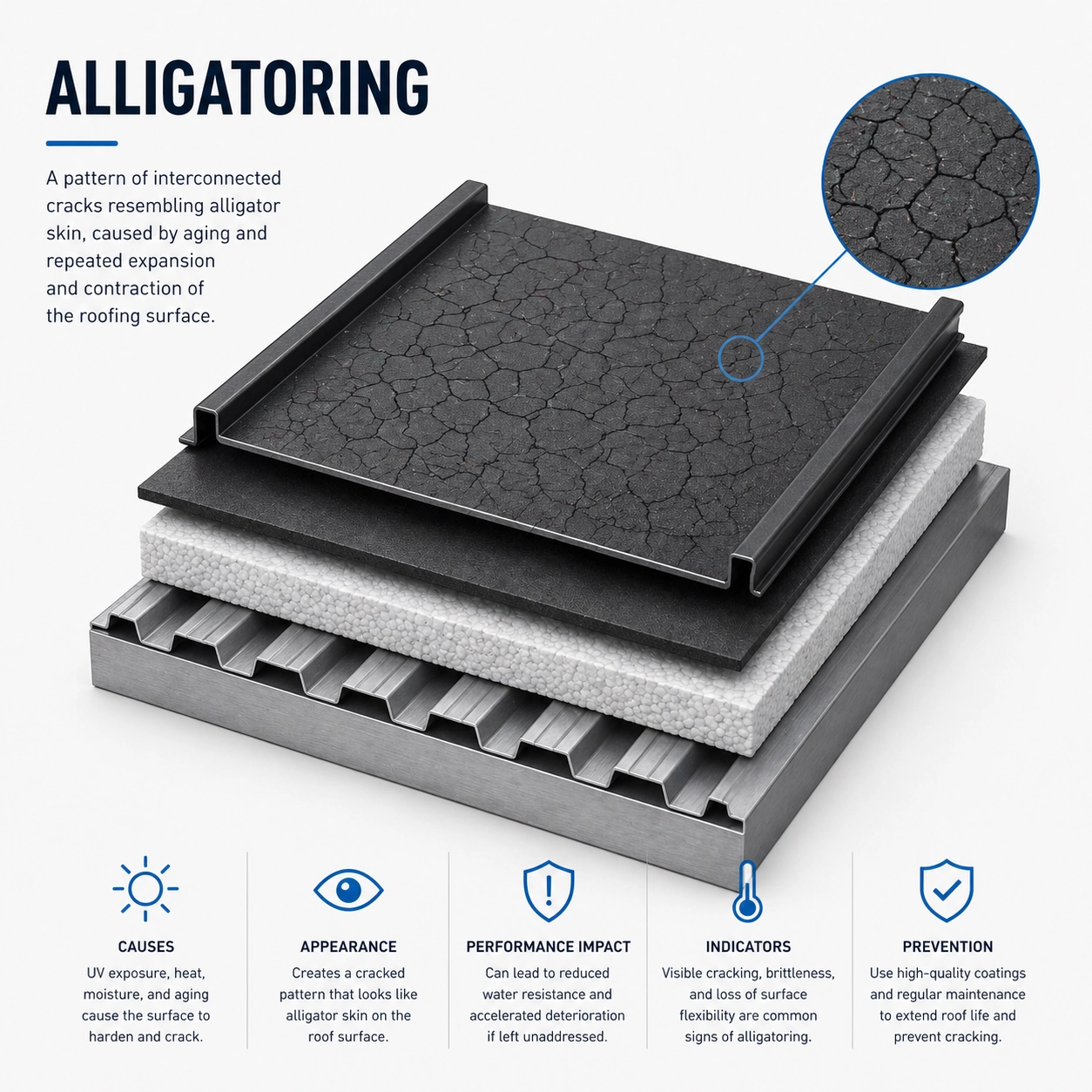
Alligatoring is a roofing defect where the surface develops a pattern of cracks resembling alligator skin, typically due to aging, UV exposure, or loss of flexibility in the roofing material. This matters because the cracks allow water infiltration, accelerating roof deterioration and increasing the risk of leaks. Prompt identification and repair are critical to prevent costly structural damage and premature roof failure.
5 FAQs About Roof Alligatoring: Signs, Causes & Solutions
Alligatoring is a roofing term describing a specific pattern of surface cracking that resembles the skin of an alligator, typically found on aged asphalt-based roofing materials such as built-up roofs or modified bitumen membranes. This phenomenon occurs when the roof’s surface coating loses its elasticity due to prolonged exposure to ultraviolet (UV) radiation, temperature fluctuations, and weathering. The cracks usually form in a repetitive, interconnected pattern across the roof’s surface, often appearing along flat or low-slope roof assemblies where water drainage is slower and thermal stresses are more pronounced.
Structurally, alligatoring indicates that the protective bituminous layer has become brittle and is no longer able to expand and contract with changes in temperature. This loss of flexibility compromises the roof’s ability to resist water infiltration, especially at vulnerable areas like seams, ridges, and eaves. Alligatoring is most commonly observed on older roofs with inadequate maintenance or insufficient protective coatings. Its presence signals a decline in the roof’s performance characteristics, including reduced wind resistance and increased risk of leaks, and typically necessitates timely repair or replacement to restore the roof’s structural efficiency and weatherproofing capabilities.
How Roof Alligatoring Is Identified and Evaluated on a Roof
Roof alligatoring is identified during visual roof inspections by the presence of distinctive, interconnected cracks resembling alligator skin, typically found on aged asphalt-based roofing materials. Roofing professionals assess the extent and pattern of these cracks to determine severity, noting whether the damage is limited to the surface or penetrates deeper into the membrane. Key signs of roof alligatoring damage include widespread surface cracking, loss of flexibility, and brittleness, which can compromise the roof’s waterproofing ability and accelerate deterioration.
Evaluating roof alligatoring involves distinguishing it from similar defects, such as blistering, which presents as raised bubbles rather than surface cracks. Professionals consider what causes roof alligatoring—primarily prolonged UV exposure, thermal cycling, and material aging—when diagnosing roof alligatoring issues and recommending solutions. The impact on roof lifespan is significant, as unchecked alligatoring can lead to leaks and premature failure. Timely identification allows for targeted roof alligatoring repair options, such as resurfacing or membrane replacement, and informs roof alligatoring prevention tips to extend service life. In cases of advanced damage, a professional inspection is essential to verify the condition and determine the most effective remediation strategy.
Overview & Key Considerations
What Is Alligatoring
Why Alligatoring Matters
Benefits of Alligatoring
EARLY DAMAGE IDENTIFICATION
Recognizing alligatoring enables prompt detection of surface deterioration before it leads to membrane failure or leaks.
PREVENTIVE MAINTENANCE PLANNING
Understanding alligatoring helps schedule targeted repairs, reducing the risk of widespread roof system degradation.
RISK MITIGATION INSIGHT
Awareness of alligatoring increases risk awareness for moisture intrusion, insulation compromise, and costly structural repairs.
INFORMED MATERIAL SELECTION
Knowledge of alligatoring guides future material choices to avoid similar aging and weathering defects in replacement systems.
Limitations of Alligatoring
EARLY DETECTION CHALLENGE
Alligatoring often develops gradually and can be difficult to identify before significant membrane cracking occurs.
REPAIR COMPLEXITY
Restoring areas affected by alligatoring typically requires full membrane replacement rather than simple patching or coating.
ESCALATION TO LEAKS
If ignored, alligatoring accelerates moisture intrusion and substrate deterioration, increasing the risk of widespread water damage.
COSTLY LONG-TERM IMPACT
Delayed intervention for alligatoring leads to higher repair costs due to compounded structural and insulation damage.
Common Alligatoring Problems
MOISTURE INTRUSION RISK
Alligatoring creates cracks in the roofing membrane, allowing water infiltration that leads to leaks and hidden substrate damage.
ACCELERATED MEMBRANE FAILURE
The brittle, cracked surface from alligatoring rapidly deteriorates under UV exposure, escalating the risk of total membrane breakdown.
SECONDARY INSULATION DAMAGE
Water entering through alligatoring cracks can saturate insulation layers, reducing thermal performance and promoting mold growth.
ESCALATING REPAIR COSTS
Delayed intervention for alligatoring allows minor surface defects to compound into widespread structural and interior damage requiring extensive repairs.
Alligatoring Quick Facts
Use Cases for Alligatoring
ROOF INSPECTION FINDINGS
Alligatoring is commonly identified during routine roof inspections as a visual indicator of advanced aging in asphalt-based membranes.
LEAK RISK DIAGNOSIS
Diagnosing alligatoring helps pinpoint areas where surface cracking may lead to future water infiltration and interior damage.
PREVENTIVE MAINTENANCE PLANNING
Recognizing early-stage alligatoring allows facility managers to schedule timely maintenance before cracks worsen and compromise waterproofing.
REPAIR STRATEGY SELECTION
Alligatoring informs contractors when to recommend surface restoration or full membrane replacement to address widespread surface deterioration.