
What Is a Gambrel Roof? Structure, Design, and Performance
TL;DR Gambrel roof Summary
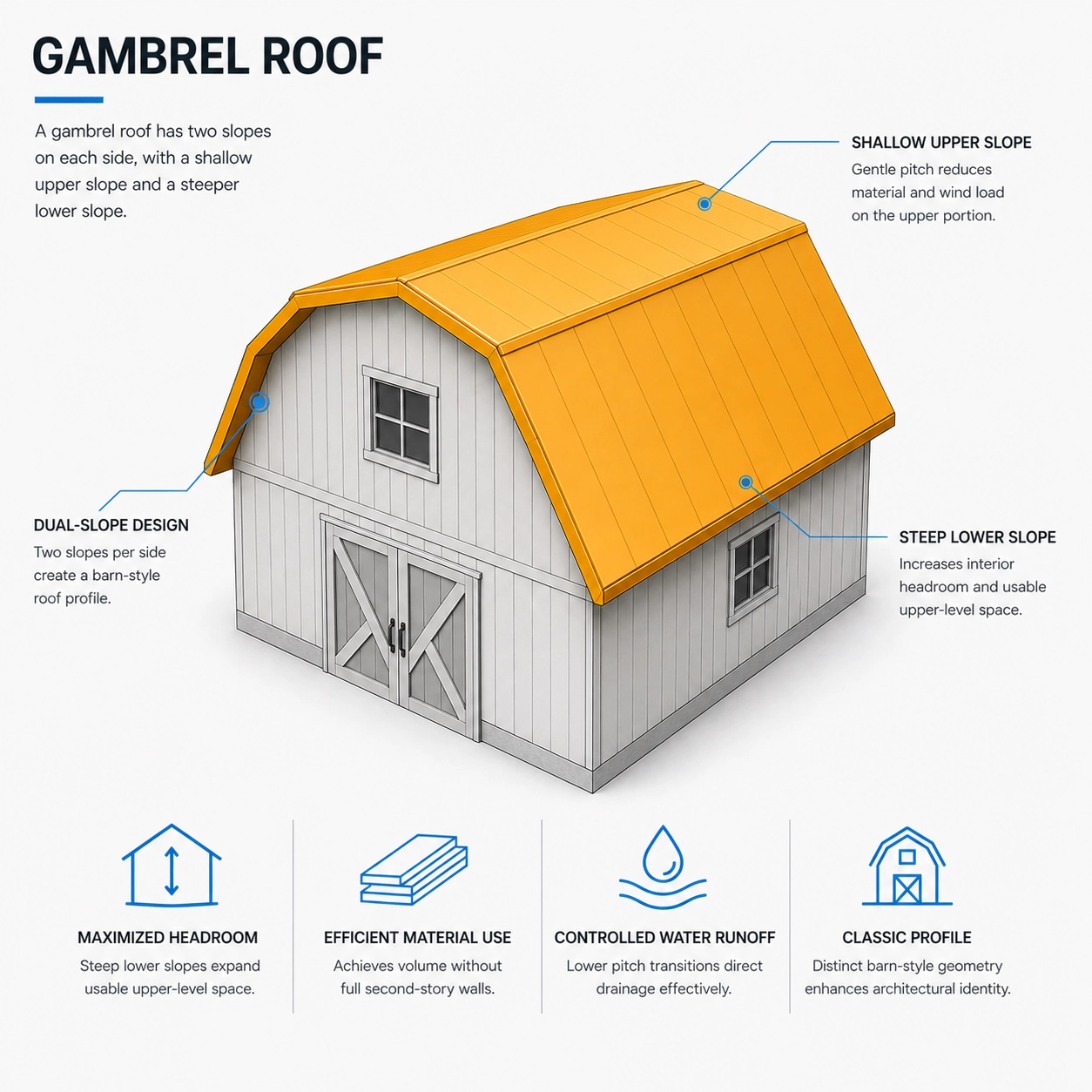
A Gambrel roof is a two-sided roof with two slopes on each side, where the lower slope is steeper than the upper. This design maximizes usable attic or loft space while promoting efficient water drainage. However, the complex geometry can increase vulnerability to wind uplift and requires precise construction to prevent leaks at the slope transitions.
How Gambrel Roof Design Influences Drainage, Snow Load, and Structural Performance
A Gambrel roof is a symmetrical, dual-pitched roof design characterized by two slopes on each side, with the lower slope steeper than the upper. This geometry creates a profile similar to a barn roof, maximizing the usable space beneath the roof structure. The ridge runs horizontally at the peak, while the eaves extend outward at the base of the lower slopes. The transition between the upper and lower slopes is defined by a distinct change in roof pitch, which enhances both the aesthetic and functional aspects of the design.
Structurally, the Gambrel roof allows for efficient water drainage and effective snow shedding due to its steep lower slopes, reducing the risk of water infiltration and excessive snow load. The design also provides increased headroom and usable attic or loft space compared to simple gable roofs, making it advantageous for buildings requiring additional upper-level storage or living areas. Commonly used in barns, colonial homes, and some commercial structures, the Gambrel roof balances structural efficiency with expanded interior volume, while its moderate wind resistance is suitable for regions with low to moderate wind exposure.
How Gambrel Roof Performance Is Evaluated in Roof Design
Gambrel roof performance is evaluated by examining several key design and structural factors that influence its suitability for various building types and climates. Roofing professionals assess the gambrel roof’s dual-slope geometry, which provides increased attic or loft space and is commonly used in barns and some residential applications. The roof’s steep lower slope and shallower upper slope are analyzed for their ability to shed water and snow efficiently, with particular attention to drainage performance and the risk of snow accumulation at the transition point. In regions with heavy snowfall, the gambrel roof for snowy climates is scrutinized for potential snow load issues and the need for reinforced framing to prevent structural stress or failure.
Wind resistance is another critical aspect, as the gambrel roof’s shape can create uplift forces at the eaves and ridge. Professionals evaluate the roof’s anchoring, bracing, and material selection to ensure compliance with local wind load requirements. The advantages and disadvantages of the gambrel roof are weighed in terms of construction complexity, usable interior space, and long-term maintenance needs. Cost estimates are developed based on the roof’s unique framing and material requirements, which can differ significantly from other roof types such as the mansard roof. Ultimately, the gambrel roof is classified and specified based on its drainage capabilities, load handling, ventilation potential, and architectural compatibility with the intended building use.
Overview & Key Considerations
What Is Gambrel roof
Why Gambrel roof Matters
Benefits of Gambrel roof
MAXIMIZED USABLE SPACE
The dual-slope geometry of a gambrel roof creates increased headroom and usable attic or upper floor area.
EFFICIENT WATER SHEDDING
Steep lower slopes on a gambrel roof promote rapid drainage, reducing the risk of water infiltration and ponding.
OPTIMIZED SNOW MANAGEMENT
The pronounced pitch transitions of a gambrel roof facilitate snow shedding, minimizing excessive structural loading in snowy climates.
DISTINCTIVE RIDGE CONFIGURATION
A gambrel roof’s double ridge lines provide unique architectural character and allow for flexible interior layout options.
Limitations of Gambrel roof
SNOW LOAD VULNERABILITY
The dual-slope geometry of gambrel roofs can create uneven snow accumulation, increasing structural load risks in heavy snowfall regions.
WIND UPLIFT RISK
The extended lower slopes of a gambrel roof present larger surfaces susceptible to wind uplift and potential structural stress in high-wind areas.
DRAINAGE CHALLENGES
The break in slope can impede efficient water runoff, increasing the likelihood of water pooling and moisture intrusion at the roof transition.
ATTIC SPACE COMPLEXITY
The unique shape complicates attic ventilation and insulation detailing, raising the risk of condensation and thermal inefficiency if not properly addressed.
Common Gambrel roof Problems
VALLEY DRAINAGE FAILURE
Gambrel roof valleys often experience water pooling and ice damming, leading to chronic leaks and interior water damage.
WIND UPLIFT AT RIDGE
The steep lower slopes and abrupt ridge transitions of gambrel roofs are highly susceptible to wind uplift and shingle blow-off.
SNOW LOAD CONCENTRATION
Gambrel roof geometry can cause uneven snow accumulation, resulting in excessive structural stress and potential rafter failure.
EAVE SAGGING
Extended lower eaves on gambrel roofs are prone to sagging and deformation due to inadequate support and water runoff concentration.
Gambrel roof Quick Facts
Use Cases for Gambrel roof
MAXIMIZING ATTIC SPACE
Gambrel roofs are ideal for barns and homes requiring spacious, unobstructed attic or loft areas for storage or living.
COLONIAL ARCHITECTURE MATCH
Gambrel roofs are commonly specified for Colonial and Dutch Colonial style buildings to achieve historically accurate rooflines.
SNOW SHEDDING IN MODERATE CLIMATES
Gambrel roofs perform well in moderate snow regions, providing sufficient slope for runoff while maximizing usable upper-floor space.
COST-EFFICIENT FRAMING
Gambrel roofs are chosen for structures needing economical roof framing that allows for large, open interior volumes without complex trusses.