

Quality Roof Materials: Why Components Matter
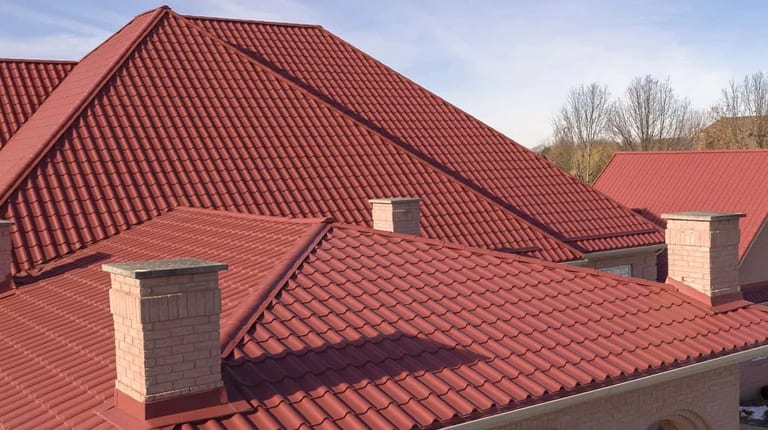
Why High-Quality Components Are Essential for Your Roofing System
Quality roof materials matter because a roof fails at its weakest part, not its strongest. A premium panel installed with cheap fasteners and flashing will still leak or corrode where those components give out. Interlock engineers the entire system — aircraft-grade aluminum panels (which never rust), stainless-steel fasteners, and cast-metal snow guards — so every part lasts as long as the roof. It’s the difference between a roof and a roofing system.
A roof is only as good as its weakest component. Interlock builds the whole system to last — aircraft-grade aluminum panels, stainless-steel fasteners, and cast-metal snow guards — so nothing rusts out before the roof does. It's the quality a retired engineer noticed, and the reason the Empire State Building switched its windows to aluminum.
A roof is a system, not a single product — and like any system, it's only as reliable as its weakest link. That link is rarely the part you can see.
Homeowners shopping for a roof naturally focus on the visible material — the shingle, the panel, the color. But roofs almost never fail in the middle of a panel. They fail at the fasteners, the flashings, the valleys, and the penetrations — the components that hold everything together and keep water out. If you're still weighing which types of metal roofing fit your home, component quality matters as much as the profile you choose.
## Why Components Matter Think about where roofs actually leak: around chimneys and vents, in the valleys where two slopes meet, along the eaves and rakes, and at the fasteners. Every one of those is a component, not the field of the roof. If the flashing is thin, the sealant cheap, or the fasteners prone to rust and back-out, the roof will fail there long before the panel itself wears out. That's also why proper roof installation matters just as much as the components themselves — even the best materials fail early if they aren't installed correctly.
## Why Aluminum Over Steel The panel material sets the ceiling for the whole system, and here aluminum has a decisive edge over steel: it doesn't rust. Steel relies on a coating, and the moment that coating is scratched, cut at an edge, or penetrated by a fastener, corrosion begins. Aluminum forms its own protective oxide layer and is immune to rust entirely. In 1994 the Empire State Building replaced more than 5,000 of its deteriorated original steel window frames with aluminum — a vivid demonstration of which metal lasts.
## The Details an Engineer Noticed Quality shows up in the details most companies cut. Interlock uses stainless-steel fasteners that won't rust and back out over time, and cast-metal snow guards built to take real loads rather than thin stamped parts. The flashings and trims are made from the same long-lived aluminum as the panels, so there's no mismatched component waiting to corrode first. It's this same engineered rigidity that makes Interlock's metal roofing systems so strong against wind, impact, and snow load.
Real customers notice the same thing in the finished product. A Plymouth, Massachusetts homeowner summed it up plainly: "Pleased with the quality and look of our new Metal Shingles; Interlock Metal Roofing (New England) Inc.'s craftsmanship has earned us many compliments."
"Pleased with the quality and look of our new Metal Shingles; Interlock Metal Roofing (New England) Inc.'s craftsmanship has earned us many compliments." — Maggie & Ken Dobie, Plymouth, Massachusetts · Installed August 2022 · Verified GuildQuality review
## A Cautionary Tale: When Quality Is Skipped One homeowner's hand-split cedar shakes — a premium-sounding material — lasted only about 30 years instead of the expected 50, undone by the realities of weather, rot, and maintenance. An engineered aluminum system removes those failure modes rather than just delaying them.
## Built as a System, Backed as One Because Interlock engineers the whole assembly — panels, fasteners, flashings, trims, and accessories — to the same standard, it can stand behind all of it with the Guardian Lifetime Limited Warranty. There's no weak component quietly counting down to an early failure.
## Quality You Can Verify The reassuring thing about a quality roofing system is that you don't have to take it on faith — the components, the alloy, the fasteners, and the testing are all documented. Request a free quote.
Frequently Asked Questions
Why do roofing components matter so much?
Because a roof fails at its weakest component — usually the fasteners, flashings, or valleys, not the panel. Cheap parts there cause leaks and corrosion even under a premium surface.
Why choose aluminum over steel for a roof?
Aluminum doesn't rust — it forms a self-protecting oxide layer — while steel corrodes wherever its coating is scratched or cut. Aluminum's durability is why the Empire State Building switched its windows to it in 1994.
What fastener and flashing quality does Interlock use?
Interlock uses stainless-steel fasteners and cast-metal snow guards, with flashings and trims made from the same long-lived aluminum as the panels, so no component corrodes ahead of the roof.
Do premium natural materials last as promised?
Often not. One homeowner's hand-split cedar shakes lasted about 30 years instead of the expected 50. Organic and coated materials depend on conditions the weather eventually overwhelms.
Is the whole roofing system warrantied together?
Yes. Because Interlock engineers panels, fasteners, flashings, and trims as one system, it backs the entire assembly with the Guardian Lifetime Limited Warranty.
How can I verify a roof's quality?
Look at the documented details — the alloy, the fastener material, the flashing, and independent testing. A quality system, like Interlock's, makes all of that available rather than asking you to trust a brochure.
Explore Interlock Metal Roofing
Last updated June 9, 2026 · Reviewed for accuracy by the Interlock SEO Desk.