

What Is Drip Edge & Why It Matters for Metal Roofs
Quick Answer
A drip edge is an angled strip of metal flashing fitted along the eaves and rakes of a roof. Its job is to direct rainwater off the roof and into the gutters, preventing it from running back under the roofing or wicking into the fascia board and decking, where it would cause rot. On a metal roof, the drip edge also creates a clean overlap that helps secure the panel edges against wind uplift and keeps water from seeping into the seams.
A drip edge is a metal flashing installed along the edges of a roof that directs runoff away from the fascia and into the gutters, instead of letting it wick back and rot the wood. On a metal roof it also helps lock the panel edges down against wind uplift and seals out water at the seams.
It's one of the least glamorous parts of a roof and one of the most important: a thin strip of metal at the edge that quietly decides whether water ends up in your gutter or in your fascia.
Most homeowners never think about the drip edge, yet it does a job nothing else on the roof can. Water doesn't just fall straight off a roof's edge — surface tension can pull it back underneath, where it soaks the fascia board, the decking, and eventually the structure. A drip edge interrupts that path, and on a metal roof it does double duty for wind and water sealing too.
Here's exactly what a drip edge does, why your metal roof needs one, and the extra benefits it provides beyond simply keeping water off the wood.
What is a drip edge and why does a metal roof need one?
A drip edge is an angled strip of metal flashing fitted along the eaves and rakes of a roof. Its job is to direct rainwater off the roof and into the gutters, preventing it from running back under the roofing or wicking into the fascia board and decking, where it would cause rot. On a metal roof, the drip edge also creates a clean overlap that helps secure the panel edges against wind uplift and keeps water from seeping into the seams.
What a Drip Edge Does
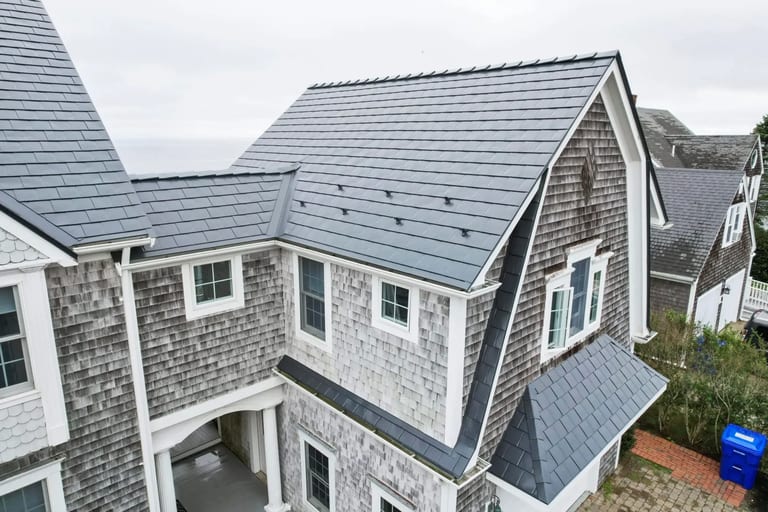
A drip edge is an L- or T-shaped strip of metal flashing installed along the lower edges (eaves) and the sloped edges (rakes) of a roof, beneath or alongside the roofing material. Its primary function is to control where water goes at the most vulnerable point of the roof: the edge. Without it, runoff can cling to the underside of the roofing and wick backward onto the fascia board and into the roof deck. The drip edge extends past the fascia and angles the water outward so it drips cleanly off the edge and into the gutter.
Why Your Metal Roof Needs One
On a metal roof, the drip edge earns its place several times over. First, it helps prevent water from seeping into the seams between metal panels at the roof's perimeter, where wind-driven rain is most likely to be forced in. Second, it helps create an overlap between the panels and the edge that contributes to resisting wind uplift — important on a roof engineered to handle 120 mph winds. And third, like on any roof, it protects the fascia and decking from the rot that destroys roof edges over time.
Protecting the Fascia and Decking
The fascia — the horizontal board behind your gutters — and the edge of the roof deck are among the first parts of a house to rot, because they sit right where water concentrates. Once water wicks into them, the damage spreads: soft fascia can't hold gutters, and a rotted deck edge undermines the roofing above it. A properly installed drip edge keeps that water moving outward and downward, away from the wood.
Drip Edge, Gutters, and Water Management
A drip edge and gutters work as a team. The drip edge delivers water precisely into the gutter trough rather than letting it sheet down the fascia or splash behind the gutter; the gutter then carries it away from the foundation. Skip the drip edge and even good gutters can be undermined by water sneaking behind them.
A Detail That Needs Doing Right
Because the drip edge controls water at the roof's most vulnerable point, its overlap, fastening, and integration with the underlayment and gutters have to be correct — too short, reversed, or poorly lapped and it can do little or even channel water the wrong way. That precision is exactly why edge details are part of a professionally installed system.
Small Part, Big Protection
The drip edge is proof that a roof is the sum of its quality materials. This unassuming strip of metal protects your fascia and decking from rot, helps your metal panels resist wind and seal out water, and works with your gutters to keep moisture away from your home's structure.
Frequently Asked Questions
What is a drip edge?
A drip edge is a strip of metal flashing installed along a roof's eaves and rakes that directs rainwater off the roof and into the gutters, preventing it from wicking back into the fascia and decking.
Does a metal roof really need a drip edge?
Yes. On a metal roof a drip edge prevents water from seeping into the panel seams at the edge, helps resist wind uplift, and protects the fascia and decking from rot — it does several jobs at once.
What other benefits does a drip edge provide?
Beyond directing water, it helps create an edge overlap that resists wind uplift, seals the seams between panels at the perimeter, and works with gutters to keep water away from the structure.
What happens without a drip edge?
Runoff can wick back under the roofing onto the fascia board and roof deck, causing rot that spreads, undermines gutters, and damages the roof edge over time.
Where is a drip edge installed?
Along the eaves (the lower, horizontal edges) and the rakes (the sloped edges) of the roof, integrated with the underlayment and positioned to deliver water into the gutters.
Can I add a drip edge myself?
It's best left to professionals. The drip edge must be lapped, fastened, and integrated with the underlayment and gutters correctly, or it can fail to protect — or even misdirect water. It's part of a properly installed system.
Explore Interlock Metal Roofing
Last updated June 9, 2026 · Reviewed for accuracy by the Interlock SEO Desk.