
What Is Roof Algae Stains? Causes, Signs, and Roofing Impact
TL;DR Algae discoloration Summary
Algae discoloration is the visible staining or dark streaking on roofing surfaces caused by the growth of airborne algae, typically in humid or shaded environments. This problem matters because algae retain moisture, accelerating shingle deterioration and reducing curb appeal. If left untreated, algae discoloration can lead to premature roof aging and may signal the need for cleaning or preventive maintenance.
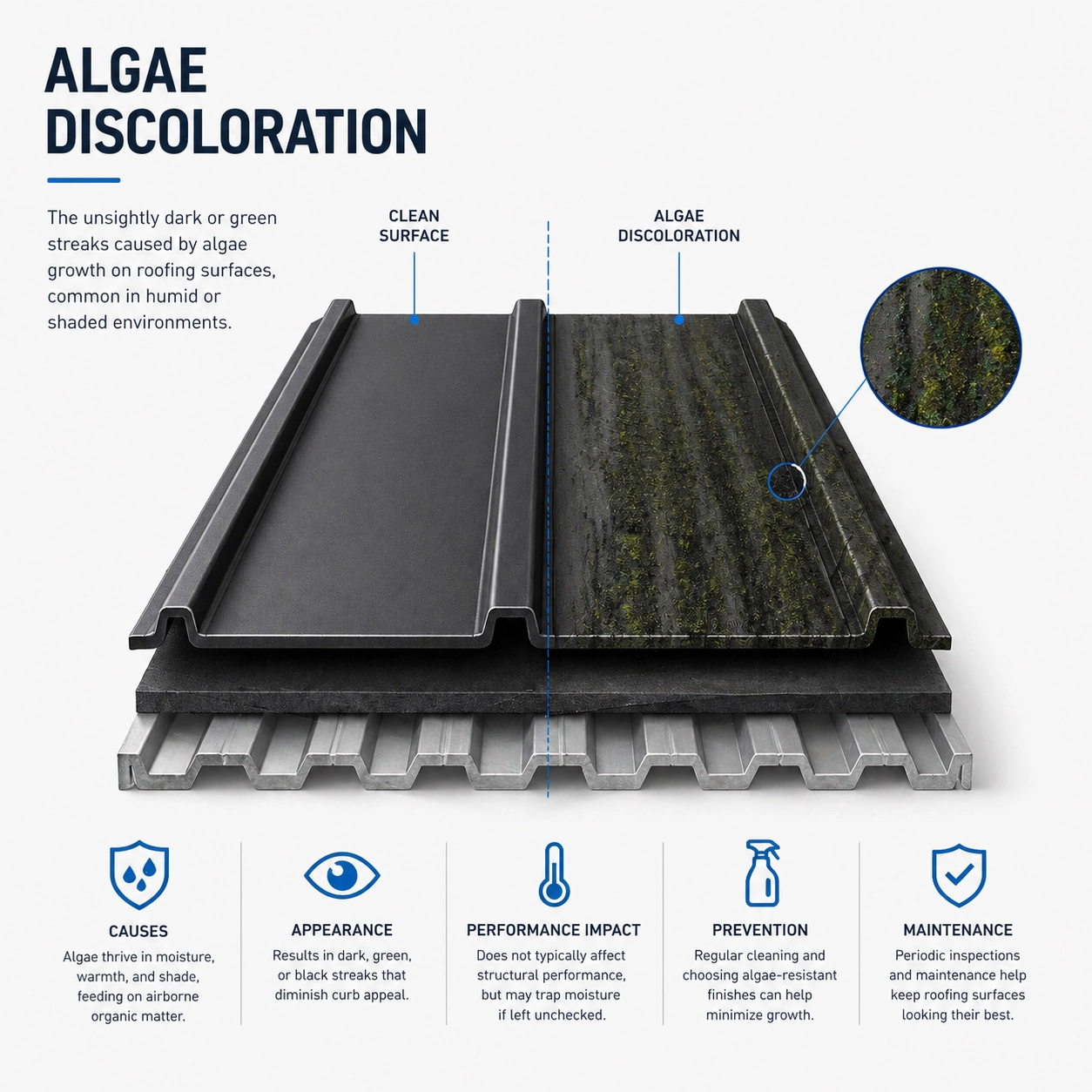
How Roof Algae Stains Affect Shingle Durability, Appearance, and Lifespan
Algae discoloration refers to the visible staining or streaking that appears on roof surfaces, typically as dark green, blue-green, or black streaks. This phenomenon is caused by the growth of airborne algae, most commonly Gloeocapsa magma, which colonizes roofing materials such as asphalt shingles, clay tiles, and even metal panels. Algae spores thrive in humid environments and tend to accumulate on roof slopes with lower sun exposure, particularly on the north-facing sections, near the ridge, or along the eaves where moisture retention is higher.
Structurally, algae discoloration does not compromise the roof’s geometry, load-bearing capacity, or water drainage performance. However, it can affect the roof’s aesthetic appearance and, over time, may contribute to surface degradation if left untreated, especially in combination with moss or lichen growth. Algae discoloration is most prevalent in regions with warm, humid climates and on roofs with shallow pitch or limited sunlight exposure. While it does not directly impact wind resistance or snow shedding, persistent moisture associated with algae can indirectly influence the longevity of roofing materials. Regular maintenance and the use of algae-resistant roofing products can help mitigate this condition.
How Algae Discoloration Is Identified and Evaluated on a Roof
Algae discoloration on roofs is typically identified by the presence of dark streaks or blotchy roof shingle discoloration, most commonly black or dark green, running down the roof surface. Roofing professionals diagnose roof algae stains by visually inspecting affected areas, noting the pattern, color, and extent of staining, which often appears on north-facing slopes or shaded sections where moisture persists. Differentiating algae discoloration vs moss on roof is important: algae forms flat, streaky stains, while moss appears as raised, green clumps.
Evaluation includes assessing the severity of staining and its impact on roof aesthetics and potential long-term effects on roof lifespan. Professionals consider what causes algae discoloration on roofs—typically airborne spores thriving in humid environments—and may investigate underlying moisture or ventilation issues that contribute to persistent growth. If black streaks are widespread or accompanied by shingle deterioration, further inspection is warranted to determine if roof algae discoloration repair or more extensive maintenance is needed. Accurate identification helps guide recommendations for how to remove algae stains from shingles and strategies for preventing roof algae growth, ensuring both cosmetic and functional roof performance are maintained.
Overview & Key Considerations
What Is Algae discoloration
Why Algae discoloration Matters
Benefits of Algae discoloration
EARLY ISSUE IDENTIFICATION
Recognizing algae discoloration enables prompt intervention before underlying moisture or material degradation worsens.
PREVENTIVE MAINTENANCE PLANNING
Understanding this defect supports targeted cleaning schedules and surface treatments to minimize recurrence and spread.
AESTHETIC RISK AWARENESS
Awareness of algae discoloration helps property owners anticipate and address potential curb appeal and property value impacts.
MOISTURE INTRUSION WARNING
Detection of algae discoloration can signal areas of persistent moisture, prompting investigation to prevent further roof system damage.
Limitations of Algae discoloration
HIDDEN EARLY STAGES
Algae discoloration often develops beneath surface granules, making early detection difficult until visible staining appears.
CLEANING DAMAGE RISK
Aggressive removal methods can dislodge protective granules or damage roofing materials, increasing vulnerability to further defects.
RECURRING ISSUE
Algae discoloration frequently recurs in humid climates, requiring repeated interventions rather than a permanent solution.
ESCALATION TO MATERIAL DEGRADATION
If ignored, persistent algae growth can retain moisture, accelerating shingle deterioration and reducing overall roof lifespan.
Common Algae discoloration Problems
ACCELERATED SHINGLE DETERIORATION
Algae discoloration retains moisture on shingle surfaces, promoting premature granule loss and material breakdown.
MASKED LEAK DETECTION
Dark streaks from algae growth obscure early signs of water intrusion, delaying identification of underlying roof leaks.
REDUCED SOLAR REFLECTANCE
Algae staining lowers roof reflectivity, increasing heat absorption and escalating cooling loads for the building.
SECONDARY ORGANIC GROWTH
Persistent algae discoloration creates a substrate for moss or lichen colonization, compounding surface degradation and water retention.
Algae discoloration Quick Facts
Use Cases for Algae discoloration
ROOF INSPECTION FINDINGS
Algae discoloration is commonly identified during roof inspections as dark streaks or stains, especially on shaded or north-facing slopes.
DIAGNOSING MOISTURE ISSUES
Algae discoloration can indicate persistent moisture retention on roofing surfaces, prompting further investigation into ventilation or drainage deficiencies.
PREVENTIVE MAINTENANCE PLANNING
Recognizing early signs of algae discoloration helps schedule timely cleaning or treatment to prevent long-term aesthetic and material degradation.
REPAIR STRATEGY DEVELOPMENT
Algae discoloration informs repair planning by highlighting areas where protective coatings or algae-resistant materials may be needed to prevent recurrence.