
What Is Roof Blistering? Causes, Signs, and Roofing Impact
TL;DR Blisters Summary
Blisters are raised bubbles or pockets that form between roofing layers or within the membrane due to trapped moisture, air, or poor adhesion. They matter because blisters can compromise the roof’s waterproofing, leading to accelerated membrane deterioration and potential leaks. Prompt identification and repair are critical, as untreated blisters increase the risk of water intrusion and costly structural damage.
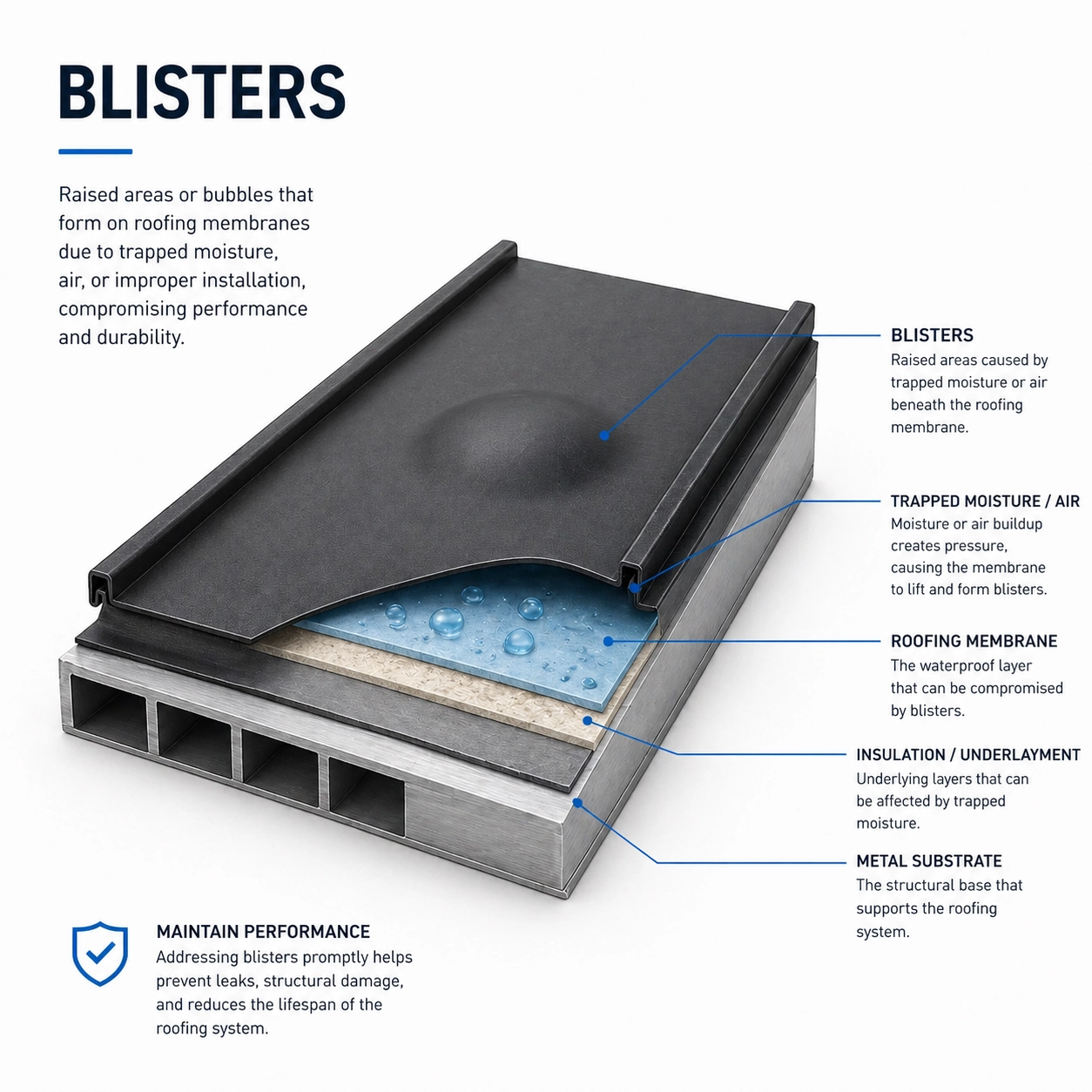
How Roof Blistering Compromises Material Durability and Increases Risk of Roof Failure
Blisters are localized, dome-shaped swellings that form between layers of a roofing membrane or between the membrane and the roof substrate. Structurally, blisters occur when air, moisture, or volatile compounds become trapped within the roofing system—typically in built-up roofs (BUR), modified bitumen, or single-ply membranes. These trapped pockets expand under heat, causing the membrane to lift and separate from the underlying surface, often along the roof’s slopes, ridges, or near eaves where water drainage and thermal movement are most active.
Functionally, blisters compromise the integrity of the roofing assembly by disrupting the continuous waterproof barrier. While small blisters may not immediately lead to leaks, larger or ruptured blisters can allow water infiltration, reducing wind resistance and accelerating membrane deterioration. Blisters are most commonly found in low-slope or flat roof assemblies, where inadequate adhesion, improper installation, or moisture intrusion during construction are prevalent. Their presence signals potential weaknesses in the roof’s structural efficiency and long-term performance, particularly in climates with significant temperature fluctuations or frequent freeze-thaw cycles.
How Roof Blisters Are Identified and Evaluated on a Roof
Roof blistering is identified during roof inspections by the presence of raised, bubble-like formations on the roof membrane or shingles, which indicate trapped air or moisture beneath the surface. Roofing professionals assess blisters by examining their size, frequency, and location, as well as by gently pressing on the affected areas to determine if the membrane remains intact or if the blister has ruptured. Key signs of roof blistering problems include soft, spongy spots and visible separations in the roofing material, which can be distinguished from roof cracking by the absence of linear splits.
Evaluating roof blisters involves determining the underlying causes, such as poor adhesion, trapped moisture, improper ventilation, or manufacturing defects. Professionals also consider the severity and distribution of blisters to assess the impact on roof performance and lifespan. Isolated, small blisters may have minimal effect, while widespread or ruptured blisters can compromise waterproofing and accelerate deterioration, especially on flat roofs where water ponding is a concern. Accurate diagnosis of roof blistering is essential for deciding whether repairs are needed, monitoring for progression, or recommending preventive measures to protect the roof’s integrity.
Overview & Key Considerations
What Is Blisters
Why Blisters Matters
Benefits of Blisters
EARLY DAMAGE IDENTIFICATION
Recognizing blisters enables prompt intervention to prevent membrane rupture and subsequent water infiltration.
PREVENTATIVE MAINTENANCE PLANNING
Understanding blister formation supports targeted maintenance strategies to minimize costly repairs and extend roof service life.
RISK MITIGATION INSIGHT
Awareness of blister risks helps contractors and owners prioritize inspection schedules and allocate resources effectively.
REDUCED STRUCTURAL IMPACT
Timely detection of blisters limits the potential for widespread substrate deterioration and associated structural compromise.
Limitations of Blisters
HIDDEN SUBSTRATE DAMAGE
Blisters often conceal underlying moisture or adhesion failures, making accurate detection and assessment challenging without invasive inspection.
REPAIR COMPLEXITY
Effective blister repair typically requires removal and replacement of affected membrane sections, increasing labor and material costs.
ESCALATION TO LEAKS
If ignored, blisters can rupture under thermal or mechanical stress, rapidly escalating to active water intrusion and structural damage.
DIFFICULT EARLY DETECTION
Blisters may remain undetected in early stages, especially on gravel-surfaced or ballasted roofs, delaying timely intervention.
Common Blisters Problems
MOISTURE INTRUSION PATHS
Blisters can rupture and create direct entry points for water, leading to concealed moisture intrusion and substrate deterioration.
MEMBRANE DELAMINATION
Expanding blisters stress roofing membranes, increasing the risk of delamination and widespread system failure over time.
HIDDEN SUBSTRATE DAMAGE
Blisters often mask underlying substrate decay, allowing rot, corrosion, or mold to progress undetected beneath the membrane.
ESCALATING LEAK RISKS
Unaddressed blisters can propagate, merge, and compromise adjacent seams or flashings, escalating the likelihood of active roof leaks.
Blisters Quick Facts
Use Cases for Blisters
ROOF INSPECTION FINDINGS
Blisters are commonly identified during routine roof inspections as raised areas or bubbles in membrane or asphalt roofing.
MOISTURE INTRUSION DIAGNOSIS
Blisters often indicate trapped moisture or air beneath roofing materials, helping diagnose underlying moisture intrusion issues.
PREVENTIVE MAINTENANCE PLANNING
Recognizing early-stage blisters allows facility managers to schedule targeted repairs before widespread membrane failure occurs.
REPAIR STRATEGY DEVELOPMENT
Blisters guide contractors in determining the extent and method of roof repairs, such as localized patching or full membrane replacement.