
What Is a Gable Roof? Structure, Design, and Performance
TL;DR Gable roof Summary
A gable roof is a roof type featuring two sloping sides that meet at a central ridge, forming a triangular end wall. Its simple geometry promotes efficient water and snow drainage, reducing the risk of leaks and structural stress in most climates. However, gable roofs can be vulnerable to wind uplift and may require additional bracing in hurricane-prone or high-wind regions.
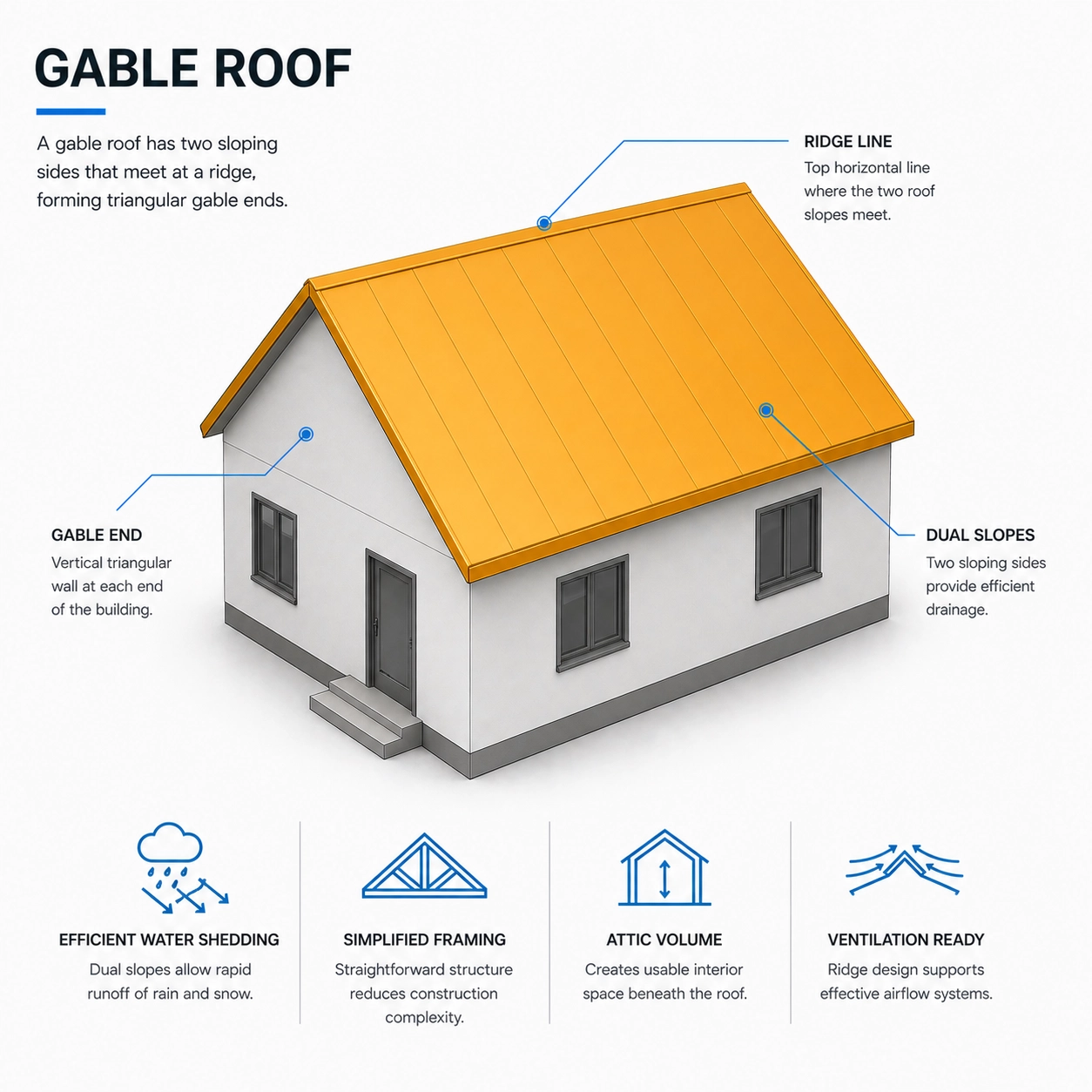
How Gable Roof Design Influences Drainage, Wind Resistance, and Structural Durability
Gable roof refers to a roof structure characterized by two sloping planes that meet at a central ridge, forming a triangular gable at each end wall. The roof pitch, or angle of the slopes, can vary depending on design requirements and climate considerations. The gable roof’s geometry creates a simple, efficient structure with a ridge running horizontally along the peak and eaves extending along the lower edges, providing clear water drainage paths and effective snow shedding.
Functionally, a gable roof offers strong water runoff due to its dual slopes, minimizing the risk of water infiltration and reducing snow accumulation. The design allows for efficient load transfer from the roof to the supporting walls, contributing to structural stability. However, gable roofs can be susceptible to wind uplift at the gable ends if not properly braced, especially in high-wind regions.
Gable roofs are widely used in residential and light commercial construction due to their straightforward framing, cost-effectiveness, and ability to create usable attic space beneath the ridge. Their adaptability to various roof pitches and compatibility with different materials make them suitable for diverse climates and architectural styles.
How Gable Roof Performance Is Evaluated in Roof Design
Gable roof performance is evaluated by examining several key design and structural factors that influence its suitability for various climates and building types. Professionals assess the roof’s slope, or pitch, which directly affects drainage performance and the ability to shed rain and snow efficiently. The framing and support structure are reviewed to ensure the gable roof can handle anticipated live and dead loads, including snow accumulation in colder regions. Ventilation is another critical aspect, as proper airflow beneath the roof deck helps prevent moisture buildup and extends the roof’s service life.
Wind resistance is a primary consideration in gable roof evaluation, especially when comparing gable roof vs hip roof designs. Gable roofs, with their vertical end walls, can be more susceptible to wind uplift and pressure, so professionals check for adequate bracing, secure fastening, and compliance with local building codes in high-wind zones. The advantages and disadvantages of a gable roof are weighed in context: while the design offers cost efficiency and straightforward construction, it may present common problems such as ridge leaks or end wall vulnerabilities if not properly detailed.
Cost factors are also assessed, including material selection, labor, and potential reinforcement needs for specific climates. Roofing professionals evaluate the overall architectural compatibility and ensure that the gable roof design aligns with the building’s intended use, aesthetic goals, and long-term performance requirements. This comprehensive evaluation helps determine whether a gable roof is the optimal choice for a given project, balancing drainage, durability, and climate resilience.
Overview & Key Considerations
What Is Gable roof
Why Gable roof Matters
Benefits of Gable roof
EFFICIENT WATER SHEDDING
The dual sloped planes of a gable roof promote rapid drainage, minimizing water accumulation and reducing leak risk.
SIMPLE STRUCTURAL DESIGN
The straightforward geometry of gable roofs allows for efficient load distribution and ease of construction.
MAXIMIZED ATTIC SPACE
The triangular profile of a gable roof creates ample usable attic or loft space beneath the roof structure.
ENHANCED VENTILATION POTENTIAL
The ridge and eave configuration of gable roofs facilitates effective natural ventilation through gable-end vents or ridge vents.
Limitations of Gable roof
WIND UPLIFT RISK
Gable roofs are more susceptible to wind uplift forces at the gable ends, increasing vulnerability in high-wind regions.
SNOW DRIFT ACCUMULATION
The intersecting slopes of a gable roof can create areas where snow drifts accumulate, leading to uneven structural loading.
LIMITED DRAINAGE CONTROL
Gable roof geometry channels water to only two eaves, concentrating runoff and increasing potential for localized drainage issues.
END WALL EXPOSURE
The vertical gable walls are more exposed to wind-driven rain and moisture intrusion compared to hip or pyramid roof types.
Common Gable roof Problems
POOR DRAINAGE AT EAVES
Gable roof geometry can cause water to accumulate at eaves, increasing risk of fascia rot and ice damming.
WIND UPLIFT AT GABLE ENDS
Exposed gable ends are vulnerable to wind uplift, leading to shingle loss or structural damage during storms.
SNOW DRIFT ACCUMULATION
Gable roofs can create uneven snow drift zones, resulting in localized overloading and potential rafter or truss failure.
GABLE WALL STRUCTURAL STRESS
Concentrated wind pressure on gable walls can induce cracking or displacement, compromising overall roof stability.
Gable roof Quick Facts
Use Cases for Gable roof
SNOW SHEDDING CLIMATES
Gable roofs are ideal in regions with heavy snowfall, as their steep slopes efficiently shed snow and reduce accumulation risks.
TRADITIONAL HOME DESIGN
Gable roofs are commonly specified for Colonial, Cape Cod, and Craftsman-style homes to achieve classic architectural profiles and attic space.
ATTIC VENTILATION NEEDS
Gable roofs facilitate natural attic ventilation by allowing for gable-end vents, improving airflow and reducing moisture buildup.
COST-EFFECTIVE STRUCTURE
Gable roofs are often chosen for simple rectangular buildings due to their straightforward framing, which lowers construction complexity and cost.