• Home
  • |
  • Copper Standing Seam Roofing | 99.9% Pure Architectural Copper | Interlock®
Metal Roofing Products

Interlock® Copper Standing Seam Roofing

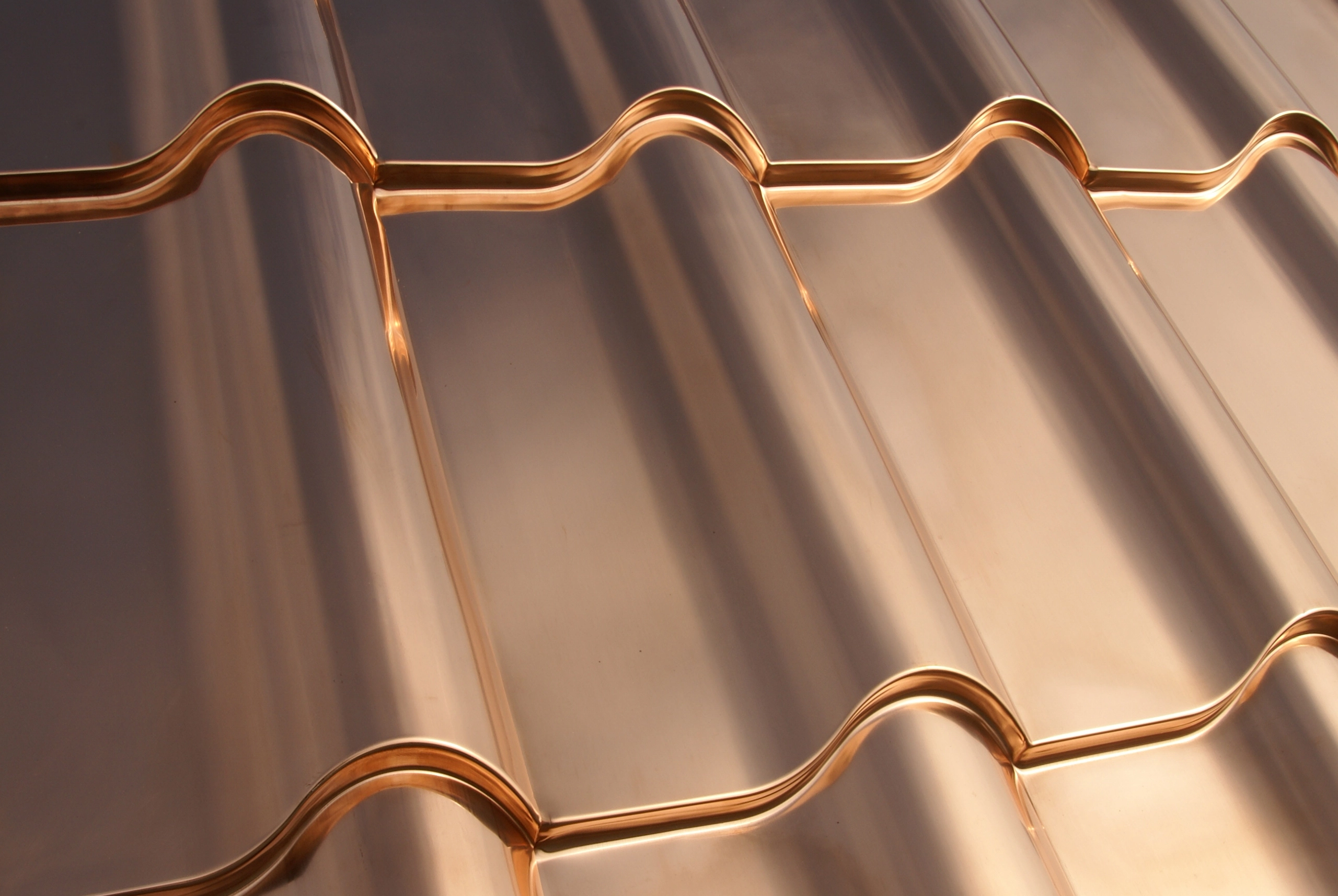
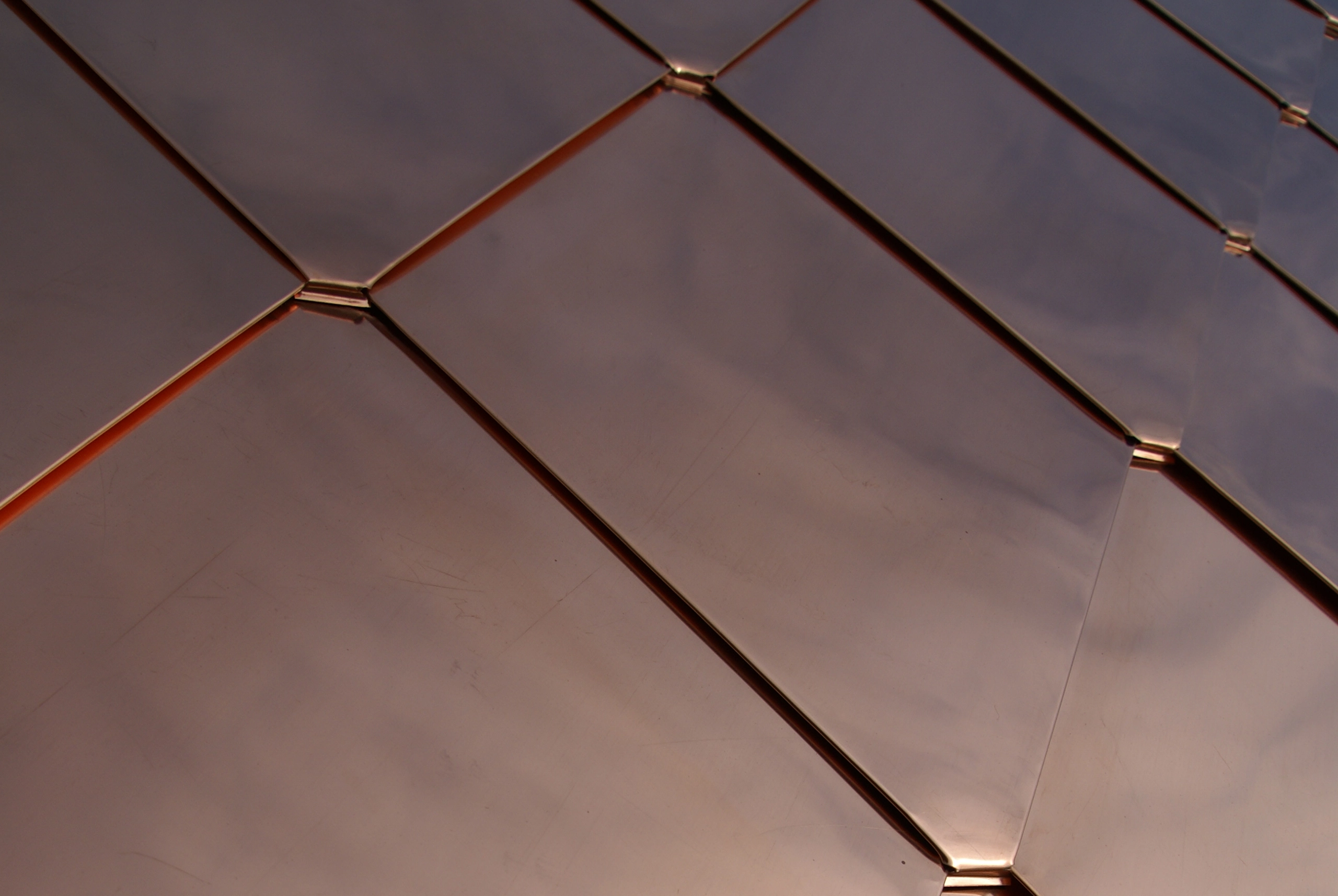
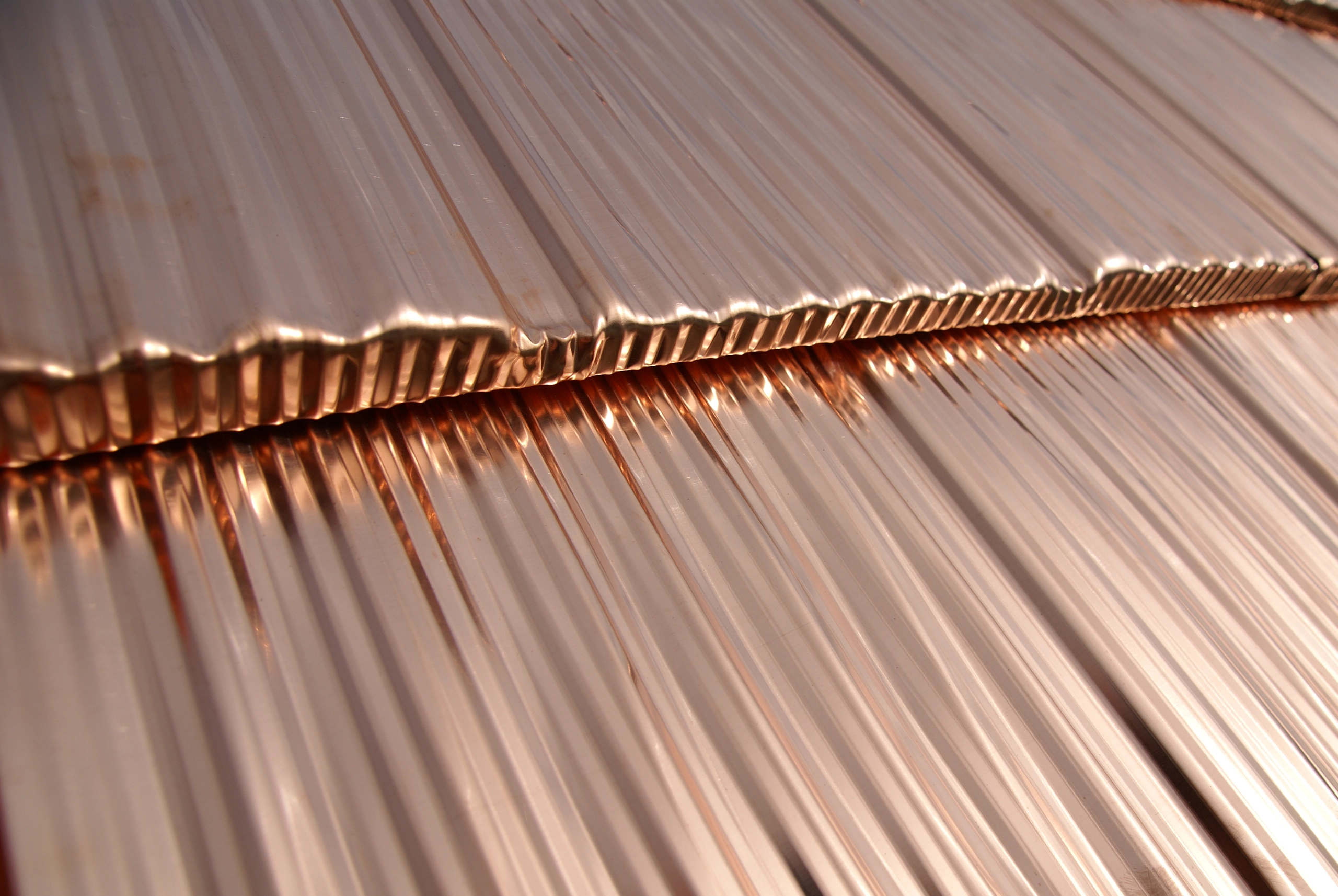
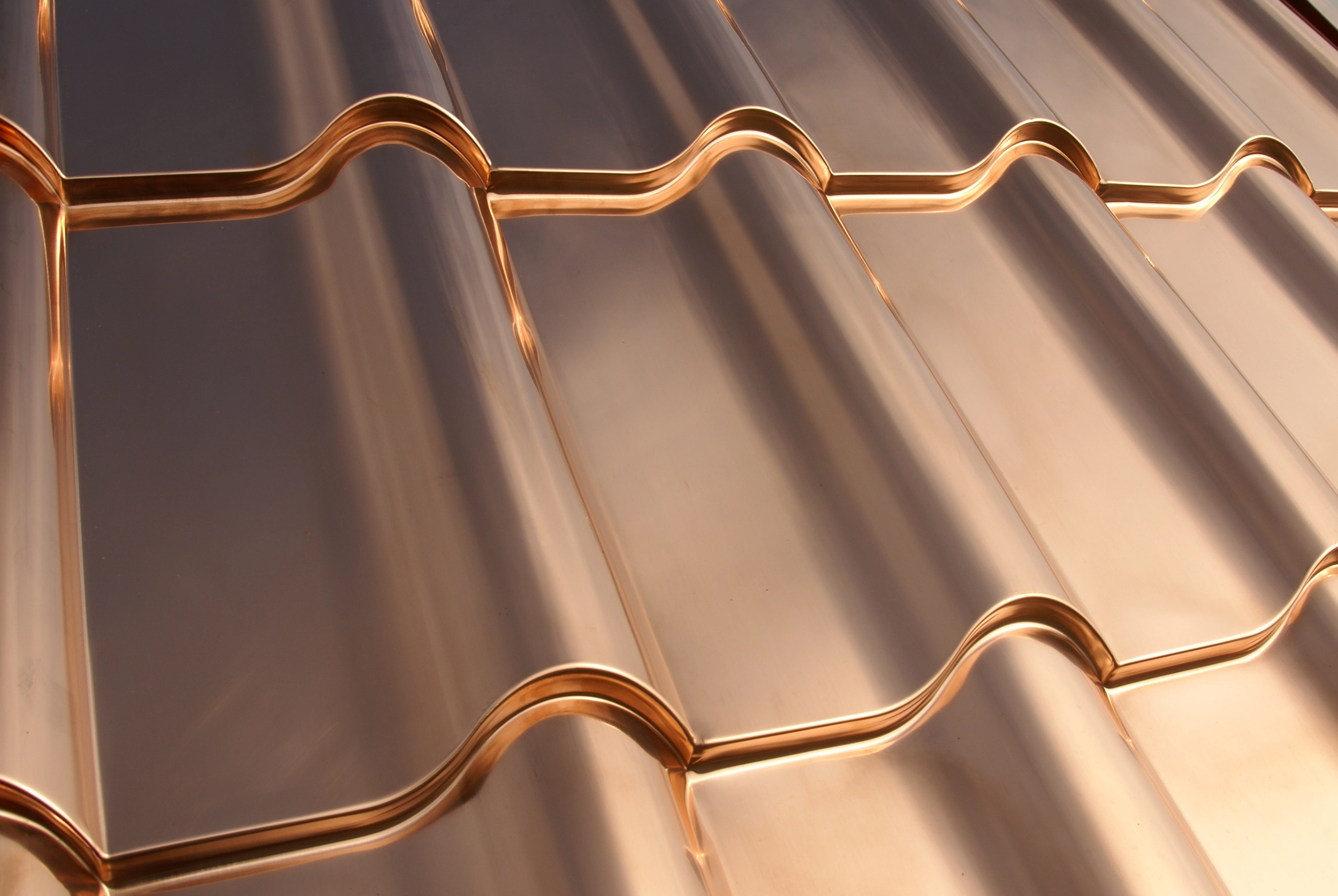
Architectural-grade vertical-rib standing seam in 99.9% pure architectural copper — the industry-standard profile for contemporary residential, civic, ecclesiastical, and architectural commercial roofing. Backed by the Interlock® Lifetime Transferable Warranty.

Interlock® Copper Standing Seam Roofing is the architectural-grade vertical-rib standing seam profile executed in solid Copper Alloy C11000 (ASTM B370) — the same alloy and gauge specification used on civic, ecclesiastical, and monumental architecture across North America and Europe for more than two hundred years.
Overview

What Is Interlock® Copper Standing Seam Roofing?

Interlock® Copper Standing Seam Roofing is the architectural-grade vertical-rib standing seam profile, executed in 99.9% pure electrolytic tough-pitch copper (Copper Alloy C11000) conforming to ASTM B370 — the recognized North American standard for cold-rolled architectural copper sheet. Standing seam is the dominant copper roofing typology for civic, ecclesiastical, and architectural commercial applications worldwide; the vertical-rib geometry with hidden mechanical seams creates the cleanest, most contemporary copper roof expression available, with the same multi-century material performance as Interlock's other solid copper profiles.

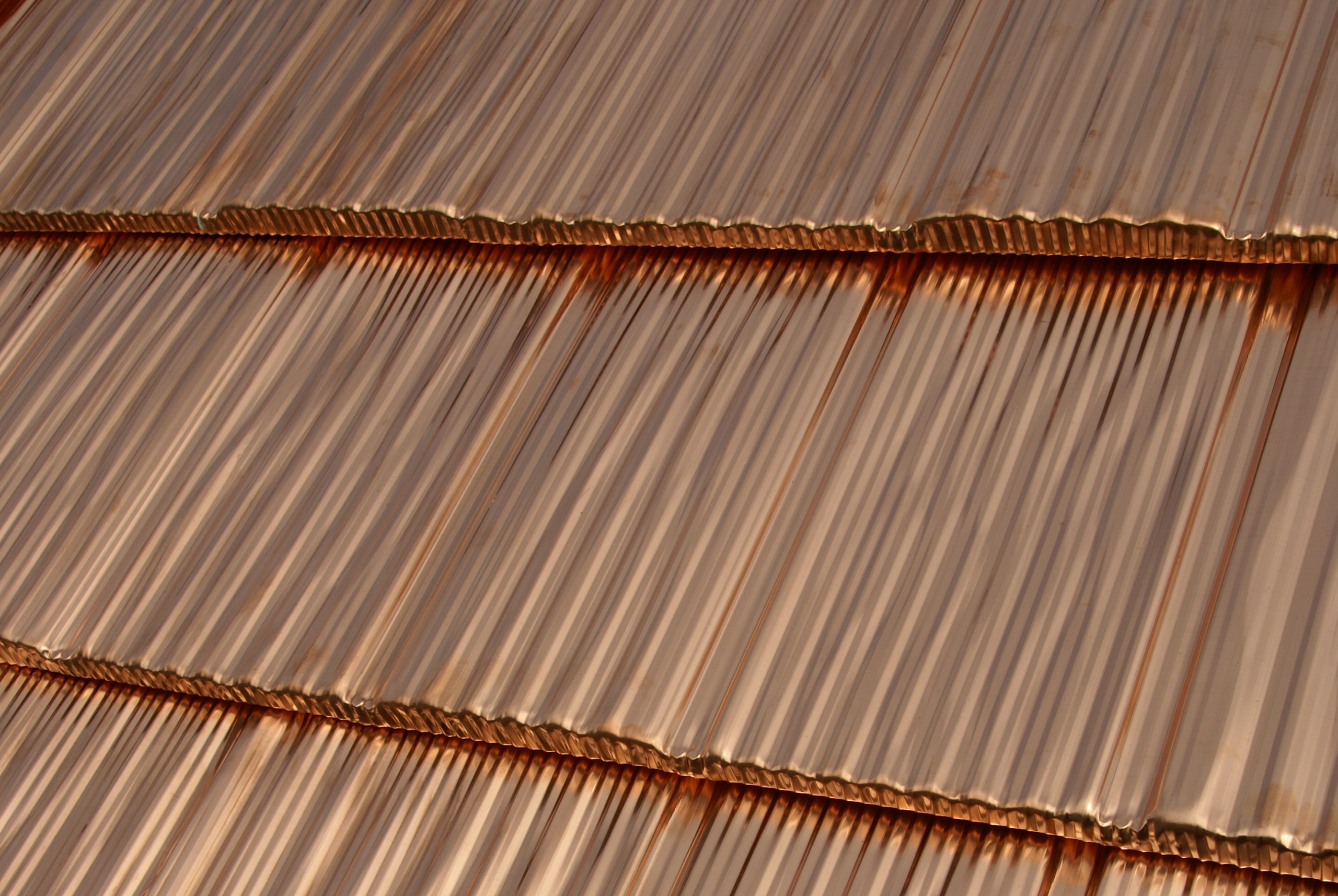
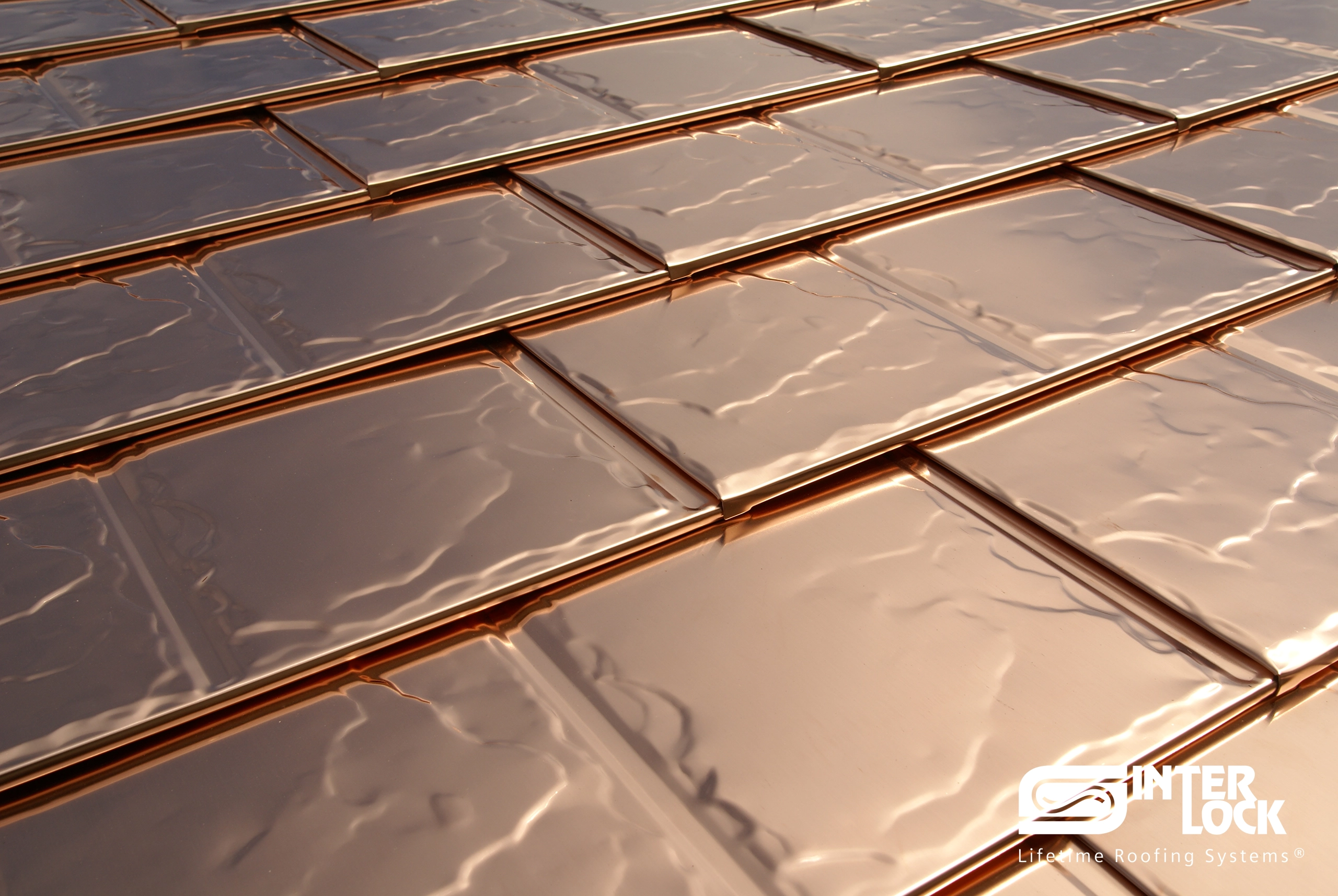
Color is intrinsic to the metal — no PVDF coating, paint film, or applied finish to fail (unlike painted steel standing seam, where the Kynar/PVDF coating becomes the service-life-limiting component). Newly installed Copper Standing Seam panels arrive bright salmon-pink and progress through a documented oxidation sequence: russet bronze within weeks (cuprite, Cu₂O), matte chocolate brown across one to three years (tenorite, CuO), and ultimately the iconic verdigris green-blue patina — a stable copper-sulfate/hydroxysulfate stratum of brochantite, antlerite, and posnjakite that becomes the roof's own self-renewing protective mineral barrier. The same metallurgical process has preserved copper standing seam roofs on civic and ecclesiastical buildings across North America and Europe for more than two centuries.

At approximately 100–125 lbs per square (16 oz or 20 oz architectural copper sheet), structural assessment is recommended for retrofit applications. Solid copper carries an inherent Class A fire rating (copper melts at 1,984°F), UL 2218 Class 4 impact resistance, ASTM E1592 wind-uplift performance, specified under CSI MasterFormat 07 41 13 (Metal Roof Panels), conforming to IBC §1507.4 and IRC §R905.10. Solar-array compatible (the contemporary standing seam typology is the preferred substrate for clip-mounted PV arrays), 100% recyclable at end of service, and backed by the Interlock® Lifetime Transferable Warranty.

Table of Contents

Who It's For

Interlock® Copper Standing Seam for Architects, Specifiers, and Civic Projects

You want the cleanest, most contemporary copper roof expression — the architectural standing seam profile that defines civic, modernist, and contemporary residential design — in a material that will outlast the structure. Interlock® Copper Standing Seam gives you the standing seam aesthetic of civic and ecclesiastical landmarks in a substrate engineered to develop a living patina rather than degrade. Solar-compatible, inherently fire-resistant, and backed by the Interlock® Lifetime Transferable Warranty applied to a material whose documented service life is multi-century.

Interlock® Copper Standing Seam is specified under CSI MasterFormat 07 41 13 (Metal Roof Panels). The substrate is Copper Alloy C11000 cold-rolled to architectural sheet per ASTM B370, supplied in 16 oz (~0.0216") or 20 oz (~0.027") nominal weight. Vertical-rib standing seam geometry with mechanically seamed or snap-lock configurations available (specify project requirements). Performance: UL 790 Class A fire (inherent / non-combustible per ASTM E136), UL 2218 Class 4 impact, ASTM E1592 wind-uplift, IBC §1507.4 / IRC §R905.10 conformance. Sustainability: 100% recyclable, no fluoropolymers, contributes to LEED Materials & Resources credits and applicable Environmental Product Declarations. Solar PV clip-mount compatible without seam penetration. Full panel profile drawings, fastener schedules, and CSI-formatted submittal language available on request.

Interlock® Copper Standing Seam installs via mechanical seaming or snap-lock configurations (project-specified) with stainless steel fasteners throughout to prevent galvanic corrosion. The vertical-rib geometry is the preferred substrate for clip-mounted solar PV arrays — PV racking attaches at the seam without seam penetration, eliminating the warranty-voiding fastener penetration common to other roof types. Copper requires careful detailing for runoff management; incompatible-metal contact must be avoided. Certified Interlock installers receive copper-specific training and technical support. Contact your regional Interlock representative to discuss copper dealer opportunities.

KEY ADVANTAGES

The Interlock® Copper Standing Seam Advantage

Multi-Century Service Life

Copper standing seam carries the only roofing service record measured in centuries rather than decades — the dominant typology on civic, ecclesiastical, and monumental architecture worldwide. The standing seam profile you specify today will be on the building in 2150.

Class A Inherent Fire Resistance

Copper is inherently non-combustible (ASTM E136; melting point 1,984°F) — the strongest fire performance specification available, applicable across civic, institutional, and high-end residential specifications where painted steel standing seam can only achieve Class A through assembly.

Naturally Evolving Patina Finish

Color is intrinsic to copper — no Kynar/PVDF coating to fail (the service-life-limiting component of painted steel standing seam). The roof evolves through documented oxidation chemistry: salmon-pink to russet bronze (weeks), matte chocolate brown CuO (1–3 years), and ultimately verdigris green-blue (brochantite, antlerite, posnjakite). The patina is the material’s self-passivating protective system.

Solar PV Compatible (Clip-Mount, No Penetration)

The standing seam vertical-rib geometry is the preferred substrate for clip-mounted solar PV arrays — PV racking attaches at the seam without seam penetration, eliminating warranty-voiding fastener penetrations that complicate solar retrofit on lower-profile roofing types. Combined with copper’s multi-century service life, the roof outlasts every PV array generation it carries.

UL 2218 Class 4 Impact / 120 mph Wind

Solid Copper Standing Seam carries the highest UL 2218 hail-impact classification (Class 4) and is warranted to 120 mph wind — backed by the inherent strength of solid copper sheet and the mechanical strength of the standing seam joint.

Lifetime Transferable Warranty

Backed by the Interlock® Lifetime Transferable Warranty — applied to a material whose verifiable service life, documented across more than two centuries of civic and ecclesiastical standing seam installations, makes solid copper the most defensible long-term roofing investment in the architectural standing seam category.
Technical Data

Product Specifications

Base Material & Alloy Specification Copper Alloy C11000 (electrolytic tough-pitch copper, 99.9% pure) cold-rolled to architectural sheet per ASTM B370
Panel Gauge & Nominal Weight 16 oz/ft² (~0.0216" / 0.549 mm) or 20 oz/ft² (~0.027" / 0.686 mm) — expressed by weight designation per industry standard
Installed Weight Per Square ~100–125 lbs per 100 sq ft (16 oz or 20 oz copper) — structural assessment recommended for retrofit applications
Hail Impact Resistance Rating Class 4 — UL 2218 (highest classification issued)
Fire Resistance Rating Class A (inherent / non-combustible per ASTM E136; copper melting point 1,984°F)
Wind Speed Resistance — Manufacturer Warranted 120 mph (193 kph) warranted; wind-uplift evaluated to ASTM E1592
Surface Finish System None applied. Copper develops a natural multi-stage atmospheric patina (cuprite Cu₂O → tenorite CuO → verdigris [brochantite, antlerite, posnjakite]) — the material's self-passivating protective system
Panel Size, Weather Exposure & Coverage Geometry Vertical-rib standing seam panels; mechanically seamed or snap-lock configurations available (specify project requirements). Contact your local Interlock dealer for current panel widths, seam heights, and exposure
Material Warranty Program Name Interlock Lifetime Transferable Warranty (Guardian Lifetime Limited Non-Prorated Material Warranty)
Warranty Duration, Ownership Terms & Transferability Lifetime for original registered owner; transferable (one-time) — applied to a material with documented multi-century service life
Recycled Content & End-of-Life Recyclability 100% recyclable at end of service. Architectural copper is routinely fabricated with substantial recycled content per Copper Development Association data
Building Code Conformance & Sustainability Credits Conforms to IBC §1507.4 and IRC §R905.10 (metal roof panels). Contributes to LEED Materials & Resources credits; Environmental Product Declarations available. Solar PV clip-mount compatible without seam penetration
CSI MasterFormat Division & Section Reference 07 41 13 — Metal Roof Panels
Available Colors

Patina Evolution — The Living Finish

Interlock® Copper Standing Seam is offered as a single architectural specification rather than a color palette — because copper is not a finish applied to a substrate; it *is* the substrate. Every panel is roll-formed from 99.9% pure electrolytic tough-pitch copper (Copper Alloy C11000, ASTM B370). Color is intrinsic to the metal: there is no Kynar/PVDF coating, paint film, or organic binder to chalk, fade, peel, delaminate, or fail by UV exposure — a defining specification difference from painted steel standing seam, where the coating becomes the service-life-limiting component. What replaces a fixed color is a documented oxidation sequence — the same self-passivating chemistry that has preserved the standing seam cladding of the Statue of Liberty (1886), the U.S. Capitol Dome (1863), and copper standing seam roofs on civic, ecclesiastical, and monumental architecture across North America and Europe in continuous service for more than two centuries. New Interlock® Copper Standing Seam arrives bright salmon-pink and progresses through measurable stages: russet bronze within weeks as cuprite (Cu₂O) forms; matte chocolate-brown tenorite (CuO) across one to three years; and ultimately the iconic verdigris green-blue — a stable copper-sulfate/hydroxysulfate stratum of brochantite (Cu₄SO₄(OH)₆), antlerite (Cu₃SO₄(OH)₄), and posnjakite (Cu₄SO₄(OH)₆·H₂O) that becomes the roof’s own mineral protective barrier. Patina is not deterioration — it is the engineered service life of the material expressing itself. Because copper is a single specification, not a palette, Interlock provides physical material samples rather than printed swatch cards. Contact your local Interlock dealer to request a solid-copper sample and the full architectural specification sheet.
Material Comparison

Copper Standing Seam vs. Painted Steel Standing Seam vs. Asphalt Shingles

How does Interlock® Copper Standing Seam compare to painted steel standing seam and the alternatives a specifier typically considers for contemporary residential, civic, and architectural standing seam applications? The numbers tell a clear story about substrate longevity, coating risk, and lifetime financial logic.
Interlock® Copper Standing Seam Painted Steel Standing Seam Asphalt Shingles
Lifespan 100-200+ years (documented) 40-70 years (limited by PVDF coating) 15-25 years
Weight ~100-125 lbs/square (16 oz / 20 oz) 100-150 lbs/square 250-350 lbs/square
Fire Rating Class A (inherent / non-combustible) Class A (assembly) Class A (with mat)
Warranty Lifetime Transferable 30-50 year limited (coating) 20-30 year limited
Maintenance Essentially maintenance-free (patina self-passivates) Periodic inspection; coating chalking/fading after 20–30 yr Periodic inspection, re-nailing
Environmental Performance

Sustainability & Energy Efficiency

Interlock Copper Roofing is the most sustainable premium roofing material available — a 100% natural, 100% recyclable solid copper product with no synthetic coatings, no chemical treatments, and no landfill contribution at end of life. Copper’s multi-century service life produces the lowest embodied carbon per year of use of any roofing material on the market. Interlock Copper is certified as a Green Roofing Product, requires zero maintenance throughout its lifespan, and retains full material recovery value when eventually recycled. For architects, developers, and homeowners committed to genuine long-term environmental performance, Interlock Copper Roofing is the definitive sustainable roofing specification.
Aluminum Coils
Interlock Copper may contribute to LEED v4 credits under Materials & Resources (MR) — Recycled Content, and Energy & Atmosphere — Enhanced Energy Performance. Contact your Interlock dealer for LEED documentation support.
Verified Customer Reviews

What Homeowners Say About Interlock Metal Roofing

FAQ

Frequently Asked Questions About Copper Standing Seam Roofing

What is Interlock® Copper Standing Seam Roofing?

Interlock® Copper Standing Seam Roofing is the architectural-grade vertical-rib standing seam profile executed in 99.9% pure electrolytic tough-pitch copper (Copper Alloy C11000) conforming to ASTM B370. Mechanically seamed or snap-lock configurations are available (specify per project). Standing seam is the dominant copper roofing typology for civic, ecclesiastical, and architectural commercial applications worldwide, and is the preferred substrate for clip-mounted solar PV arrays. Every panel is backed by the Interlock® Lifetime Transferable Warranty.
Painted steel standing seam (typically 24–26 gauge Galvalume substrate with Kynar 500 or Hylar 5000 PVDF coating) has a documented service life of 40–70 years — limited not by the steel substrate but by the eventual chalking, fading, and adhesion failure of the PVDF coating. Solid copper standing seam has no applied coating to fail — color is intrinsic to the metal, and service life is documented at 100–200+ years. The trade-off is upfront cost: painted steel is less expensive at installation; copper is the lower 50-year total-cost-of-ownership option.
Yes — and this is one of copper standing seam’s defining specification advantages. The vertical-rib geometry is the preferred substrate for clip-mounted solar PV racking (S-5!, SnapNrack, IronRidge, EcoFasten, and similar systems): clamps attach mechanically to the seam itself without penetrating the panel, eliminating fastener penetrations that void roofing warranties on lower-profile systems. Combined with copper’s multi-century service life, the roof reliably outlasts every generation of PV array it carries — an important consideration for net-zero and sustainability-target projects.
Yes — copper standing seam installation requires copper-specific detailing that steel standing seam does not. Critical differences: stainless steel fasteners throughout (galvanized or carbon steel fasteners cause galvanic corrosion at every contact point); managed runoff to prevent copper-salt staining of masonry, stucco, or limestone below; expansion-joint detailing tuned to copper’s higher thermal expansion coefficient than steel; and incompatible-metal isolation at all interfaces with aluminum, zinc, and galvanized assemblies. Certified Interlock copper installers receive copper-specific training; this is not a category for unfamiliar installers.
Painted steel standing seam: 40–70 years, with service life limited by the PVDF coating (the steel substrate itself lasts longer than the coating in most climates). Solid copper standing seam: 100–200+ years, with service life limited by no applied coating since none exists — the material itself is the protective system. Historic copper standing seam roofs on civic and ecclesiastical buildings across North America and Europe are documented in continuous service for more than two centuries.
No — and this is a common misconception about metal roofing generally. Interlock copper standing seam is installed over solid roof decking and standard underlayment, not over open purlins like agricultural barn roofs. Independent acoustic testing of decked metal roofing assemblies measures rain and hail noise within 1–3 decibels of asphalt shingle assemblies. With standard attic insulation, the interior is acoustically indistinguishable from a conventional shingle roof. Copper actually damps higher-frequency sound slightly better than thinner-gauge painted steel.
Yes — copper standing seam is among the most architecturally appropriate specifications for contemporary residential design. The clean vertical-rib geometry, hidden mechanical seams, and crisp panel lines complement modernist, contemporary, and architectural residential aesthetics. The natural patina evolution adds material depth that aluminum-and-paint products cannot match, and the multi-century service life aligns with sustainability-target projects (passive house, net-zero, LEED Platinum). Verdigris-stage copper is particularly identified with contemporary architectural commercial and civic projects.
Solid copper standing seam typically carries a 2–4× material cost premium over painted steel standing seam, depending on copper commodity pricing and gauge specification (16 oz vs 20 oz). Installation labor is comparable. The premium narrows over a 50-year ownership window once recurring re-coating, re-roofing, and warranty-expiration costs are factored in: painted steel typically requires re-coating or replacement at year 40–60; copper does not. Solid copper also retains substantial commodity salvage value at end of service that painted steel does not.
Yes — solid copper standing seam is the historically dominant specification for civic, ecclesiastical, and institutional roofing. Specify under CSI MasterFormat 07 41 13 (Metal Roof Panels) with the Interlock® material specification (C11000, ASTM B370, 16 oz or 20 oz nominal). The specification accepts mechanically seamed or snap-lock configurations per project requirements. Performance: UL 790 Class A fire, UL 2218 Class 4 impact, ASTM E1592 wind-uplift, IBC §1507.4 / IRC §R905.10 conformance. Lifetime Transferable Warranty applies to public and institutional projects.
The patina evolution is particularly architecturally compelling on contemporary and modernist residential design. The crisp salmon-pink and russet-bronze stages contrast sharply with concrete, stone, wood, and steel exterior materials that define modernist vocabulary, and the mature verdigris green-blue stage — the iconic copper patina — reads as architecturally precise and distinctive on contemporary buildings rather than historicizing. Many contemporary architects deliberately specify copper standing seam specifically *because* of the patina evolution, treating it as a material time-component of the building’s expression.
Share to...