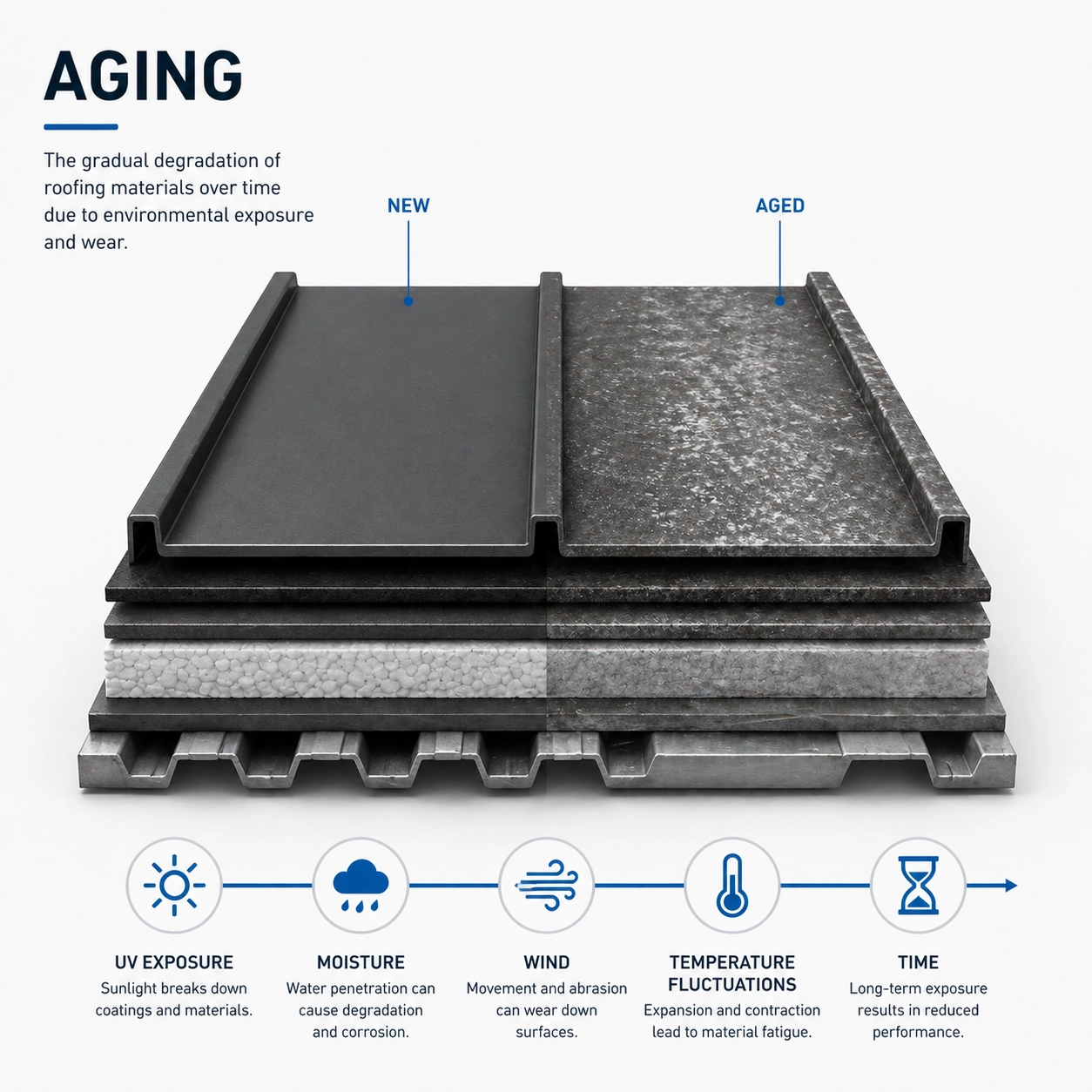
Aging

TL;DR

Aging in roofing refers to the gradual deterioration of roofing materials due to exposure to weather, UV radiation, and environmental factors over time. Understanding aging is crucial because it directly impacts a roof’s water resistance, structural integrity, and lifespan, influencing maintenance needs and long-term performance.

Explanation

Aging in roofing refers to the gradual process by which roofing materials deteriorate or change in physical and chemical properties over time due to exposure to environmental factors. This process affects all components of a roof system, including shingles, membranes, underlayment, flashing, and sealants. Aging is influenced by variables such as ultraviolet (UV) radiation, temperature fluctuations, moisture, freeze-thaw cycles, and airborne pollutants, which collectively impact the roof’s structural integrity and performance.

As roofing materials age, their ability to shed water, resist wind uplift, and maintain proper drainage along slopes, ridges, and eaves can diminish. Common signs of aging include loss of granules on asphalt shingles, cracking or curling at the roof pitch, brittleness, and reduced flexibility in membranes. These changes can compromise the roof’s ability to prevent leaks, manage snow shedding, and withstand wind loads, ultimately affecting the building’s overall envelope. Understanding the aging process is critical for maintenance planning, roof inspections, and determining the remaining service life of a roofing system.

MATERIAL PERFORMANCE INSIGHT
Aging reveals how roofing materials respond to UV exposure, temperature changes, and precipitation over time.

MAINTENANCE PLANNING
Understanding aging patterns helps schedule targeted inspections and proactive repairs, reducing unexpected failures.

WATERPROOFING ASSESSMENT
Aging highlights areas where waterproofing may degrade, allowing for timely interventions to prevent leaks.

VENTILATION EFFECTIVENESS
Aging analysis can indicate if ventilation is sufficient, as premature wear often signals trapped moisture or heat.

Single ratings do not describe the entire roof assembly; testing conditions do not capture every real-world scenario; interpretation should consider climate and installation details

Misreading ratings, overclaiming performance, or using a metric outside the context of the full tested roof assembly

All roofing systems degrade eventually. Materials may become brittle, lose protective coatings, or weaken structurally.
Aging impacts durability, leak resistance, and lifespan. Understanding aging helps homeowners plan maintenance and replacement timelines.
Surface microcracking alters shingle ridge and valley geometry Multiple roof planes show uneven weathering over time Aged roofs exhibit reduced water-shedding at eaves Framing joints may loosen as materials contract and expand Asphalt shingles and EPDM membranes display visible aging effects Common in low-slope commercial roofs exposed to UV and heat

Aging FAQ's

refers to the natural deterioration of roofing materials over time due to weather exposure, UV radiation, and environmental conditions.
Aging impacts durability, leak resistance, and lifespan. Understanding aging helps homeowners plan maintenance and replacement timelines.
All roofing systems degrade eventually. Materials may become brittle, lose protective coatings, or weaken structurally.
Aging is usually understood through product data, field performance, testing, standards, design practice, or inspection findings depending on the term and context.
Aging can be influenced by material choice, installation quality, climate, roof design, maintenance, and how the overall roof assembly is built.
Yes. Some roofing concepts become especially important in climates with heavy sun, moisture, snow, wind, hail, or extreme temperature swings.
Sometimes. In many cases, homeowners notice the effects of Aging through comfort, moisture issues, roof aging, energy performance, or visible wear rather than through the term itself.
They improve or manage it through better material selection, roof detailing, ventilation, drainage, insulation, attachment methods, and adherence to tested or code-aligned assemblies.
Aging should be compared with related concepts carefully because similar terms can refer to different performance traits, testing methods, or design priorities.
Aging should influence a roofing decision when it affects long-term durability, code compliance, weather exposure, energy performance, warranty expectations, or maintenance risk.

Related Terms

Last modified: April 30, 2026 11:10 am
Share to...