
Bonnet roof
TL;DR
Bonnet roof is mainly about roof design. The bonnet roof is often used in hot and humid climates to provide additional protection from the sun and rain. Related topics often include Roof Pitch, Attic.
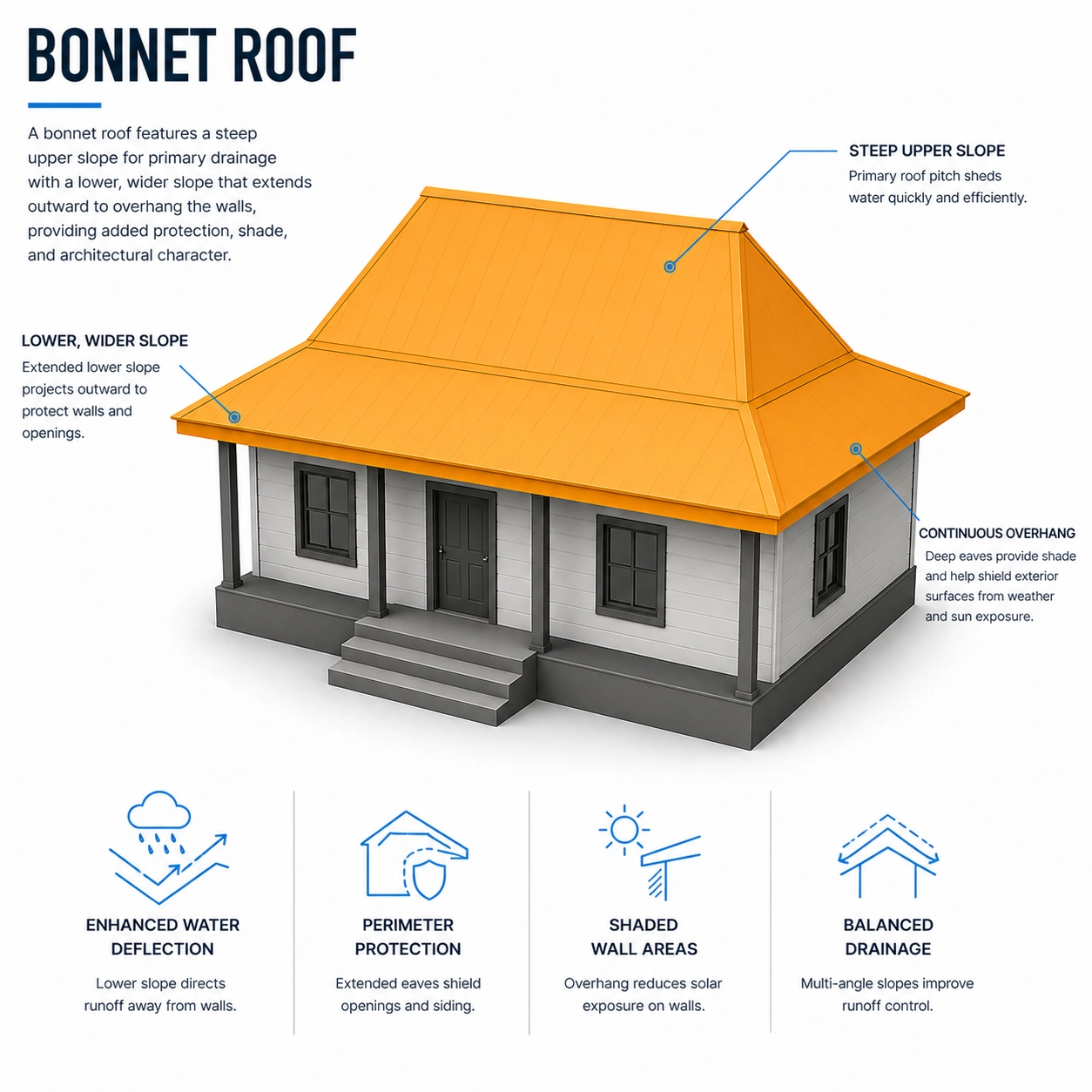
Explanation
A bonnet roof, also known as a kicked-eaves roof, is a type of roof with two slopes on each of the four sides of the building. The upper slope is positioned at a steep angle, while the lower slope has a shallower pitch.
Helps explain drainage behavior and detailing needs; supports better decisions about style, slope, and climate fit; clarifies how roof geometry affects ventilation, snow shedding, and maintenance
Weather performance still depends on detailing, materials, and installation; complex shapes can increase framing and flashing cost; usable attic space and access may be affected
Poor drainage detailing at valleys or transitions; ventilation or insulation design that does not match the roof geometry; higher maintenance at complex intersections
The upper slope is positioned at a steep angle, while the lower slope has a shallower pitch.
The bonnet roof is often used in hot and humid climates to provide additional protection from the sun and rain.
Bonnet roof FAQ's
What is Bonnet roof in roofing?
A bonnet roof, also known as a kicked-eaves roof, is a type of roof with two slopes on each of the four sides of the building.
What does Bonnet roof look like?
What are the benefits of Bonnet roof?
The bonnet roof is often used in hot and humid climates to provide additional protection from the sun and rain.
What are the drawbacks of Bonnet roof?
Potential drawbacks of Bonnet roof can include more complex framing, harder flashing or ventilation detailing, altered interior space, or higher installation cost depending on the design.
Is Bonnet roof a good roof style for rain, snow, or wind?
That depends on pitch, detailing, and material choice, but roof shape strongly influences how water, snow, and wind loads behave. The suitability of a Bonnet roof roof depends on climate, design goals, structural layout, and how the roof will be insulated, ventilated, and finished.
What roofing materials work well on Bonnet roof?
Suitable materials depend on slope, climate, and detailing complexity, but asphalt shingles, metal roofing, and other steep-slope systems are often considered when the geometry and drainage conditions are appropriate.
Does Bonnet roof affect ventilation or attic space?
Yes. Roof shape influences airflow paths, insulation strategies, attic volume, and where intake and exhaust ventilation can be placed.
How does Bonnet roof affect cost?
Roof shape can affect labor, material waste, flashing complexity, framing, and maintenance access. More complex shapes often cost more to build and detail correctly.
The best comparison depends on what you care about most: drainage, usable interior space, weather performance, curb appeal, or construction complexity. Bonnet roof should be evaluated as part of the full roof and building design.
When is Bonnet roof a smart choice for a home?
Bonnet roof is a smart choice when its geometry matches the climate, architectural style, structural plan, and long-term maintenance goals of the building.