
What Is a Skillion Roof? Structure, Design, and Performance
TL;DR Skillion roof Summary
A Skillion roof is a single-sloped roof type characterized by its flat, angled surface, often resembling a shed or lean-to. Its simple geometry promotes efficient water drainage and allows for modern architectural designs with high ceilings or clerestory windows. However, skillion roofs can be more susceptible to wind uplift and require careful waterproofing at joints and edges, especially in areas with heavy rainfall.
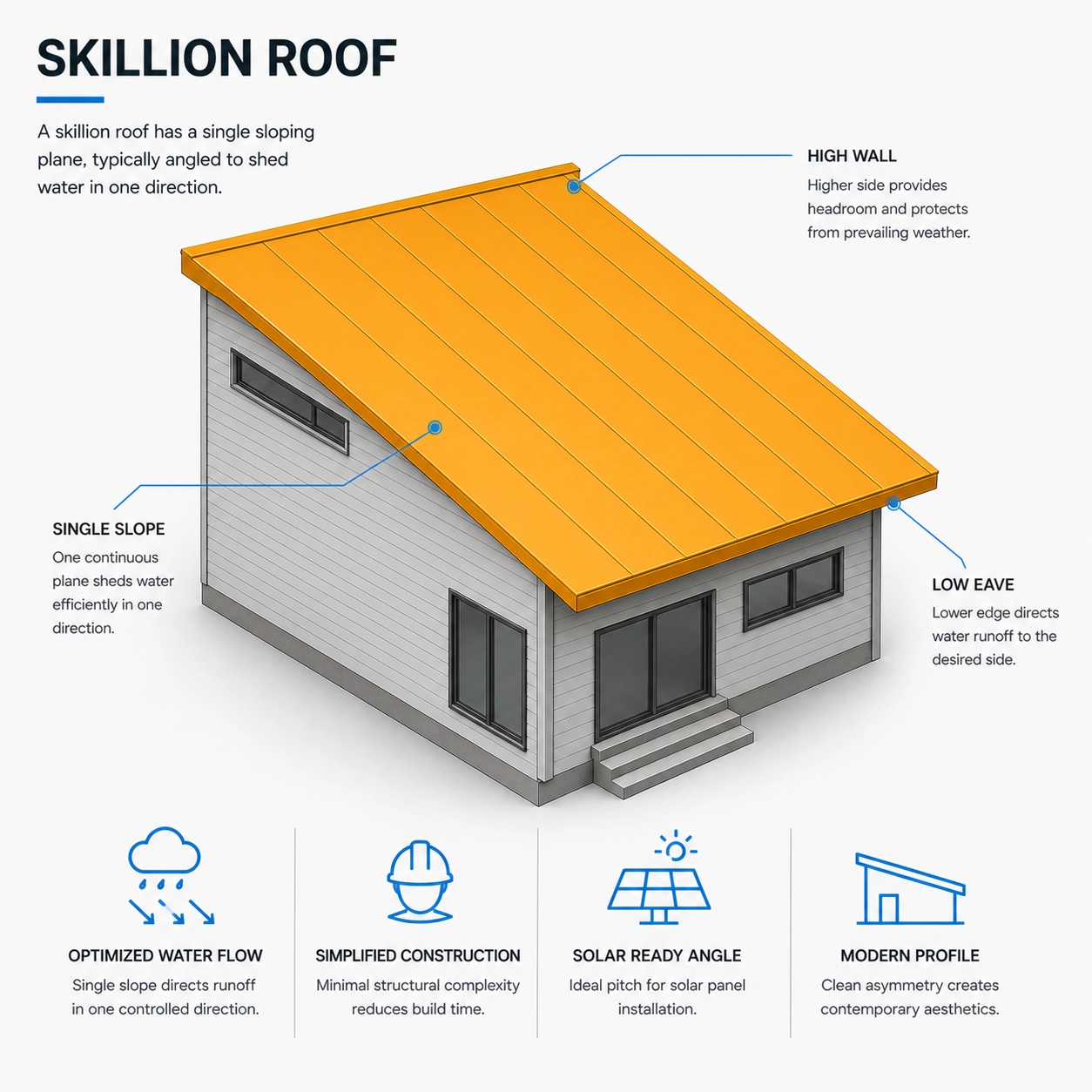
How Skillion Roof Design Influences Drainage, Wind Resistance, and Modern Home Performance
A Skillion roof is a single-sloped roofing system characterized by one flat surface set at a steep or moderate roof pitch, without a central ridge or peak. Unlike gable or hip roofs, a skillion roof consists of a single plane that extends from one eave to the opposite higher wall, creating a distinctive angular profile. The structure is typically supported by rafters or trusses, and the slope can vary depending on design requirements and climatic considerations.
Functionally, the skillion roof excels in water drainage and snow shedding due to its pronounced slope, minimizing the risk of water pooling and structural load from accumulated snow. Its simple geometry enhances structural efficiency, often requiring fewer materials and less complex framing compared to multi-plane roofs. The absence of valleys and ridges reduces potential leak points, contributing to long-term durability.
Skillion roofs are commonly used in modern residential architecture, sheds, and extensions where maximizing ceiling height or creating clerestory windows is desired. They are particularly suited to regions with heavy rainfall or snow, as the single slope efficiently channels water away from the building envelope. The design also allows for flexible orientation to optimize solar panel placement and natural light.
How Skillion Roof Performance Is Evaluated in Roof Design
Skillion roof performance is evaluated by examining several key design and functional criteria that influence its suitability for various building applications. The primary factor is roof slope, which is typically steeper than a flat roof and directly impacts drainage performance, snow shedding, and the ability to resist water ponding. Roofing professionals assess the angle and orientation of a skillion roof to ensure effective water runoff, minimizing the risk of leaks and moisture-related problems. Structural evaluation focuses on the roof’s ability to handle wind loads, as the single-plane design can create uplift pressures; wind resistance is verified through engineering calculations and, where applicable, compliance with local building codes.
In addition to structural and drainage considerations, the performance of a skillion roof is influenced by material selection, insulation, and ventilation strategies. Professionals evaluate how well the roof assembly manages thermal performance and condensation, especially in modern homes where energy efficiency is a priority. The architectural suitability of a skillion roof is also assessed in terms of integration with the overall building design, aesthetic goals, and site-specific factors such as prevailing weather patterns. Cost, maintenance requirements, and potential problems—such as limited attic space or increased exposure to wind—are weighed during the design phase to ensure the roof type aligns with the client’s needs and long-term performance expectations.
Overview & Key Considerations
What Is Skillion roof
Why Skillion roof Matters
Benefits of Skillion roof
SINGLE SLOPE DESIGN
A skillion roof’s single-plane geometry enables efficient water drainage and minimizes the risk of ponding or leaks.
MAXIMIZED USABLE SPACE
The steep pitch and lack of internal ridges allow for increased ceiling height and flexible interior volume beneath the roof.
SIMPLIFIED STRUCTURAL LOADS
The straightforward sloped configuration distributes loads directly to supporting walls, reducing structural complexity and material requirements.
OPTIMIZED SOLAR ORIENTATION
The uniform slope provides an ideal surface for solar panel installation, maximizing exposure and energy capture efficiency.
Limitations of Skillion roof
LIMITED DRAINAGE CAPACITY
The single-pitch design of a skillion roof can lead to rapid runoff but increases risk of overflow during intense rainfall.
WIND UPLIFT VULNERABILITY
The steep, unbroken slope of skillion roofs is more susceptible to wind uplift forces compared to multi-plane roof types.
INSULATION CHALLENGES
Minimal attic space in skillion roofs restricts insulation options and complicates effective thermal and moisture control.
SNOW LOAD CONSTRAINTS
Low-pitch skillion roofs are prone to snow accumulation, increasing structural load and potential for localized failure in cold climates.
Common Skillion roof Problems
INADEQUATE DRAINAGE
Skillion roof geometry often leads to water pooling at the lower edge, increasing leak and overflow risks.
WIND UPLIFT VULNERABILITY
The single-slope design of skillion roofs can create uplift zones, making them more susceptible to wind-driven damage.
SNOW LOAD CONCENTRATION
Snow accumulation on skillion roofs can cause uneven structural loading, increasing the risk of localized sagging or collapse.
STRUCTURAL STRESS POINTS
The lack of opposing slopes in skillion roofs can concentrate stress at wall junctions, leading to cracking or deformation.
Skillion roof Quick Facts
Use Cases for Skillion roof
MODERN HOME DESIGN
Skillion roofs are frequently chosen for contemporary residential architecture to achieve a minimalist, angular aesthetic with efficient water runoff.
RAINWATER HARVESTING
A skillion roof’s single, steep slope is ideal for directing rainwater efficiently into collection systems in regions with moderate to heavy rainfall.
URBAN INFILL BUILDINGS
Skillion roofs are well-suited for narrow urban lots where maximizing interior ceiling height and daylighting is a design priority.
SOLAR PANEL INSTALLATION
The consistent pitch of a skillion roof provides an optimal surface for mounting solar panels at a fixed, energy-efficient angle.