Metal Roofing in Littlefield, Texas — Lifetime Interlock® Aluminum Shingles Installed Locally
Littlefield Metal Roofing Experts Installing Lifetime Interlock® Aluminum Shingles Since 2014
Metal Roofing Built for Littlefield's Heavy Rain, Snow Loads, Windstorms & Lifetime Protection
Interlock Roofing of America—founded in 2014 and the exclusive authorized installer of Interlock® Lifetime Aluminum Roofing Systems in Littlefield, Texas (Lamb County)—is your trusted local metal roofing contractor for roof replacement and re-roofing, delivering heavy-gauge, fire-resistant, energy-efficient cool roofs engineered for snow-shedding and long-term protection; our Interlock Lifetime Roofing System combines the timeless look of slate, cedar shingles, shake, Mediterranean tile, or standing seam with the strength of metal, protected by the Alunar® Coating System and backed by a Lifetime Warranty. Littlefield’s semi-arid climate features hot summers with average highs near 92°F and wide temperature swings, and it receives only about 18 inches of precipitation annually—conditions that make fire-resistant, reflective aluminum roofs ideal for lowering cooling loads and resisting heat, while heavy-gauge construction, superior wind-hold, and snow-shedding profiles guard against occasional winter storms and wind-driven events.
Performance you can measure (all climates)

Weather Resistant
Tested to 193+ km/h (120 mph) winds

Durable
Lifetime-Limited, transferable warranty

Energy Efficient
Reflective cool-roof lowers cooling costs

Freeze–Thaw Durable
Endures ~57 freeze–thaw days a year


Corrosion Resistant
Aluminum won’t rust or corrode
- Authorized Interlock® installer serving Littlefield homeowners and Lamb County properties
- Precision weatherproof seams (profiles: slate, cedar, shake, tile) and mechanical fastening (profile: standing seam) deliver long-term leak protection during wind-driven rain events
- Aluminum panels coated with the Alunar® Coating System (no visible aluminum surface) for durable color retention and corrosion resistance
- Tested to 120+ mph (193+ km/h) to resist severe Panhandle windstorms that impact Littlefield roofs
- Class A fire-rated available to enhance resilience during dry spells and elevated ember risk in Lamb County
- High solar reflectivity and cool-roof performance reduce attic temperatures and lower cooling loads during Littlefield heat waves
- UL 2218 Class 4 impact resistance protects against hail, falling branches, and storm debris common across the Texas High Plains
- Designed to shed occasional snow and limit ice-dam formation during rare freeze–thaw cycles
- Low-maintenance, non-porous finish minimizes organic growth and reduces roof cleaning for rural Littlefield properties
- Durable interlocking panels resist degradation from dust, dirt, and agricultural particulates found in Lamb County
- Solar-compatible roof geometry supports modern bracket-mounted photovoltaic systems
- Fully recyclable aluminum supports sustainable reroofing and reduces long-term environmental impact
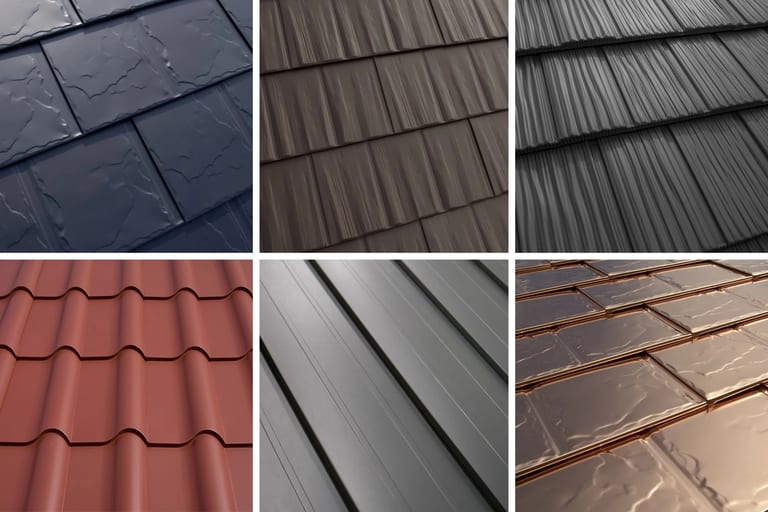
- Premium architectural profiles replicate slate, cedar shake, and tile, with standing seam available for contemporary Littlefield aesthetics
- Precision-engineered panel tolerances and mechanical fastening deliver consistent installation quality and long-term dimensional stability
- Backed by a Lifetime-Limited transferable warranty to protect investment and resale value for Littlefield homeowners
Metal roofing built for Littlefield's climate
Averages (10-yr): ~314 mm rain and 17 cm snow per year, ~3909 sunshine hours, mean 16.4°C, typical daily-max winds ~23 km/h with gusts to 104 km/h, and ~57 freeze–thaw days per year.
- 17 cmavg. snow / year
- 314 mmavg. rain / year
- 57freeze–thaw days / year
- 104 km/hpeak wind gusts
- 3909 hrsannual sunshine
- 16.4°Cmean temperature
Interlock® aluminum roofing is engineered for these conditions — wind-rated to 193+ km/h (120 mph), UL 2218 Class 4 impact-rated, Class A fire-rated, and built to shed snow and resist ice dams and freeze–thaw cracking, backed by a lifetime limited warranty.
Interlock Roofing of America
- Texas
- Phone 1-866-733-5811
- Toll-Free 1-866-733-5811
- Customer Service [email protected]
- www.TexasRoofing.Systems
- Serving Texas since 2014 — 12 years
Interlock Roofing of America is a leading provider of premium metal roofing systems, delivering durable, energy-efficient solutions through a nationwide network of certified local contractors. Built on decades of manufacturing expertise, the company specializes in high-performance aluminum roofing designed to withstand harsh weather conditions while enhancing the long-term value and appearance of residential properties. Rather than operating as a traditional contractor, Interlock Roofing of America partners with carefully vetted, factory-trained installers in local markets. This model ensures homeowners receive both the strength of a proven, engineered roofing system and the personalized service of a trusted local professional. Every project is completed to strict installation standards, maintaining consistency, quality, and long-term performance across all regions. Interlock’s roofing systems are engineered to address the unique climate challenges found across Texas and beyond—including extreme heat, heavy rain, hail, and high winds. With a focus on longevity and low maintenance, their metal roofing solutions offer a sustainable alternative to traditional materials, often backed by comprehensive warranties for added peace of mind. At its core, Interlock Roofing of America is committed to combining advanced manufacturing, certified local expertise, and customer-first service—delivering roofing systems built to last a lifetime.
Get a Free Metal Roof Estimate in Littlefield, Texas
Interlock® Aluminum Roofing — all-climates performance specs for Littlefield, Texas
| Spec / Rating | Climate / Risk Factor + What It Solves |
|---|---|
| Wind resistance: 120+ mph (193+ kph) | Extreme wind, hurricanes, storm uplift: full interlocking attachment helps prevent blow-offs, edge lifting, and panel loss in high-gust events. |
| Fire rating: Class A (with proper assembly) | Wildfire, embers, radiant heat, chimney sparks: non-combustible roof assembly provides the highest residential fire protection rating. |
| Hail resistance: UL 2218 Class 4 | Hail and impact debris: highest impact classification; resists cracking, splitting, and surface loss common with asphalt under hail strikes. |
| Snow & ice performance: interlocking, shedding profile | Heavy snow, freeze-thaw, ice dams: smooth aluminum sheds snow efficiently and the interlocking design helps block water intrusion when melt-refreeze cycles occur. (Final snow-load capacity depends on roof structure and local code.) |
| Corrosion resistance: aluminum (won’t rust) | Salt air, coastal humidity, wet climates: aluminum naturally resists rust and corrosion, reducing long-term failure risk in marine or high-moisture environments. |
| Heat / UV durability: baked-on coating system | High heat, intense sun, thermal cycling: coatings resist UV breakdown and temperature-swing fatigue, slowing fading and surface degradation. |
| Moss / algae resistance: smooth coated surface | Wet shade, organic growth: low-porosity metal surface gives moss/algae less to grip, reducing staining and maintenance. |
| Material: heavy-gauge aluminum roof profiles (Slate / Shake / Shingle / Tile / Standing Seam) | All-season structural stability: lightweight, dent-resistant metal system stays stable through large hot-cold swings and severe weather. |
| Expected lifespan: 50+ years | Long-term durability across climates: avoids re-roof cycles typical of shorter-life materials, even in high-stress environments. |
| Warranty: Lifetime-Limited, non-prorated + 50-year transferable | Lifetime protection + resale value: guarantees long-term material confidence and transfers to future owners. |
Available Profiles in Littlefield, Texas:
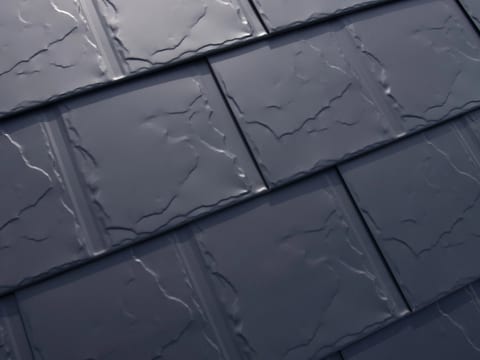
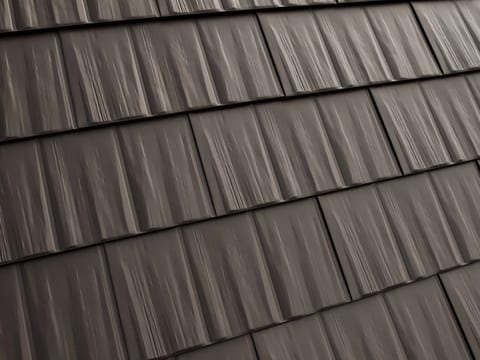
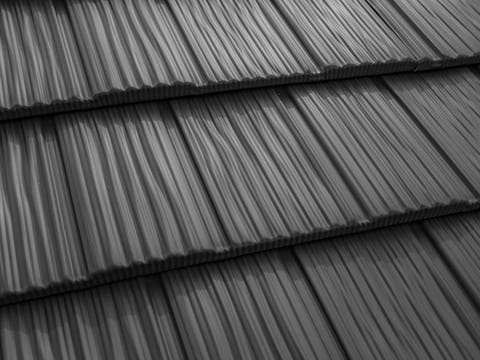
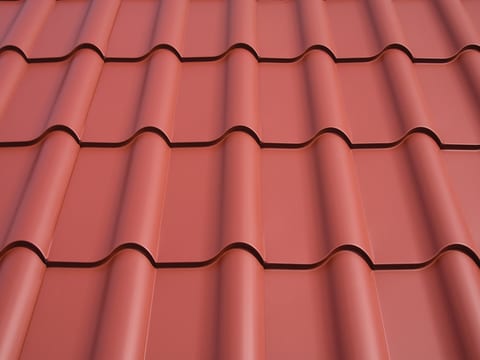
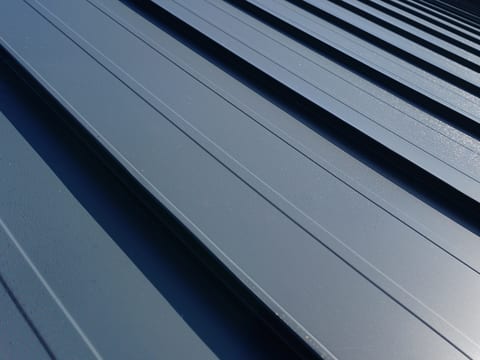
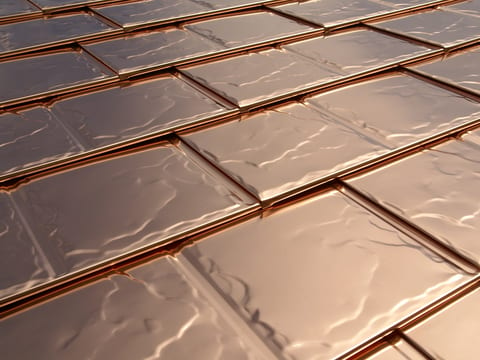
Explore all Interlock® metal roofing systems, or see the Guardian lifetime warranty and independent testing reports.
Completed Interlock® metal roofs near Littlefield, TX
Every marker is a real, anonymized Interlock® aluminum roof completed by a Certified Interlock Installer. Explore verified Interlock® installations near Littlefield, Texas, United States on the interactive project map and photo grid — filter by roof profile (Slate, Cedar Shingle, Shake, Mediterranean Tile, Standing Seam, Solid Copper), colour and year of completion.
Open Littlefield on the interactive project map →Browse all Interlock® projects in Texas →See more Interlock® projects →
Nearby service areas in Lamb County
Interlock® metal roofing is also installed in these communities near Littlefield:
Metal Roofing FAQs for Homeowners in Littlefield
The following metal roofing FAQs are designed specifically for homeowners in Littlefield, Texas. Whether you are building a new home or replacing an existing roof, understanding how roofing materials perform in local weather conditions is essential. From wind and storm protection to fire resistance, hail impact, snow loads, and coastal moisture exposure, Interlock’s Lifetime Aluminum Roofing System is engineered to provide long-term durability, energy efficiency, and peace of mind in Littlefield.
Will an aluminum metal roof hold up through Littlefield's freeze-thaw cycles?
Yes—aluminum actually improves in freeze-thaw conditions because it expands and contracts uniformly without cracking or splitting. Littlefield experiences about 57 freeze-thaw days per year, which is exactly where materials either fail or prove themselves. Aluminum's oxide layer doesn't trap moisture the way asphalt does, so ice buildup releases cleanly. The four-way interlocking panels flex as a system rather than working against each other, and with annual rainfall around 314 mm plus 17 cm of snow, proper drainage removes water before it can refreeze under the panels. That's why Interlock panels have been installed from coastal salt-spray zones to Antarctica without splitting or delamination.
Can aluminum roofing rust in Texas?
Aluminum cannot rust because it contains no iron—that's the fundamental difference from steel. Instead, aluminum develops a microscopically thin oxide layer that seals itself when scratched, blocking further corrosion. On top of that, Interlock panels are coated with Alunar 70% PVDF fluorocarbon finish on both sides, warranted 30 years against fading and chalking. With Littlefield's average wind gusts reaching 104 km/h and 314 mm annual rainfall, that dual protection means your roof stays intact through salt spray, dust abrasion, and moisture cycles that would pit or corrode other metals. The warranty even covers perforation from hail up to 1.5 inches, so corrosion isn't a failure mode you'll encounter.
Do I need to reinforce my roof frame for a metal roof?
No structural reinforcement needed—that's one of aluminum's biggest advantages. The Slate profile weighs about 0.41 pounds per square foot, and even the heavier Tile profile at roughly 0.59 lb/sq ft is about 96% lighter than concrete or clay tile. Most older homes in Littlefield were framed to support traditional roofing loads, so Interlock panels actually reduce strain on trusses and walls. Because the panels are so light, installation over your existing roof is often possible, saving the cost and hassle of a tear-off. Your structural engineer may not even need to review the plans. That weight advantage also means faster installation, lower labor costs, and no surprises during the job.
How does metal roofing handle the wind gusts we get in Littlefield?
Interlock panels are warranted to resist wind speeds up to 120 mph (193 km/h) when installed to specification—well above Littlefield's typical peak gusts of 104 km/h. The four-way interlocking system locks panels together so they work as one unit rather than individual pieces fighting the wind. Each panel's edges hook into its neighbors, distributing wind load across the entire roof instead of concentrating stress on fasteners. That redundancy means even severe wind events don't loosen or peel panels. UL 2218 Class 4 impact rating and a full wind warranty give you documented protection, plus many insurers recognize this and offer premium discounts. Installation matters—your local Interlock Roofing of America crew has been doing this since 2014 and knows exactly how to secure panels in our climate.
Does a metal roof reduce hail damage and insurance costs?
Aluminum roofing achieves UL 2218 Class 4 impact rating—the highest available—and the warranty covers perforation from hailstones up to 1.5 inches. Littlefield's climate data doesn't flag frequent severe hail, but the rating means you're protected even if it occurs, and the warranty is unambiguous about what's covered. Many insurers recognize the durability and offer discounts on homes with Class 4-rated roofing, sometimes recouping your material investment within the first few years of premium savings. Unlike asphalt shingles that dent and lose granules, or wood shake that cracks, aluminum deforms slightly on impact and springs back without permanent damage. Request quotes from your current insurer before installation; several have specific discount programs for impact-rated metal roofs, and some even waive hail deductibles.
Will a metal roof help keep cooling costs down in the Texas heat?
energy-efficient colors on Interlock panels reflect up to 0.55 solar reflectance (measured as Aged Copper Penny), with thermal emissivity of 0.84—meaning they shed summer heat that asphalt absorbs and re-radiates into your attic. Littlefield gets about 3909 sunshine hours annually, so that reflectance translates directly to lower cooling costs, especially from May through September. Cool Roof Rating Council testing validates these numbers. You won't transform your electric bill, but a reflective metal roof runs measurably cooler than asphalt in direct sun, reducing HVAC cycling on the hottest days. Over a 50-year lifespan, that's meaningful savings. Paint colors matter—lighter tones perform better—so discuss energy-efficient options with your installer when choosing your profile and finish.
What warranty comes with Interlock roofing, and how long will it actually last?
The Guardian Warranty is a lifetime limited, non-prorated material warranty for the original owner—covering rusting, rotting, splitting, cracking, curling, and loss of impact resistance. That means if something fails due to material defect, Interlock covers replacement parts at no cost, any time during your ownership. The warranty transfers once to the next owner for 50 years from completion, which adds genuine value if you sell. Littlefield's 57 annual freeze-thaw days and 17 cm snow load test materials rigorously, and Interlock panels have been manufactured since 1998 with a track record from coastal salt-air to Antarctic research stations. No other roofing material matches a truly lifetime, non-prorated warranty—that's the financial confidence behind the aluminum and PVDF coating.
How much upkeep does a metal roof need compared to asphalt or wood?
Metal roofing requires essentially no maintenance—no annual inspections for missing shingles, no moss or algae treatment, no wood sealing. Asphalt shingles need regular inspection and replacement of failed granules; wood shake requires re-staining or oiling every 5–7 years to prevent rot. Aluminum doesn't rot, split, or curl, and the PVDF coating is warranted 30 years against chalking and fading—meaning you might never need to repaint it. Littlefield's 314 mm annual rainfall and 104 km/h wind gusts naturally self-clean the panels, washing away dust and salt deposits. Debris in valleys should be cleared, and gutters maintained (as with any roof), but that's the extent of it. CALGreen verifies Interlock roofing for reduced maintenance, which translates to lower lifetime ownership costs and fewer contractor call-outs over 50 years.
Is a metal roof worth the upfront cost compared to asphalt over 30 or 50 years?
Metal costs more upfront but ends the cycle of tear-offs and replacements that make asphalt expensive over time. Asphalt lasts 15–25 years in Littlefield's climate with its 57 freeze-thaw days and 314 mm rainfall—that's 2–4 replacement cycles over 50 years, each costing $8,000–15,000 including removal, disposal, and labor. Metal roofing costs roughly 2–3 times asphalt initially, but you install it once and transfer the warranty to the next owner. The non-prorated lifetime coverage means if a panel fails in year 20 or year 40, replacement is free. Add energy savings, no maintenance, and transferable resale value, and the arithmetic favors metal by year 35. A 50-year roof that you never replace beats four 15-year roofs that all end up in the landfill.
How long does installation take, and can you install over my existing roof?
Installation typically takes 3–7 days depending on roof size and complexity, and one of metal roofing's biggest advantages is that Interlock panels often install directly over your existing asphalt shingles—eliminating the tear-off, debris removal, and disposal costs. The aluminum weight (0.41–0.59 lb/sq ft) poses no structural concern over old shingles, and the new roof's interlocking system creates a weathertight seal that doesn't depend on the old layer underneath. Your local Interlock Roofing of America team, operating since 2014, will inspect your deck for soft spots and make repairs if needed before installation. A bare-deck install takes longer but is sometimes preferable if damage is found. The timeline depends on weather (Littlefield's 3909 annual sunshine hours favor scheduling), roof pitch, and profile complexity—your installer will give you a firm schedule after the site survey.
Is a metal roof a good choice for Littlefield’s climate?
Yes. Littlefield averages about 17 cm of snow, 314 mm of rain, roughly 57 freeze–thaw days a year, with peak wind gusts near 104 km/h. Interlock® aluminum roofing is wind-rated to 193+ km/h (120 mph), UL 2218 Class 4 impact-rated and Class A fire-rated, and its four-way interlocking panels shed snow and resist ice dams and freeze–thaw cracking — all backed by a lifetime limited, transferable warranty.