
Engineered for Extremes: Interlock Metal Roofing Takes on Antarctica
The SPOT MODULE Project — McMurdo Station to Amundsen-Scott South Pole Station
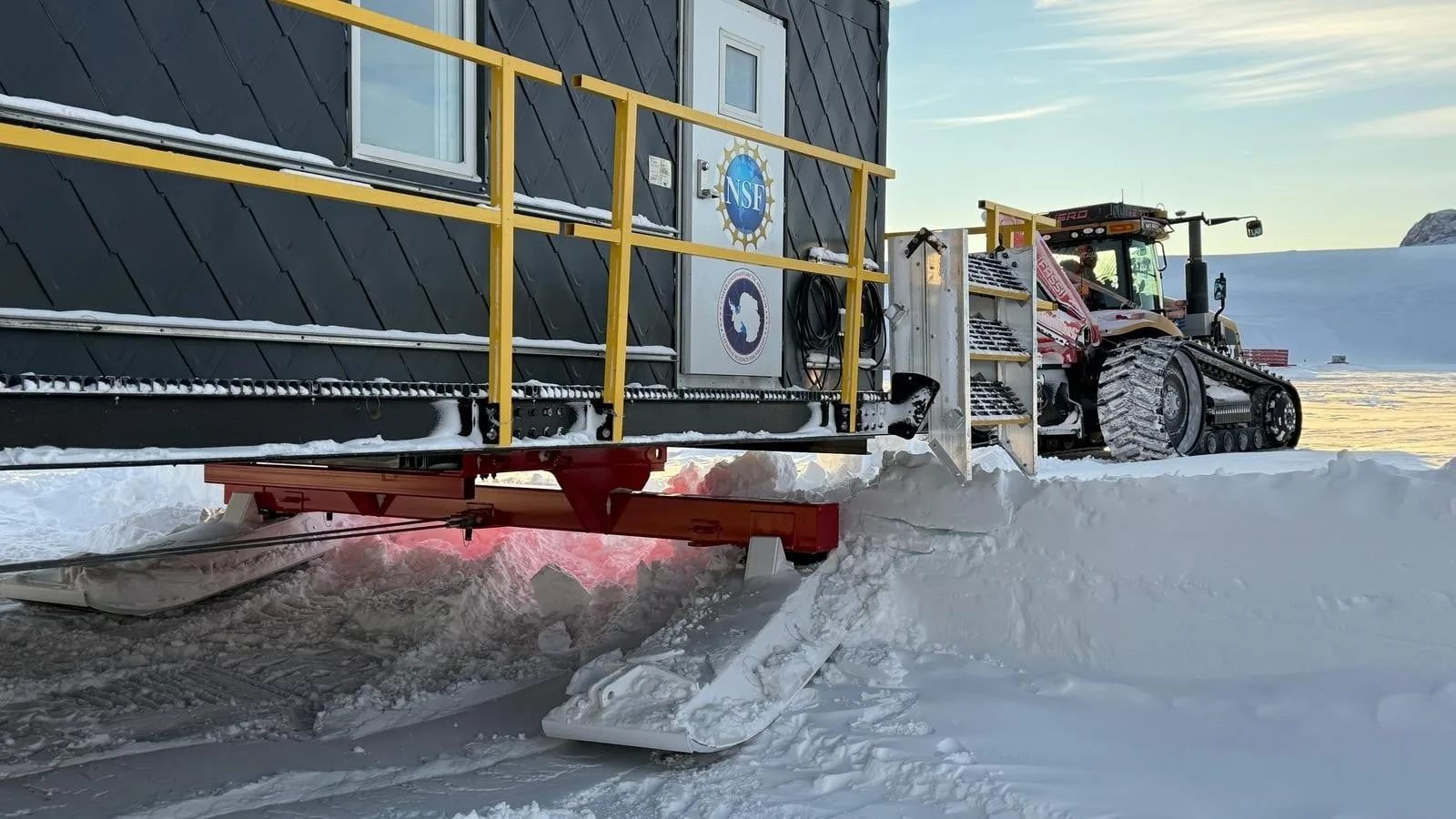
Architects and engineers facing environmental extremes demand materials that perform without compromise. That's precisely why — after a rigorous selection process evaluating exceptional performance in extreme temperatures, high wind resistance and structural reliability, and lightweight, corrosion-resistant aluminum construction — project leaders selected Interlock Metal Roofing to supply both the roofing and siding for a groundbreaking initiative at the bottom of the world: the SPOT MODULE Project, a key part of the U.S. National Science Foundation's (NSF) mission-critical operations in Antarctica.
Set amidst the windswept ice of McMurdo Station, this project is a living example of how innovation, engineering, and endurance come together to support one of the most ambitious scientific missions on Earth.
The Challenge: Housing Support for the South Pole Overland Traverse (SPoT)
In the harshest, coldest environment on the planet, even the most straightforward tasks become logistical puzzles. The South Pole Overland Traverse is a critical logistics mission operated by the United States Antarctic Program (USAP), connecting McMurdo Station on the coast of Antarctica to the Amundsen–Scott South Pole Station, over 1,000 miles inland.
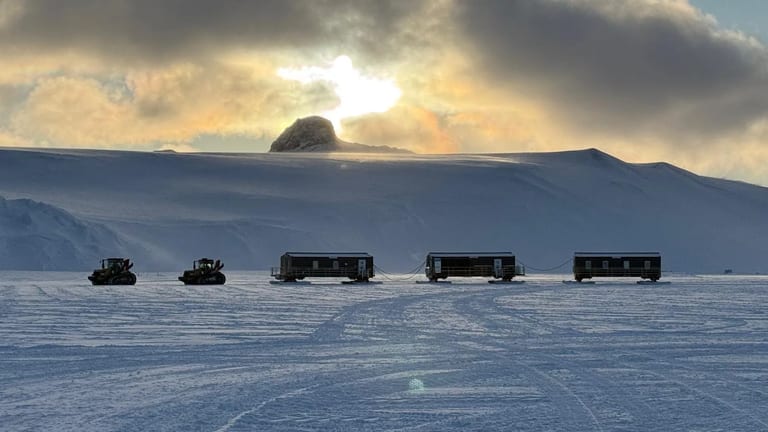
These traverses transport fuel, equipment, and essential supplies via tracked vehicles over glacial terrain. The round-trip takes two months in isolation, and the crews that complete it need reliable, insulated, portable structures to rest, work, and survive. The NSF and USAP set out to design and build six modular structures capable of being towed across the ice, withstanding extreme cold and wind, and sustaining human life in the most remote locations.
The Vision: Modular Arctic-Ready Design by Yardstick Studio
Yardstick Studio Architecture, renowned for its innovative and pragmatic approach to designing in harsh environments, was enlisted by the NSF to engineer a self-contained unit that's as rugged as it is adaptable — serving as a living module, sleeping quarters, and operations base for the SPOT support teams.
"This project is about as atypical as they come. We had to blend mobility, durability, insulation, and modularity into a single cohesive design — and do it with absolute confidence it would survive the Antarctic interior."
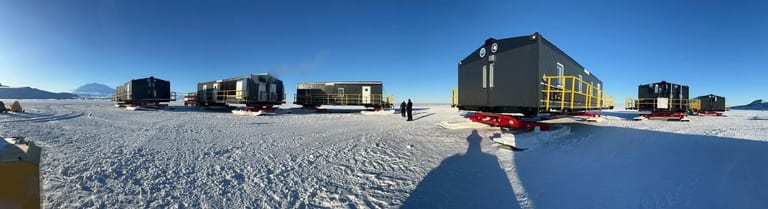
The result: a fleet of six SPOT MODULES, each clad in Interlock's rugged yet refined materials and engineered to endure the unimaginable.
The Material: Interlock Metal Roofing — Built for Earth's Final Frontier
Interlock Diamond Aluminum Shingles (Used as Siding)
Initially designed as ultra-durable roofing shingles, the Black Diamond aluminum panels were reimagined as vertical siding, enveloping the modules in sleek, lightweight armour.
- Finish: black, heat-diffusing fluoropolymer coating
- Benefits: corrosion-resistant, fade-proof, lightweight, low-maintenance
- Bonus: panels interlock to form a weather-tight barrier against snow and ice
Interlock Standing Seam Aluminum Panels (Used as Roofing)
On the roof, Interlock's black aluminum Standing Seam panels were the obvious choice, offering unparalleled performance in high-snow, high-wind environments:
- Hidden fastener system ensures clean lines and no exposed screws
- Durable seam locks prevent wind uplift and snow infiltration
- Coated aluminum resists pitting, oxidation, and UV degradation
In a place where maintenance is nearly impossible, durability isn't optional — it's a requirement.
The Execution: A Real-World Test of Resilience
Designers engineered each of the six SPOT MODULES for easy towing across glaciers and quick reassembly in the field. Inside, the modules maintain livable temperatures, store essential supplies, and provide a vital refuge for NSF crews operating hundreds of miles from the nearest research station.
With Interlock's materials as the skin and armour of these structures, the NSF can count on year-after-year performance — no corrosion, no maintenance nightmares, and no failures in the face of 100 mph winds or −60°F conditions.
From Rooftops to Research Stations
From a suburban home in Seattle to a windswept mobile lab in Antarctica, Interlock Metal Roofing proves that performance knows no bounds. When your mission demands strength, reliability, and durability — whether it's keeping your family safe or supporting scientific discovery in the polar south — Interlock stands ready.
Built to last. Tested at the edge of the Earth. Proven in Antarctica.
Sources
- United States Antarctic Program (USAP)
- Yardstick Studio, LLC Architecture
- Interlock Metal Roofing
If it survives Antarctica, imagine what it does for your home.
Get a Free Quote