

Is It Cheaper to Put a Metal Roof or Shingles?
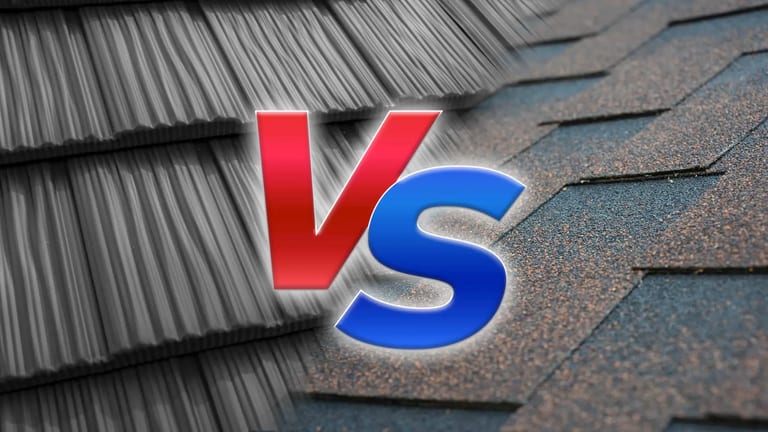
Quick Answer
Shingles are cheaper upfront — typically $120–$400 per square versus two to three times that for premium metal. But over 50 years the comparison flips: an Interlock metal roof lasts 50+ years versus 15–20 for asphalt, so you buy one roof instead of two or three. Add minimal maintenance, and metal is usually the lower total cost of ownership.
Asphalt shingles are cheaper to install today; a metal roof is cheaper to own. Shingles run roughly $120–$400 per square and last 15–20 years, so you replace them 2–3 times over the 50+ years one Interlock aluminum roof lasts — before counting energy savings and avoided repairs.
Ask "which roof is cheaper?" and the honest answer is: it depends entirely on whether you mean cheaper today or cheaper over the time you own your home.
On install day, asphalt shingles are the budget choice — there's no debating it. They're inexpensive to manufacture and quick to lay down, which is why they top most North American homes. A premium metal roof costs more upfront, often two to three times as much per square.
But a roof isn't a one-time purchase you make once and forget — it's a cost you carry for as long as you own the house. Measured that way, the cheaper roof is frequently the more expensive-looking one.
Is it cheaper to install a metal roof or shingles?
Shingles are cheaper upfront — typically $120–$400 per square versus two to three times that for premium metal. But over 50 years the comparison flips: an Interlock metal roof lasts 50+ years versus 15–20 for asphalt, so you buy one roof instead of two or three. Add minimal maintenance, and metal is usually the lower total cost of ownership.
Metal roof vs. asphalt shingles at a glance
| Factor | Aluminum metal roof (Interlock) | Asphalt shingles |
|---|---|---|
| Installed cost | $9–$17 per sq ft | $4–$8 per sq ft |
| Service life | 50+ years (lifetime warranty) | 15–30 years; 15–20 typical |
| Roofs bought in 50 years | 1 | 2–3 |
| Maintenance | Minimal; never rusts, rots or curls | Periodic repair; granule loss, moss |
| Cooling energy | CRRC-rated reflective finish | Absorbs heat |
| Hail and fire | UL 2218 Class 4 impact; Class A assembly available | Varies by grade |
| Insurance | Class 4 discounts common | Standard |
| Resale | ~60–70% of cost recouped; warranty transfers | Lower |
Upfront Cost: Asphalt Is Cheaper, Full Stop
There's no need to spin this: asphalt shingles cost less to install than a premium metal roof. A "square" (100 square feet) of asphalt typically runs about $120–$400 in materials, and installation is fast and widely available. Premium aluminum systems like Interlock generally cost two to three times more per square upfront, reflecting the material, the engineering, and the factory-trained installation. That upfront gap is also why it's worth understanding the different types of metal roofing available, since profile and finish both affect price.
Lifespan: Where the Comparison Flips
The upfront number only tells half the story, because the two roofs don't last anywhere near the same length of time. A typical asphalt roof lasts 15–20 years before it needs replacing — sooner in harsh sun, salt air, or hail country. An Interlock aluminum roof is built to last 50 years or more. That means over the life of one metal roof you would buy, tear off, and dispose of two or three asphalt roofs — a reminder that no roof lasts forever, but some last far longer than others.
Total Cost of Ownership: The Honest Comparison
Stack the lifecycles side by side and the math changes. Three asphalt roofs over 50 years means three sets of materials, three tear-offs, three disposal fees, and three labor bills — and labor and materials inflate every year, so each replacement costs more than the last. One Interlock install, by contrast, is a single cost spread across the same five decades.
"Despite a longer lead time, the investment was worth it: the crew was fast, punctual, and professional... and delivered top-tier quality, value, and lasting performance." — Michele Beckler, Portland, Oregon · Installed August 2022 · Verified GuildQuality review
Worked example: a 2,000 sq ft roof over 40 years
Use the same defaults as our roof cost calculator: architectural asphalt at $6 per square foot, premium interlocking aluminum at $13, a 20-year asphalt life, and 3% a year roofing-cost inflation. The asphalt roof costs about $12,000 today and about $21,700 to replace at year 20 — a 40-year cumulative of roughly $33,700, with a third roof (about $39,100) due at year 40. The aluminum roof costs about $26,000, once.
| Year | Asphalt, cumulative | Aluminum, cumulative |
|---|---|---|
| 0 | $12,000 | $26,000 |
| 20 | $33,700 | $26,000 |
| 40 | $72,800 | $26,000 |
On the re-roof cycle alone the lines cross at the first asphalt replacement. Energy savings, a Class 4 insurance credit and the 60–70% resale recoup all pull the crossover earlier. Change any assumption in the calculator and it re-runs the comparison for your roof.
The Costs Asphalt Hides
Sticker price also ignores what each roof costs you while it's on the house. Asphalt absorbs heat and drives up cooling bills; Interlock's Alunar® finish reflects more of the sun. Asphalt needs periodic repairs, loses granules, and grows moss; aluminum is low-maintenance and immune to rot and rust.
Maintenance and Risk Over the Decades
Every asphalt roof is a maintenance schedule waiting to happen — curling tabs, cracked shingles, sealed flashing, and storm repairs that add up quietly over 15–20 years. An Interlock roof's four-way interlocking aluminum panels have no exposed fasteners to back out and won't curl, crack, rot, or rust, so ongoing upkeep is minimal.
When asphalt is the better choice
Honest comparison cuts both ways. Asphalt is the right call if you expect to sell within about five years in a market that doesn't price a premium roof; if the roof is on a low-value outbuilding, garage or rental where a 15-year horizon is the whole plan; if the budget can't stretch to the higher first invoice and financing isn't attractive; or if the building is temporary. A premium architectural shingle, properly installed and ventilated in a mild climate, can also reach the upper end of its 30-year range — the example above uses 20 years because that is what most North American climates deliver. If you're staying put, in a climate with hail, wildfire ember exposure, coastal salt, heavy snow or summer heat, the case for metal strengthens on every one of those lines.
So, Which Is Cheaper?
If you're selling next year, asphalt is cheaper. If you're staying — or want to hand the next owner a roof they'll never replace — metal usually wins on total cost of ownership once you count lifespan, energy, maintenance, and insurance. That total-cost logic is also the heart of why an Interlock metal roof is a great investment rather than just a purchase. For the full numbers, see how much a metal roof costs and is a metal roof worth it.
Frequently Asked Questions
Is it cheaper to install a metal roof or shingles?
Shingles are cheaper to install — about $120–$400 per square versus 2–3× for premium metal. Over 50 years, metal is often cheaper to own because it isn't replaced every 15–20 years.
How long does each roof last?
Asphalt shingles typically last 15–20 years; an Interlock aluminum roof is built to last 50 years or more — roughly two to three asphalt lifespans.
How much does a metal roof cost compared to shingles over 40 years?
On a 2,000 sq ft roof at calculator defaults ($6 vs $13 per sq ft, 20-year asphalt life, 3% inflation), asphalt runs about $33,700 by year 20 and $72,800 by year 40 with replacements; the aluminum roof is about $26,000 once.
When does asphalt make more sense than metal?
When you'll sell within a few years in a market that doesn't reward a premium roof, on a low-value or short-horizon building, or when the higher first invoice is out of reach. For a long-term home in a demanding climate, the math favours metal.
Why choose metal if it costs more upfront?
Because total cost of ownership favors it: one install instead of 2–3, low maintenance, possible insurance discounts, and a transferable lifetime warranty.
Does a metal roof really save on energy?
It can. Metal reflects more of the sun than dark asphalt, and Interlock's Alunar® colors are CRRC-rated (initial solar reflectance up to 0.44, thermal emittance 0.83 to 0.86). Actual savings depend on climate, color, insulation and ventilation.
What hidden costs does asphalt have?
Repeated tear-offs and disposal, periodic repairs, granule loss and moss, higher cooling bills, and fewer insurance discounts — costs that accumulate across each 15–20 year cycle.
Is the metal roof's value transferable when I sell?
Yes. The Guardian Lifetime Limited Warranty transfers once to a second owner for 50 years from completion, making the roof a documented asset at resale.
Explore Interlock Metal Roofing
Last updated September 3, 2026