

Best Roofing for Minneapolis's Climate: What Actually Lasts
An objective, data-backed look at what actually survives Minneapolis's snow, wind, freeze-thaw and hail — measured against 91 real Interlock installs and 45 verified Minneapolis reviews.
91 Interlock roofs installed in Minneapolis · 45 verified local reviews · 4.42★ average rating · installing here since 2004
What's the best roof for a home in Minneapolis?
An impact-rated aluminum metal roof (UL 2218 Class 4). It is the most resilient option against Minneapolis's snow, wind, freeze-thaw and hail, lasts the life of the home, and over 40–50 years typically costs less than replacing asphalt two or three times.
Minneapolis's climate is a roof stress-test
Minneapolis gets cold, snowy winters with heavy snow load, ice dams and severe freeze–thaw, high wind off the plains and lakes, and a real summer hail risk. Roofs here are hit from every direction across the year.
How we evaluated the options
This guide isn't a sales page dressed as advice. Materials are ranked against the specific threats Minneapolis actually presents, using three inputs: Interlock’s live project record for Minneapolis (91 completed roofs, 45 verified reviews), published third-party standards (UL 2218 Class 4, ICC-ES ESR-1790, Florida FL7263), and regional climate data. Where a trade-off exists (upfront cost, for example), it is stated plainly.
How the main roofing options compare in Minneapolis
| Roof type | Hail | Freeze-thaw | Wind/storm | Moisture/moss | Lifespan | Relative cost |
|---|---|---|---|---|---|---|
| Asphalt shingles | Poor | Poor | Fair | Poor | 15–20 yrs | $ |
| Aluminum metal (impact-rated) | Excellent | Excellent | Excellent | Excellent | Lifetime (50+ yrs) | $ |
| Steel metal | Good* | Excellent | Excellent | Good | 40–50 yrs | $ |
| Concrete / clay tile | Fair | Fair** | Good | Fair | 40+ yrs | $ |
| Cedar shakes | Fair | Poor | Fair | Poor | 20–30 yrs | $ |
*Steel can dent under large hail and its coatings can eventually corrode. **Tile can crack under hard freeze-thaw and is heavy. Category is only a starting point — a specific product's tested ratings (impact class, wind rating, fire class) are what actually perform.
Why impact-rated aluminum wins in Minneapolis
Snow & ice dams. Metal sheds snow and resists the ice-dam meltwater that rots decking under asphalt through Minneapolis winters.
Wind & hail. Four-sided interlocking panels are warranted to 120 mph, and the aluminum carries a UL 2218 Class 4 impact rating for summer hail.
Freeze-thaw. Aluminum won't crack or shed granules through the region's hard freeze-thaw.
Interlock's aluminum system is lightweight (it often installs right over an existing roof) and is Class A Fire Rated Available as a tested assembly, backed by a lifetime limited, 50-year transferable warranty and code-recognized under ICC-ES ESR-1790 and CCMC 10475-R. The honest caveat: it costs more upfront than asphalt, and no roof is completely hail- or storm-proof — the case is durability and total cost over decades.
Local proof: Interlock in Minneapolis
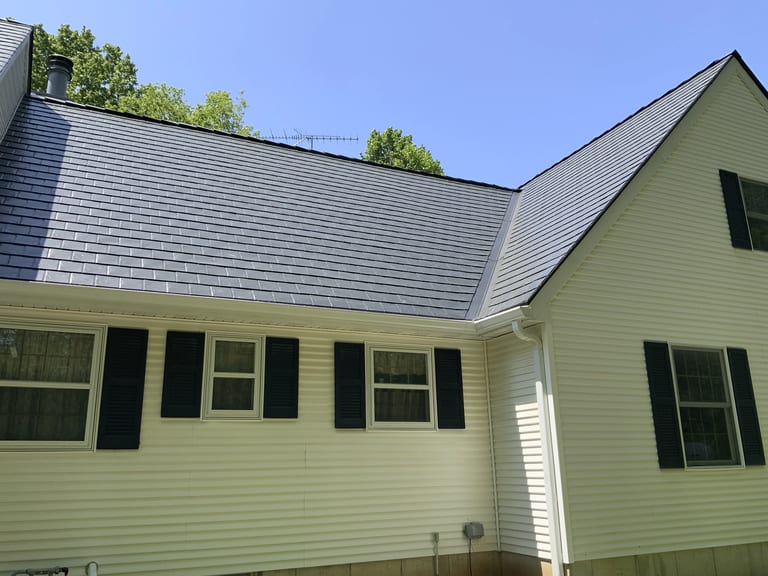
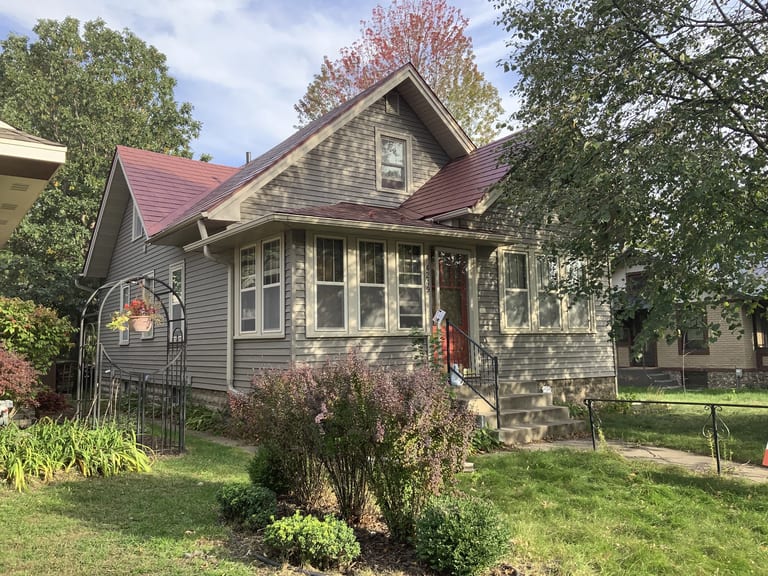
This isn't theoretical here. 91 Interlock roofs installed in Minneapolis · 45 verified local reviews · 4.42★ average rating · installing here since 2004.
The most-installed profile in Minneapolis is Slate, drawn from Interlock's live Minneapolis project record. Browse more in the photo gallery or read verified reviews.
What Minneapolis homeowners say
“They provided me and my wife excellent advice and the work crews were extremely quick in the execution of their work, working during our regular work hours, and having excellent communication during the entire process.”
— Jordan B. and Kate P., Minneapolis, 2021 · ★★★★★
What a lifetime roof really costs in Minneapolis
Upfront, an aluminum roof costs more than asphalt — that's the honest trade-off. Over the life of the home the math inverts. Asphalt in Minneapolis's climate typically needs replacing every 15–20 years, so a 40–50 year horizon means paying for two or three asphalt roofs (plus tear-off and disposal each time) against one aluminum roof installed once. On top of that, the reflective Alunar® cool-roof coating can trim summer cooling load, an impact-resistant roof may earn an insurance credit, and a transferable lifetime warranty carries resale value. Lowest sticker price and lowest lifetime cost are rarely the same roof.
Maintenance, warranty and what to expect
Aluminum is close to maintenance-free: it won't rust, rot, curl, or shed granules, and its smooth surface gives moss and debris little to grip. Practical upkeep is simple — keep gutters and valleys clear so water and embers have nowhere to collect. Because the panels interlock on all four sides and are light, they can often go over an existing roof deck, and the Guardian warranty is a lifetime-limited, 50-year transferable coverage — it moves to the next owner if you sell. See the full range of profiles and finishes across Interlock's metal roofing systems.
The insurance angle
Roofing choice affects insurance two ways in Minneapolis: many insurers offer premium credits for impact-resistant (Class 4) roofs, and older asphalt roofs are increasingly paid out at depreciated value rather than replacement cost. A lifetime metal roof can move you to the better side of both — see the Insurance Information Institute for general guidance.
This is general information, not insurance advice — confirm any credit and your coverage with your own broker.
Minneapolis metal roofing FAQ
Common questions about roofing for Minneapolis's climate.
What is the best roof for a home in Minneapolis?
For Minneapolis's snow, wind, freeze-thaw and hail, an impact-rated (UL 2218 Class 4) aluminum metal roof is the most resilient choice. Asphalt is cheapest upfront but the least durable here.
Is a metal roof worth it in Minneapolis?
Usually yes — it lasts decades longer, stands up to Minneapolis's climate, may earn an insurance credit, and over 40–50 years often costs less than replacing asphalt two or three times.
How long does a roof last in Minneapolis?
Asphalt commonly lasts 15–20 years in Minneapolis's climate (often less); quality aluminum roofing is built to last the life of the home with a lifetime, transferable warranty.
Does a metal roof help with insurance in Minneapolis?
Often. Many insurers give premium credits for impact-resistant (UL 2218 Class 4) roofs, and a Class A fire-rated assembly can matter in fire-exposed areas. Confirm specifics with your broker.
Sources
- Interlock — Technical Specifications & Code Approvals — ICC-ES ESR-1790, UL 2218 Class 4 impact, Florida Product Approval FL7263, CCMC 10475-R
- Interlock — The Guardian 50-Year Transferable Warranty
- Interlock verified homeowner reviews (GuildQuality)
- Metal Roofing Alliance — North American metal roofing association
- Cool Roof Rating Council (CRRC) — third-party solar reflectance ratings
- NOAA National Centers for Environmental Information — U.S. Climate Normals
- Insurance Information Institute — roofing & homeowners-insurance guidance
Explore Interlock Metal Roofing
Last updated July 28, 2026 · Written by Scott Plumptree, Director of Marketing, Interlock Metal Roofing · Ranked using Interlock's live Minneapolis install and GuildQuality review data plus third-party certification standards (UL 2218 Class 4, ICC-ES ESR-1790, CCMC 10475-R).