
Extreme Roofing: Interlock Selected for Antarctic Science Base
Quick Answer
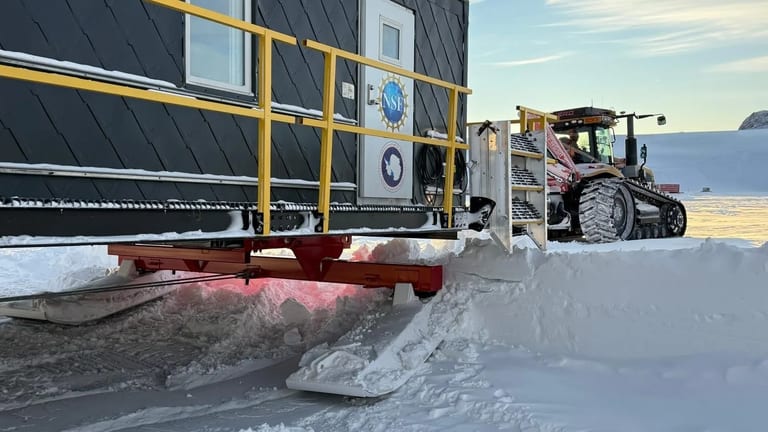
Interlock Metal Roofing was selected for the U.S. National Science Foundation’s SPOT MODULE Project, a research module deployed via the South Pole Overland Traverse from McMurdo Station, Antarctica. Interlock’s aircraft-grade aluminum and Alunar® coating were chosen to withstand −60°F temperatures, sustained winds over 100 mph, and relentless UV — conditions no residential climate comes close to. The same system that survives Antarctica is what protects Interlock homeowners across North America.
When the U.S. National Science Foundation needed roofing for a research module bound for Antarctica, it chose Interlock. The aluminum system endures −60°F cold, 100+ mph katabatic winds, and extreme UV, then survived a 995-mile overland traverse to its site — the ultimate proof that a roof built for the South Pole will protect any home.
No home in North America will ever face what this roof was built for — and that's exactly the point.
When you build in the harshest environment on Earth, every material choice is a matter of survival. That's why Interlock Metal Roofing was selected as part of the U.S. National Science Foundation's SPOT MODULE Project — a research module destined for the Antarctic interior, where a roof failure isn't an inconvenience but a genuine danger. The same aircraft-grade aluminum strength that protects a polar research station is what goes on an Interlock home, the same engineered strength behind every Interlock system.
This is the story of how an Interlock roof earned a place on the most extreme building site on the planet — and what that means for the roof over your own head.
Why was Interlock chosen for an Antarctic research station?
Interlock Metal Roofing was selected for the U.S. National Science Foundation's SPOT MODULE Project, a research module deployed via the South Pole Overland Traverse from McMurdo Station, Antarctica. Interlock's aircraft-grade aluminum and Alunar® coating were chosen to withstand −60°F temperatures, sustained winds over 100 mph, and relentless UV — conditions no residential climate comes close to. The same system that survives Antarctica is what protects Interlock homeowners across North America.
The Challenge: Building for Antarctica
Antarctica is the coldest, windiest, and one of the most UV-intense places on Earth. The SPOT MODULE had to function at operating temperatures around −60°F, withstand the katabatic winds that scream off the polar plateau at over 100 mph — far beyond the 120 mph wind rating Interlock's residential systems are tested to — and endure months of relentless ultraviolet radiation reflected off the ice. There is no maintenance crew on call and no hardware store for hundreds of miles, so every component had to be chosen to perform flawlessly for decades with zero intervention. Roofing materials that crack in the cold, corrode, or peel under UV were non-starters. The bar wasn't "durable" — it was "survives the South Pole."
The Solution: Interlock Metal Roofing
Interlock's aircraft-grade aluminum roofing met that bar. Aluminum doesn't grow brittle and fracture in extreme cold the way some materials do, and it can't rust or corrode. The Alunar® PVDF coating, engineered to hold its finish against punishing UV, keeps the panels intact where ordinary coatings would chalk and fail. And the four-way mechanical interlock — with no exposed fasteners for wind to catch — gives the roof the wind resistance an Antarctic deployment demands. For the U.S. National Science Foundation, those weren't marketing claims; they were the performance characteristics the mission required, and Interlock delivered them.
The Design: Modular Innovation
The SPOT MODULE was conceived as a modular structure, prefabricated and then transported across the continent to its destination. That meant the roof had to be installed before the module ever reached its site and then survive being hauled across the ice — vibration, flex, and impact included — without a single panel loosening or a seam opening. Interlock's interlocking panel system, mechanically locked into a continuous surface, is uniquely suited to exactly that kind of stress, holding together as one rigid, sealed assembly through transport and deployment alike.
The 995-Mile Traverse
Reaching the interior of Antarctica isn't a delivery — it's an expedition. The module traveled via the South Pole Overland Traverse, a roughly 995-mile journey that takes more than 40 days, with the structures dragged across the polar ice from McMurdo Station deep into the continent. The roof endured the entire crossing exposed to the elements and the constant mechanical stress of the traverse, and arrived intact and watertight. Few products of any kind are ever tested this severely; an Interlock roof passed.
Engineered for Cold, Wind, and UV
Each of Antarctica's threats maps to an Interlock strength. Against cold: aluminum stays tough and dimensionally stable where other materials embrittle. Against wind: the four-way interlock and concealed fasteners present no edge to lift, the same design that resists 120 mph winds on homes. Against UV and moisture: the Alunar® coating and corrosion-proof aluminum shrug off radiation and damp that would degrade lesser roofs — the same properties that make it ideal for salt-air coastal homes. It's one system, proven against the planet's extremes.
Why This Matters for Your Home
Here is the takeaway for any homeowner: the conditions your roof faces — summer heat, winter storms, hail, coastal salt, decades of sun — are a fraction of what an Interlock roof endured in Antarctica. The exact same engineering, materials, and warranty that protected a National Science Foundation research module are what go on a residential Interlock roof, with an expected 50–75 year service life. When a roof has been chosen for the South Pole, the question isn't whether it can handle your climate — it's why you'd settle for anything less.
Frequently Asked Questions
What is the SPOT MODULE Project in Antarctica?
The SPOT MODULE Project is an NSF / USAP initiative that built six modular shelters for the South Pole Overland Traverse — a 995-mile resupply route between McMurdo Station and the Amundsen-Scott South Pole Station. Interlock Metal Roofing provided both roofing and siding for all six modules.
Why was Interlock chosen for this extreme environment project?
Interlock won the selection on six criteria: performance to −60°F, 100+ mph wind resistance, structural reliability, lightweight aluminum construction, corrosion resistance, and a proven track record in harsh climates. No other residential roofing system met all six.
What is the Alunar® Coating System?
Alunar® is Interlock's proprietary PVDF coating. It reflects UV, holds color and gloss for decades, and protects the aluminum panels — a key reason the system performs in both extreme cold and intense polar sun.
How does Interlock roofing perform in extreme cold?
Interlock's aluminum panels and Alunar® coating maintain integrity at −60°F without becoming brittle or cracking, and their smooth, interlocking surface sheds snow rather than letting it build up.
How does Interlock handle extreme winds?
The 4-way interlocking design locks each panel on all four sides with no exposed fasteners, resisting 100+ mph winds. The system is tested and warranted to 120 mph — Category 2 hurricane strength.
How are the modules transported without damaging the roof?
Six modules are towed 995 miles across glacial terrain on a 40+ day journey. The lightweight aluminum panels and interlocking system stay fully intact under that stress — not a single panel failure.
How long do these roofing systems last?
Interlock systems carry an expected lifespan of 50–75 years in normal conditions and are backed by a Lifetime Limited transferable warranty. Aluminum will not rust, rot, or degrade like steel or asphalt, and the Alunar® coating keeps its color for decades.
Why aluminum over steel for extreme conditions?
Aluminum is pound-for-pound stronger than steel, about one-third the weight, and won't rust or corrode — ideal for an isolated, fully maintenance-free service life in the harshest environment on Earth.
Are Interlock systems compatible with solar panels?
Yes — especially Standing Seam. Because the roof lasts a lifetime, it outlives the solar array, so you never remove panels for a mid-life re-roof.
What Interlock profiles are available for homes?
Slate, Cedar Shingle, Shake, Mediterranean Tile, and Standing Seam — in heavy-gauge aluminum or premium copper, all backed by the Lifetime Limited Warranty.
Explore Interlock Metal Roofing
Last updated June 9, 2026