

The Pros and Cons of a Metal Roof: An Honest 2026 Breakdown
Quick Answer
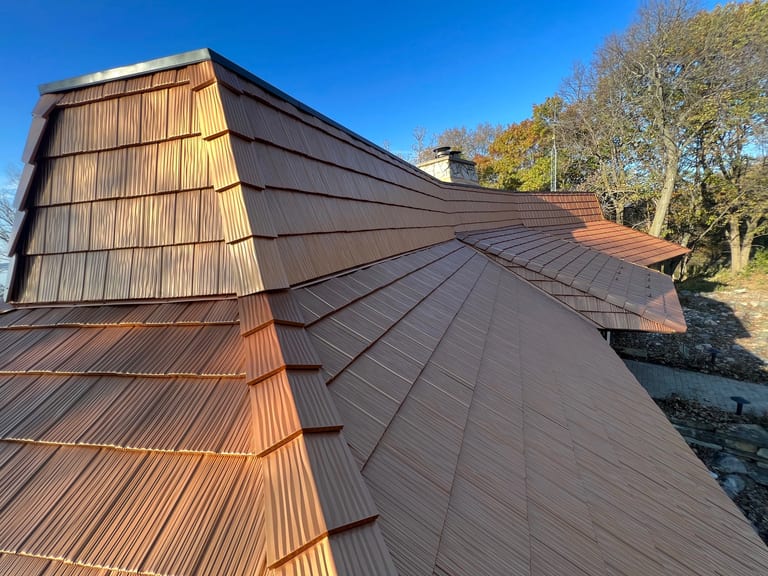
The main cons of a metal roof are a higher upfront cost, the need for a certified installer, possible oil canning on flat-pan profiles, and future color-matching of repairs. The pros are a 50-75 year lifespan, Class 4 impact and Class A fire ratings, 120 mph wind resistance, energy savings, and a transferable Lifetime Warranty.
The Honest Summary
A quality metal roof costs meaningfully more up front than asphalt shingles, needs an experienced installer to do right, and — on certain flat-pan profiles — can show subtle waviness called oil canning. In exchange, you get a roof engineered to last 50-75 years, shrug off hail and 120 mph winds, reflect more of the sun than dark asphalt, and (in most cases) never need replacing again. Whether that trade is worth it depends on how long you plan to stay in the home and how much you value not re-roofing every 15-20 years. Our companion piece, Is a Metal Roof Worth It?, works the lifetime math in detail.
Metal Roof Pros and Cons at a Glance
Here's the honest two-column view before we unpack each point.
Cons — comparison
- 50-75 year lifespan — often a genuine "last roof" purchase: Cons: Higher upfront cost than asphalt shingles
- Class A fire and UL 2218 Class 4 impact resistance (the top hail rating): Cons: Requires an experienced, certified installer — not every roofer qualifies
- Tested to 120 mph winds; concealed-fastener 4-way interlocking panels resist uplift: Cons: Some flat-pan profiles can show oil canning (minor surface waviness)
- Reflective Alunar 70% PVDF finishes lower attic heat and can trim cooling bills: Cons: Color-matching a future repair can be tricky as finishes weather
- Lightweight aluminum won't burden the structure and won't rust in coastal salt air: Cons: Fewer qualified crews means scheduling can take longer
- Low maintenance and roughly 100% recyclable at end of life: Cons: Higher financing amount up front, even if lifetime cost is lower
- Transferable Lifetime Warranty supports resale value: Cons: Not the cheapest option if you plan to move within a few years
The Pros — With Real Proof Points
These aren't slogans; each one ties to a testable specification.
- It can genuinely be your last roof. Asphalt shingles typically need replacing every 15-20 years. A premium aluminum roof is engineered to last 50-75 years and is backed by a transferable Lifetime Warranty — which is why we describe it as "Never Re-Roof Again." Over that window, that can mean skipping two or three full asphalt tear-offs.
- It handles severe weather. Interlock panels carry a UL 2218 Class 4 impact rating — the highest tier for hail resistance — a Class A fire rating, and are tested to 120 mph winds. The concealed-fastener, 4-way interlocking design means there are no exposed screws to back out or gaskets to dry and leak over time.
- It can lower your energy bills. Reflective Alunar 70% PVDF finishes bounce solar radiation instead of absorbing it, reducing attic heat gain and easing the load on your air conditioner in summer. See how the system supports efficient roofing.
- It's lightweight and won't rust. Aluminum panels weigh a fraction of concrete tile or slate, so they don't stress the structure — and unlike steel, aluminum won't rust, making it a strong choice for coastal homes.
- It's low-maintenance and recyclable. No annual sealing, no granule loss, no moss-prone shingles. And at the very end of its long life, aluminum is roughly 100% recyclable rather than landfilled.
The Cons — Told Straight
A balanced decision needs the downsides in full. Here they are.
- 1. Higher upfront cost. This is the real one. A premium metal roof can cost two to three times what a basic asphalt job does at the point of purchase. The counterargument is total cost of ownership — one metal roof versus multiple asphalt replacements — but that only matters if you stay long enough to bank the savings. If cash flow up front is the constraint, that's a legitimate reason to pause.
- 2. It needs an experienced, certified installer. Metal roofing is an installation-driven product. Concealed-fastener systems, flashing details, and thermal-movement allowances all have to be done correctly, and a general shingle crew doing its first metal job is a real risk. There are simply fewer qualified installers, which can also mean longer lead times. Always verify manufacturer certification and work with a certified installer before signing.
- 3. Oil canning on some flat-pan profiles. Oil canning is the subtle waviness you sometimes see across broad, flat metal panels — most associated with wide flat-pan standing seam. It's a cosmetic characteristic, not a defect or a leak, but it can bother some homeowners in the right light. Textured, striated, or shingle-style profiles are far less prone to it. If a dead-flat look matters to you, discuss profile choice openly with your rep.
- 4. Color-matching future repairs. If a panel is ever damaged years down the road, a brand-new replacement panel may not perfectly match the slightly weathered finish of the surrounding roof. Premium PVDF finishes fade very slowly and evenly, which minimizes this, but it's worth knowing — keep a few spare panels from your original batch if you can.
Noise and Lightning: Two Myths Worth Clearing Up
Two "cons" come up constantly that don't survive scrutiny.
- Noise. Installed over solid decking and underlayment — as any quality residential metal roof is — an aluminum roof is no louder in the rain than asphalt shingles. The tin-roof-on-a-barn sound comes from metal over open purlins with no deck beneath. We cover the acoustics in full in Are Metal Roofs Loud When It Rains?
- Lightning. A metal roof does not attract lightning. Metal is non-combustible, so if anything it makes a strike safer by dispersing energy without igniting.
So, Are Metal Roofs Worth It?
For a homeowner planning to stay put, wanting to buy once, and valuing storm resilience and energy performance, the pros clearly outweigh the cons — and a metal roof can add to resale value. For someone selling within a couple of years on a tight budget, asphalt may make more financial sense; our Metal Roofing vs. Asphalt Shingles comparison lays out that decision. The honest answer is that the right roof depends on your timeline, not just the product. If you'd like a straight, no-pressure assessment of whether metal fits your home and plans, request a free quote and we're happy to talk it through.
Frequently Asked Questions
What is the biggest downside of a metal roof?
The higher upfront cost. A premium metal roof can run two to three times an asphalt job at purchase. The offset is a 50-75 year lifespan that replaces multiple asphalt cycles — but that only pays back if you stay in the home long enough to capture the savings.
Are metal roofs worth the extra cost?
For homeowners planning to stay long-term, usually yes. Over 50-plus years a single metal roof can replace two or three asphalt roofs, while adding storm resistance, energy savings, and resale value. For someone moving within a few years on a tight budget, asphalt may make more sense.
Are metal roofs loud when it rains?
No. Installed over solid decking and underlayment, an aluminum roof is no louder than asphalt shingles. The loud 'tin roof' sound comes from bare metal over open framing with no deck beneath. See our dedicated noise article for the full explanation.
What is oil canning and should I worry about it?
Oil canning is slight surface waviness that can appear on broad, flat metal panels — most common on wide flat-pan standing seam. It's cosmetic, not a defect or leak. Textured and shingle-style profiles are far less prone to it, so profile choice largely controls it.
Do metal roofs need a special installer?
Yes, effectively. Concealed-fastener systems, flashing, and thermal-movement details must be done correctly, so a manufacturer-certified installer matters far more than with shingles. There are fewer qualified crews, which can also lengthen scheduling — always verify certification before signing.
Can you match the color if a metal panel is damaged later?
Usually closely, not always perfectly. A new panel may differ slightly from surrounding panels that have weathered for years. Premium PVDF finishes fade slowly and evenly to minimize this, and keeping a few spare panels from the original batch is the best insurance.
Do metal roofs attract lightning?
No. A metal roof does not increase the likelihood of a lightning strike. Because metal is non-combustible, it can actually make a strike safer by dispersing the energy without igniting, unlike some other roofing materials.
Who should NOT get a metal roof?
Homeowners planning to sell within a couple of years, or those whose budget can't absorb the higher upfront cost, may be better served by asphalt. A metal roof rewards owners who plan to stay and want to buy once — its value builds over decades, not months.
Explore Interlock Metal Roofing
Last updated July 11, 2026