

Are Metal Roofs Loud When It Rains? Debunking the Noise Myth
Quick Answer
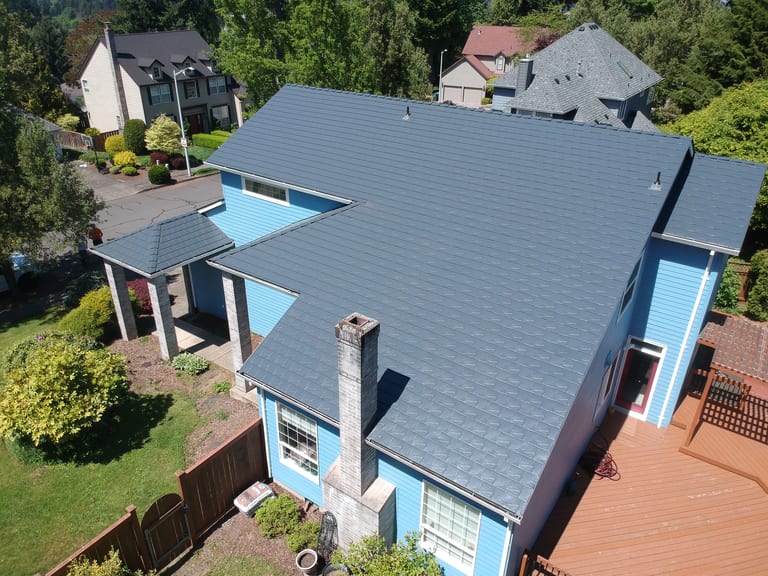
No. A residential metal roof installed over solid decking, a layer of underlayment, and a properly insulated attic is about as quiet inside your home as asphalt shingles. The "loud metal roof" impression comes from thin bare panels on barns and sheds, which have no deck, insulation, or finished ceiling to muffle the sound.
The Short Answer: No, a Modern Metal Roof Is Not Loud in the Rain
If quietness is the one thing holding you back from considering metal, you can cross it off the list. On a properly built home, the surface material you see from the street is only one thin layer in a multi-layer assembly engineered for a finished living space. That assembly—not the metal itself—is what determines how much rain noise ever reaches your ears.
Independent measurements of interior sound transmission have found that metal, asphalt, and tile roofs perform within a few decibels of one another once each is installed over a standard decked-and-insulated roof. A few decibels is a difference most people simply cannot perceive from the couch. So when you compare a real metal roof to the shingles you already live under—something we dig into in our metal roofing vs. asphalt shingles guide—the noise question effectively disappears.
Why the Noise Myth Exists in the First Place
Almost everyone who believes metal roofs are loud is picturing the same thing without realizing it: a barn, shed, carport, or agricultural building. And in that specific context, they're not entirely wrong—those structures really can be loud in a downpour.
The reason is construction, not the metal. On an old barn or a utility shed, thin corrugated or exposed-fastener panels are screwed directly onto open purlins—spaced wooden or steel framing members with nothing but air behind the panel. There is no solid roof deck, no underlayment, no insulation, and no finished ceiling underneath. When rain hits a thin panel stretched over an empty air cavity, the panel vibrates like a drumhead and the sound echoes straight into the open space below. That is the noise people remember, and it gets unfairly pinned on every metal roof. A residential system is a completely different animal.
What's Actually Between the Rain and Your Ears
On a properly built home, sound from rainfall has to pass through several dampening layers before it ever reaches you:
- The metal panel or shingle itself — on a quality interlocking system this is a rigid, contoured aluminum profile, not a floppy flat sheet. The stone-like texture, formed shape, and 4-way interlock stiffen the panel so it doesn't resonate.
- Solid roof decking — typically 1/2" or thicker plywood or OSB sheathing covering the entire roof. This continuous surface absorbs and deadens impact rather than letting it echo.
- Underlayment — a synthetic or felt membrane between the deck and the metal that adds another dampening layer and eliminates any panel-to-deck rattle.
- The attic air gap and insulation — the single biggest sound buffer in the system. Batts or blown insulation muffle sound the same way they trap heat.
- The ceiling and drywall of your finished living space — the final barrier between the attic and the room you're sitting in.
Stack all of that together and the eardrum-level difference between metal and asphalt is negligible. It's one of many reasons metal earns its place on any honest list of metal roof pros and cons.
Open-Frame Barn vs. Residential System: A Side-by-Side Look
The table below shows why the same material can be loud in one setting and quiet in another. The metal doesn't change—everything behind it does.
Open-Frame Barn / Shed vs. Residential Metal Roof System — comparison
- Panel type: Open-Frame Barn / Shed: Thin, flat exposed-fastener sheet · Residential Metal Roof System: Rigid 4-way interlocking aluminum profile
- Roof deck: Open-Frame Barn / Shed: None — panel spans open purlins · Residential Metal Roof System: Solid plywood / OSB sheathing
- Underlayment: Open-Frame Barn / Shed: None · Residential Metal Roof System: Synthetic underlayment layer
- Air cavity behind panel: Open-Frame Barn / Shed: Large, open, echoing · Residential Metal Roof System: Sealed against a solid deck
- Attic insulation: Open-Frame Barn / Shed: None · Residential Metal Roof System: Full batt or blown insulation
- Finished ceiling below: Open-Frame Barn / Shed: None — open rafters · Residential Metal Roof System: Drywall ceiling of living space
- Result in rain: Open-Frame Barn / Shed: Drum-like, amplified · Residential Metal Roof System: Comparable to asphalt shingles
Read across any row and the pattern is clear: the residential column adds a solid, sound-absorbing barrier exactly where the barn has open air.
What About Hail, Wind, and Heavy Storms?
The same physics apply to hail. On an open-frame structure, hail on a bare panel is genuinely loud. On a decked, insulated residential roof, hail sounds much like it does on any other roof type—present, but muffled by the same layers that quiet the rain.
A premium aluminum system also carries real structural advantages during storms: Interlock panels are rated UL 2218 Class 4 for impact and 120 mph for wind, meaning they're built to shrug off the very weather people worry will be noisy or damaging. Those ratings are part of what backs our lifetime warranty—and they're installed to spec by our certified installers, which is what makes the difference between a quiet, storm-ready roof and a rattly one.
Can You Make a Metal Roof Even Quieter?
For most homeowners the standard assembly is already quiet enough that no extra steps are needed. But if you're acoustically sensitive—say you're finishing an attic into a bedroom or home office directly under the roof—a few options add even more sound control:
- Install over solid decking rather than battens (standard on every Interlock installation anyway).
- Add a layer of foam or felt underlayment for extra dampening.
- Ensure the attic is fully insulated, which helps with both sound and energy efficiency.
- Choose a textured, contoured profile—like a metal shake or slate—over a flat panel; the formed shape naturally resists resonance.
The bottom line: the idea that metal roofs are loud comes from remembering rain on a barn, not from living under a modern residential metal roof. Install a rigid aluminum system over solid decking, underlayment, and a properly insulated attic and you get the 50-plus-year lifespan, Class A fire resistance, and storm-grade durability of metal with an interior sound level indistinguishable from shingles. If you're also weighing budget, our metal roof cost guide breaks down the long-term value.
Frequently Asked Questions
Are metal roofs loud when it rains?
No. Installed over solid decking, underlayment, and an insulated attic, a residential metal roof is about as quiet inside your home as asphalt shingles. The 'loud metal roof' impression comes from bare panels on barns and sheds that have no deck, insulation, or ceiling behind them to muffle the sound.
Are metal roofs louder than asphalt shingles?
Not in a normal home. Once a metal roof is installed over a solid deck with underlayment and attic insulation, interior sound levels measure within a few decibels of asphalt—a difference most people can't perceive. The multi-layer assembly, not the surface material, determines how much rain noise reaches you.
Why do people think metal roofs are noisy?
Because they're picturing barns, sheds, and carports. Those structures use thin metal panels screwed directly to open purlins with an empty air cavity behind them and no ceiling below, so the panel vibrates and echoes like a drum. A finished home's roof has none of that open space, so it stays quiet.
Are metal roofs loud during hail?
On a decked, insulated residential roof, hail sounds muffled and comparable to hail on other roof types—not the amplified banging you'd hear on a bare barn panel. Premium aluminum roofs like Interlock's are also rated UL 2218 Class 4 for impact, so they resist hail damage in addition to dampening the sound.
How can I make a metal roof quieter?
Most homes don't need anything extra, but you can add sound control by installing over solid decking rather than battens, adding a foam or felt underlayment layer, fully insulating the attic, and choosing a textured, contoured profile that resists resonance instead of a flat panel.
Does attic insulation reduce metal roof noise?
Yes—it's one of the most effective sound buffers in the whole system. The same batt or blown insulation that keeps heat from escaping also absorbs sound before it can reach your living space, which is a major reason a modern metal roof is so much quieter than an uninsulated barn.
Will a metal roof be noisy in an attic bedroom directly under the roof?
It can be if the space is uninsulated, because you're closer to the roof surface with fewer layers in between. The fix is straightforward: install over solid decking, fully insulate the attic, add a dampening underlayment, and finish the ceiling with drywall. Done that way, an attic bedroom under metal is as quiet as one under shingles.
Is a standing seam metal roof louder than metal shingles?
Both are quiet when installed over solid decking and insulation. Textured, contoured profiles such as metal shake and slate shingles resist resonance slightly better than flat panels because their formed shape stiffens the surface, but the difference is minor once the full assembly is in place.
Explore Interlock Metal Roofing
Last updated July 11, 2026