Arlington Heights, IL · Lifetime Aluminum Roofing
Metal Roofing in Arlington Heights, Illinois
Interlock® installs lifetime aluminum metal roofing in Arlington Heights, IL — 19 roofs completed since 2001 by certified local crews, every system backed by a transferable lifetime warranty.
Why Arlington Heights homeowners choose Interlock
Interlock Metal Roofing is a trusted metal roofing contractor and the exclusive authorized installer of Interlock® lifetime aluminum roofing systems serving homeowners in Arlington Heights, Illinois (Cook County); founded on May 17, 2001. Engineered for performance, beauty, and durability, the Interlock Lifetime Roofing System provides heavy-gauge, fire-resistant, energy-efficient cool-roof protection ideal for Arlington Heights’ climate—designed to shed snow and reduce ice dams during harsh winters, withstand hail and high winds that can occur in the Chicago area, and lower cooling costs in hot, humid summers. We offer roof replacement and re-roofing throughout Arlington Heights with timeless slate, cedar shingle, shake, Mediterranean tile, or standing seam looks combined with the strength of metal. Every roof is sealed with the Alunar® Coating System and backed by a Lifetime Warranty for local homeowners.
- 19Roofs installed in Arlington Heights
- 2001First Arlington Heights installation
- 2024Most recent installation
- 6Verified local reviews
Roofing styles available in Arlington Heights
Every Interlock® system is heavy-gauge aluminum finished with the Alunar® coating — five architectural looks, one transferable lifetime warranty.
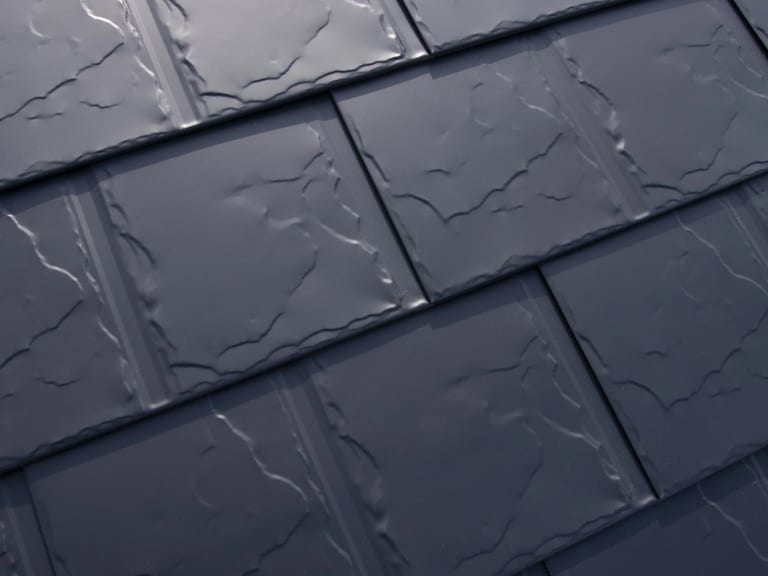 SlateThe dimensional look of natural slate at a fraction of the weight.
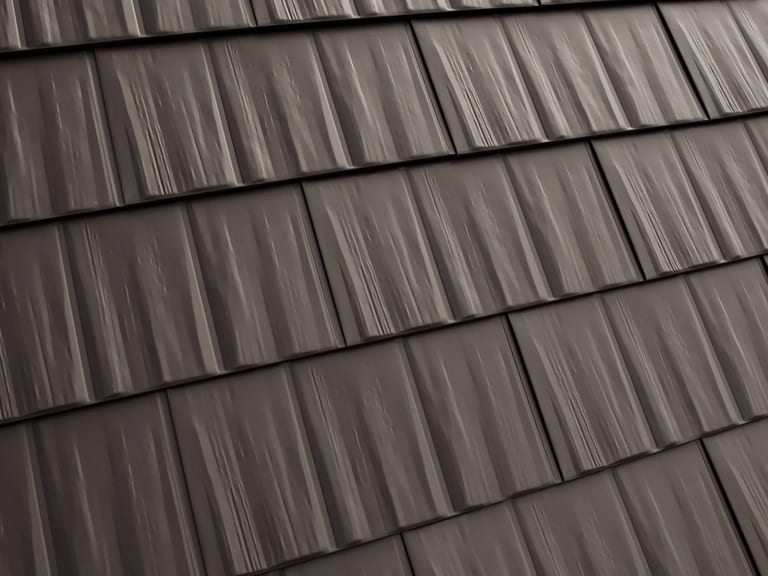 Cedar ShingleWarm cedar-shake character that never rots, splits or curls.
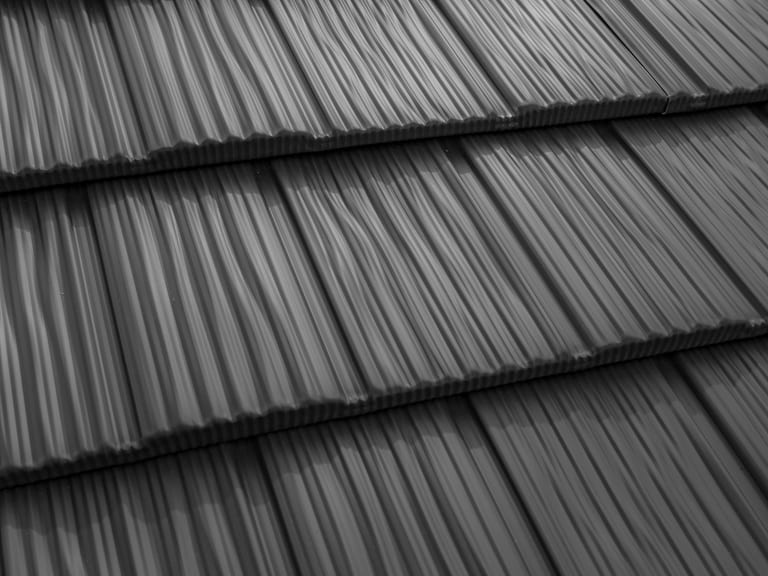 ShakeDeep, hand-split shake texture in aircraft-grade aluminum.
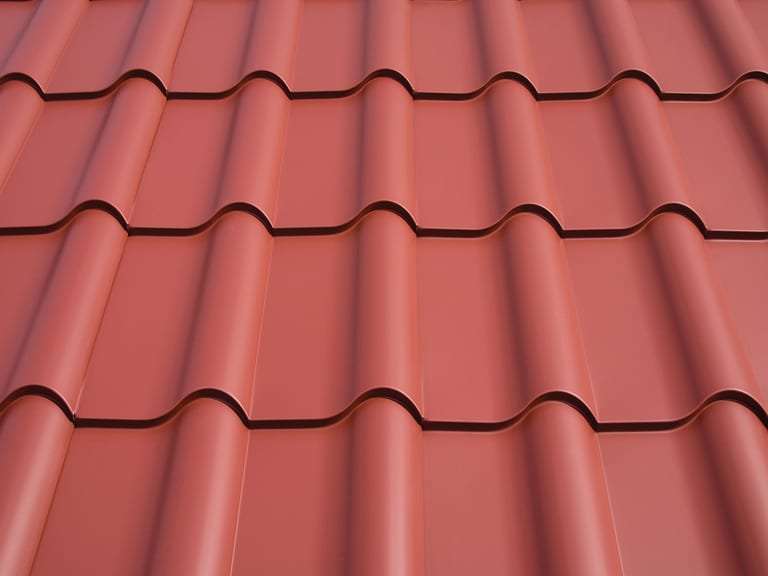 Mediterranean TileClassic barrel-tile lines without the crushing tile weight.
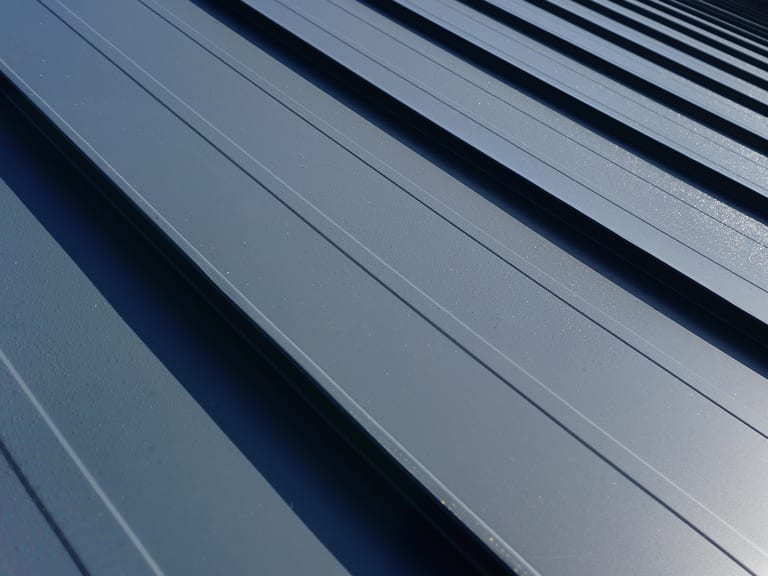 Standing SeamClean vertical lines for modern and contemporary homes.
Completed Interlock® metal roofs near Arlington Heights, IL
Interlock® has installed 19 lifetime aluminum metal roofs in Arlington Heights, Illinois, United States since 2001. Every marker below is a real, anonymized Interlock® aluminum roof completed by a Certified Interlock Installer. Explore verified installations across Arlington Heights, Illinois, United States on the interactive project map and photo grid — filter by roof profile (Slate, Cedar Shingle, Shake, Mediterranean Tile and Standing Seam), colour and year of completion.
Open Arlington Heights, IL on the interactive project map →Browse the Interlock® project directory for Arlington Heights, IL →See more Interlock® projects →
What Arlington Heights homeowners say
- ★★★☆☆
Metal Shingles Arlington Heights, IL Review 🇺🇸 — August 23, 2023 | Interlock®
Review: August 23, 2023Completion: June 27, 2023Arlington Heights, IL
- ★★★★★
Metal Shingles Arlington Heights, IL Review 🇺🇸 — September 9, 2022 | Interlock®
Review: September 9, 2022Completion: September 2, 2022I think Interlock Roofing could have improved on the last walkthrough. They did a last walkthrough at dusk, and it was too dark to see everything that could be picked up. A lot of little pieces of nails and screws were found the following morning. Overall, I was very satisfied with what they did, though. We had a lot of people who stopped and looked. A couple of people asked us about the roof. We told them to call the number if they were interested.
Arlington Heights, IL - ★★★★★
Metal Shingles Arlington Heights, IL Review 🇺🇸 — January 14, 2021 | Interlock®
Review: January 14, 2021Completion: December 18, 2020They exceeded my expectations by delivering the product as described, and installing it professionally, and in a timely manner. no conflicts or issues.
Arlington Heights, IL - ★★★★☆
Metal Shingles Arlington Heights, IL Review 🇺🇸 — September 6, 2018 | Interlock®
Review: September 6, 2018Completion: September 6, 2018Arlington Heights, IL - ★★★★★
Metal Shingles Arlington Heights, IL Review 🇺🇸 — May 9, 2018 | Interlock®
Review: May 9, 2018Completion: May 9, 2018Arlington Heights, IL - ★★★★★
Metal Shingles Arlington Heights, IL Review 🇺🇸 — September 15, 2015 | Interlock®
Review: September 15, 2015Completion: September 15, 2015John was really excellent and knew his stuff! If we had the extra money, we would have done it. He was A+++
Arlington Heights, IL
Interlock Industries (Midwest) Inc.
205 North Michigan Avenue, Suite 810, Chicago, IL 60601, United States
Sales & Marketing
Customer Service
www.ChicagolandMetalRoofing.com
License: 104.013389
Metal roofing near Arlington Heights
Arlington Heights metal roofing FAQ
How does metal roofing handle Arlington Heights winters with heavy snow and freeze-thaw cycles?
Interlock metal roofing sheds snow and ice safely because aluminum expands and contracts uniformly, unlike asphalt that becomes brittle. Arlington Heights receives about 73 cm of snow annually and experiences roughly 82 freeze-thaw days per year—conditions that cause asphalt to crack and curl. The four-way interlocking aluminum panels are warranted to 120 mph wind resistance, so wind-driven snow and ice sliding off won't damage neighboring properties. The lightweight design (Shingle profile at 0.41 lb/sq ft) means no structural reinforcement is needed even after snow accumulation, and the smooth aluminum surface prevents ice dams better than textured shingles.
Why does aluminum hold up better than asphalt shingles in freeze-thaw climates?
Aluminum contains no iron and its oxide layer self-heals when scratched, making it immune to rust and corrosion from repeated moisture exposure. Asphalt, by contrast, absorbs water; when Arlington Heights experiences its typical 993 mm of rain plus 73 cm of snow annually, water infiltrates asphalt and splits it during the 82 annual freeze-thaw cycles. Roofing-grade 3105-H24 aluminum alloy (ASTM B209) maintains structural integrity through these cycles without degradation. The Alunar 70% PVDF fluorocarbon coating, warranted 30 years against chalking and fading (ASTM D4214/D2244), protects against UV damage from the region's 3,051 annual sunshine hours while temperature swings shrink and swell the material harmlessly.
Can a metal roof rust in the Midwest, or is that only a concern near the ocean?
Aluminum cannot rust because it contains no iron—the element that oxidizes in moisture and air. Steel roofs do rust, but Interlock uses roofing-grade aluminum alloy (ASTM B209), designed for durability from coastal salt air to inland regions. Arlington Heights' climate of about 993 mm annual rainfall and variable humidity is far gentler than ocean environments where Interlock panels have been installed for decades. The Alunar 70% PVDF coating applied to both sides of every panel adds a 30-year warranty against corrosion, fading, and chalking. Even in a freeze-thaw region with 82 annual cycles, the aluminum's self-healing oxide layer means no rust can start, no matter how many times the roof contracts and expands.
Do I need to reinforce my roof structure to install metal roofing?
No structural reinforcement is required because Interlock aluminum roofing is extraordinarily light. The Slate profile installs at just 0.41 lb/sq ft, and even the Mediterranean Tile—which replicates the look of heavy clay or concrete tile—weighs only about 0.59 lb/sq ft, roughly 96% lighter than the material it mimics. This light weight means the panels can typically install directly over your existing roof, saving tear-off costs and labor time. By comparison, real clay or concrete tile weighs 8–15 lb/sq ft, requiring expensive framing upgrades. Interlock's ESR-1790 evaluation (IBC/IRC, reissued 2025) confirms the installation method for your roof type, so installers in Arlington Heights know exactly how to proceed without surprises.
Will a metal roof dent in hail, and does it qualify for insurance discounts?
Interlock metal roofing carries a UL 2218 Class 4 impact rating—the highest available—and the Guardian warranty even covers perforation from hailstones up to 1.5 inches. Class 4 is the same standard that earns insurance discounts on traditional roofing, so your carrier may lower your premium when you upgrade. Arlington Heights' typical daily-max winds of 19 km/h with gusts to 97 km/h are well within normal spring-storm ranges, and the four-way interlocking aluminum panels resist up to 120 mph winds when installed to spec. The non-combustible aluminum also qualifies for Class A fire ratings where available, which some insurers reward further. Check with your agent: a durable metal roof often justifies lower rates due to reduced claim risk.
Does a metal roof help lower cooling costs in the summer?
Arlington Heights receives about 3,051 sunshine hours per year, making reflective roofing coatings worthwhile. Interlock's energy-efficient colors achieve thermal emissivity of 0.84 and solar reflectance up to 0.55 (Aged Copper Penny profile), so they reflect heat that dark asphalt absorbs, reducing cooling demand in summer. The Cool Roof Rating Council rating confirms measurable energy savings. Lighter Interlock profiles—Slate or Cedar Shingle in pale finishes—bounce more of the sun's rays away from your home, lowering air-conditioner runtime during warm months. Darker profiles (standing seam in bronze, for instance) still outperform asphalt and add visual drama. Over a roof's 50-year lifespan, the cooling savings accumulate significantly, especially if you live in a south- or west-facing home where summer sun is relentless.
Is metal roofing really the last roof I'll buy, or does it cost too much upfront?
Metal roofing costs more initially than asphalt but is the last roof you'll buy because it lasts decades without replacement. Asphalt shingles typically need replacement every 15–25 years; over 50 years, you might buy three to four asphalt roofs. Interlock's Guardian warranty is a lifetime limited non-prorated material warranty for the original owner, plus one transfer at 50 years for the next owner—meaning your investment protects your home across decades of weather (993 mm rain, 73 cm snow, 82 freeze-thaw days annually) without degradation. The Alunar 70% PVDF coating is warranted 30 years, and the aluminum itself is 95% recyclable at end of life, so you avoid landfill costs and tear-off debris. Calculate your total cost over 50 years: one metal roof beats multiple asphalt replacements, labor, and disposal fees.
How much maintenance does a metal roof really need compared to asphalt or wood shakes?
Interlock metal roofing requires almost no maintenance: occasional gutter cleaning and inspection after severe weather. Unlike asphalt shingles that curl, crack, and lose granules under Arlington Heights' 82 annual freeze-thaw cycles, aluminum panels remain intact and retain their appearance. Wood shakes absorb moisture from the region's 993 mm annual rainfall and eventually rot or invite moss; metal panels shed water instantly and don't decompose. Asphalt shingles need resealing, algae treatment, and spot repair within 15–20 years; metal roofs stay sealed and algae-resistant indefinitely. The Alunar 70% PVDF coating (warranted 30 years against fading and chalking) keeps the finish looking new without paint or sealant reapplication. Lower maintenance means fewer contractor visits, lower lifetime service costs, and more predictable budgeting over your home's ownership span.
How long does installation take, and can it be done over my existing roof?
Installation timelines depend on roof size and complexity, typically 2–5 days for a standard residential home. Because Interlock aluminum panels weigh only 0.41–0.59 lb/sq ft (compared to real slate or tile at 8–15 lb/sq ft), they often install directly over your existing shingles, eliminating costly tear-off and disposal. The ICC-ES evaluation report ESR-1790 specifies installation methods for different roof types, and Interlock's local installer—serving the region since 2001—follows those guidelines precisely. Over-roof installation reduces labor time, cuts down on waste hauling, and minimizes disruption to your home. If tear-off is necessary (older deteriorated roofing), the aluminum's light weight still speeds installation compared to heavy alternatives. Your installer will assess your deck condition and recommend the most cost-effective method before starting work.
Will a metal roof blow off in Arlington Heights' windstorms?
No. Interlock metal roofing is warranted to resist wind speeds up to 120 mph when installed to specification, far exceeding Arlington Heights' typical gusts of 97 km/h (roughly 60 mph). The four-way interlocking aluminum panels lock together mechanically, so each panel braces its neighbors—wind cannot lift individual sections. The panel design and fastening method are detailed in ESR-1790, and your local installer, serving since 2001, knows these spec requirements. Spring and fall storms in Cook County occasionally gust harder than the 19 km/h daily average, but even worst-case gusts remain well below the 120 mph warranty threshold. The lightweight aluminum (Shingle at 0.41 lb/sq ft) actually helps: less mass means less structural strain, so there's no need for reinforcement and the roof stays secure during heavy wind and rain events common in the Midwest.
Ready for your last roof in Arlington Heights?
Talk to your local Interlock® team about a lifetime aluminum roof — Never Re-Roof Again®.