

Hon. Jill McKnight, Canada's Veterans Affairs Minister, Visits Interlock Metal Roofing to Discuss Tariffs and Manufacturing
Quick Answer
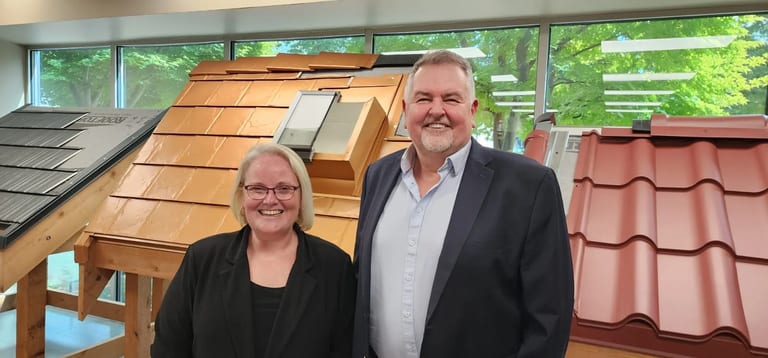
Interlock Metal Roofing hosted The Honourable Jill McKnight — Member of Parliament for Delta and Canada’s Minister of Veterans Affairs — at its Delta, British Columbia manufacturing facility on July 3, 2025. The visit highlighted Interlock as a Canadian, family-owned manufacturer of premium aluminum roofing distributed across Canada and the United States, and opened a conversation about how metal tariffs affect Canadian manufacturers and the workers and communities they support.
On July 3, 2025, The Honourable Jill McKnight, MP for Delta and Canada's Minister of Veterans Affairs, toured Interlock Metal Roofing's Delta, BC manufacturing facility. The visit centered on Canadian aluminum manufacturing, the jobs it supports in Delta, and how tariff policy affects a domestic manufacturer that ships finished roofing systems across Canada and the United States.
A cabinet minister doesn't tour a roofing plant for a photo op alone — she tours it to see a supply chain up close. On July 3, 2025, that's what brought The Honourable Jill McKnight, Member of Parliament for Delta, British Columbia and Canada's Minister of Veterans Affairs, to Interlock Metal Roofing's manufacturing facility.
Interlock is a Canadian, family-owned manufacturer that engineers and produces its aluminum roofing systems at its Delta plant, then distributes them to homeowners and installers across both Canada and the United States. That cross-border footprint is exactly why the visit mattered: aluminum is a globally traded metal, and the roofing built from it moves across the same border its raw material often crosses first.
Why did Minister Jill McKnight visit Interlock Metal Roofing?
Minister McKnight toured Interlock's Delta facility on July 3, 2025 to see Canadian aluminum manufacturing firsthand and to discuss how metal tariffs affect a domestic producer that both sources aluminum and exports finished roofing across the Canada–U.S. border. As MP for Delta, she represents the community where Interlock designs, engineers, and builds its products.
What the Visit Represents: Manufacturing, Not Just Marketing
Interlock's Delta facility is a working plant, not a showroom. Aluminum stock arrives, is formed into the interlocking panel profiles the company is named for, and ships out as a finished roofing system installed by regional crews across North America. A minister walking that floor sees the parts of the business that policy actually touches: material sourcing, production scheduling, skilled labor, and outbound logistics to two different national markets.
Aluminum Manufacturing and Supply Chain Resilience
For a company that builds its entire product line from aluminum, the metal's cost, availability, and cross-border movement are not abstract line items — they are the business. Tariffs on imported or exported metal can change input costs, shift where a manufacturer sources material, and affect how competitively a Canadian-made product prices against roofing made elsewhere. Domestic manufacturing capacity like Interlock's Delta plant is part of how a company insulates itself from those swings: production stays in one place, the workforce is local, and the company controls more of its own supply chain than an importer or reseller would.
A Local Plant with a Continental Market
Interlock's position is a useful case study in why trade policy and local manufacturing are linked. The company employs people in Delta, sources and processes aluminum domestically, and then sells across two countries — which means changes in tariff policy on either side of the border can reach directly into a BC production schedule and a BC payroll. That's the throughline the visit was built around: a federal policy conversation grounded in one specific, real manufacturing facility.
Built in Delta, Shipped Across North America
The same Delta plant that hosted Minister McKnight also produces the aluminum systems that have gone onto homes from coastal Washington to an Antarctic research station, under the same manufacturing standards regardless of destination. For customers on either side of the border, that means the roofing they buy is engineered and built at a single, known Canadian facility — not sourced from a shifting mix of overseas suppliers whose access to that facility's floor is exactly what this visit was about.
Frequently Asked Questions
Why did Minister Jill McKnight visit Interlock Metal Roofing?
She toured Interlock's Delta, BC manufacturing facility on July 3, 2025 to see Canadian aluminum manufacturing firsthand and discuss how metal tariffs affect a domestic producer that sources aluminum and exports finished roofing across the Canada–U.S. border.
Who is Jill McKnight?
The Honourable Jill McKnight is the Member of Parliament for Delta, British Columbia and Canada's Minister of Veterans Affairs.
Where does Interlock manufacture its roofing?
Interlock designs, engineers, and manufactures its aluminum roofing systems at a single facility in Delta, British Columbia, Canada.
How do tariffs affect a Canadian aluminum manufacturer like Interlock?
Because Interlock's entire product line is built from aluminum and sold across two countries, tariffs on metal can change input costs and affect how competitively a Canadian-made product prices against roofing made elsewhere.
Does Interlock sell in both Canada and the United States?
Yes. Interlock manufactures at its Delta, BC facility and distributes its roofing systems to homeowners and installers in both countries.
Why does domestic manufacturing matter for supply chains?
Keeping production, sourcing, and the workforce in one facility gives a manufacturer more control over its own supply chain than it would have relying on imported or resold products, which helps insulate the business from trade and tariff swings.
Explore Interlock Metal Roofing
Last updated June 9, 2026