Huntsville, ON · Lifetime Aluminum Roofing
Metal Roofing in Huntsville, Ontario
Interlock® installs lifetime aluminum metal roofing in Huntsville, ON — 19 roofs completed since 1998 by certified local crews, every system backed by a transferable lifetime warranty.
Why Huntsville homeowners choose Interlock
Interlock Metal Roofing (Ontario) Ltd., founded February 27, 1998, is a trusted metal roofing contractor and exclusive authorized installer of Interlock® Lifetime aluminum roofing systems serving homeowners in Huntsville, Ontario. Our Interlock Lifetime Roofing System combines heavy-gauge, fire-resistant aluminum with the Alunar® Coating System and a Lifetime Warranty—engineered for Huntsville’s long, cold winters, heavy snow loads and freeze–thaw cycles, while delivering energy-efficient cool-roof performance in summer. Built to shed snow, resist corrosion and reduce heat transfer, Interlock offers the timeless look of slate, cedar shingles, shake, Mediterranean tile, or standing seam with the strength and durability of metal; we provide expert roof replacement and re-roofing across Huntsville for long-term protection and curb appeal.
- 19Roofs installed in Huntsville
- 1998First Huntsville installation
- 2020Most recent installation
- 7Verified local reviews
Roofing styles available in Huntsville
Every Interlock® system is heavy-gauge aluminum finished with the Alunar® coating — five architectural looks, one transferable lifetime warranty.
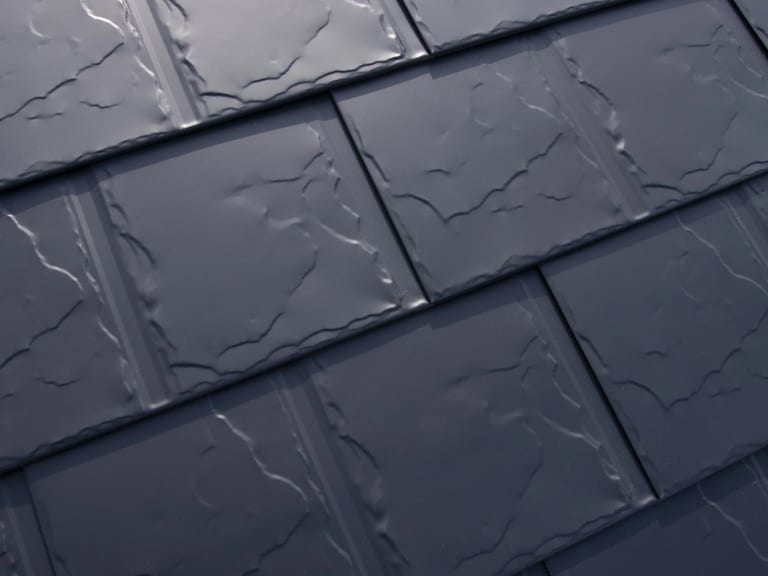 SlateThe dimensional look of natural slate at a fraction of the weight.
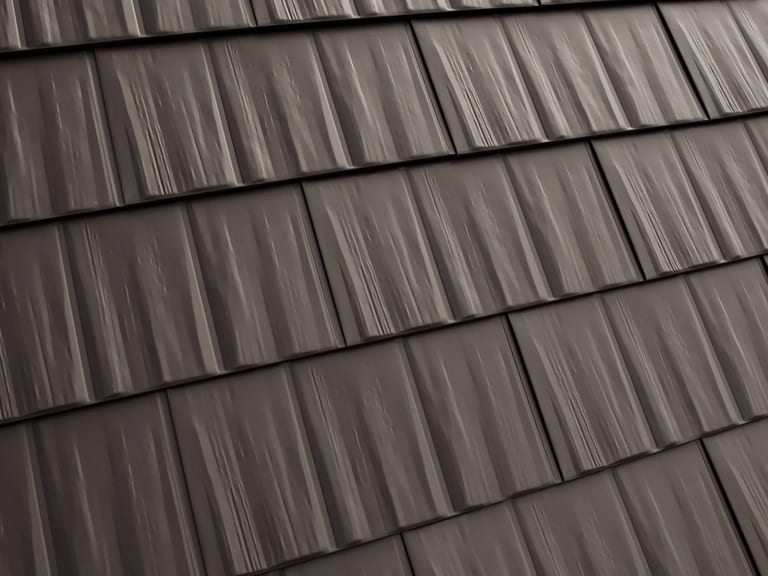 Cedar ShingleWarm cedar-shake character that never rots, splits or curls.
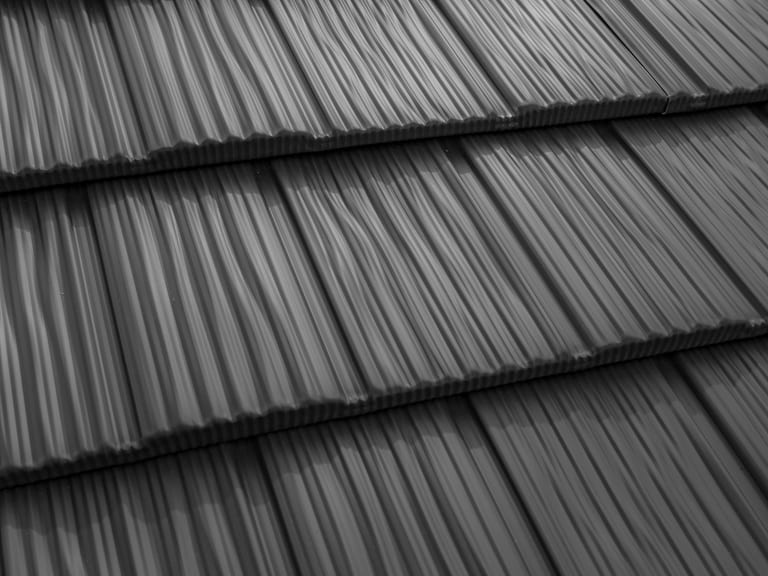 ShakeDeep, hand-split shake texture in aircraft-grade aluminum.
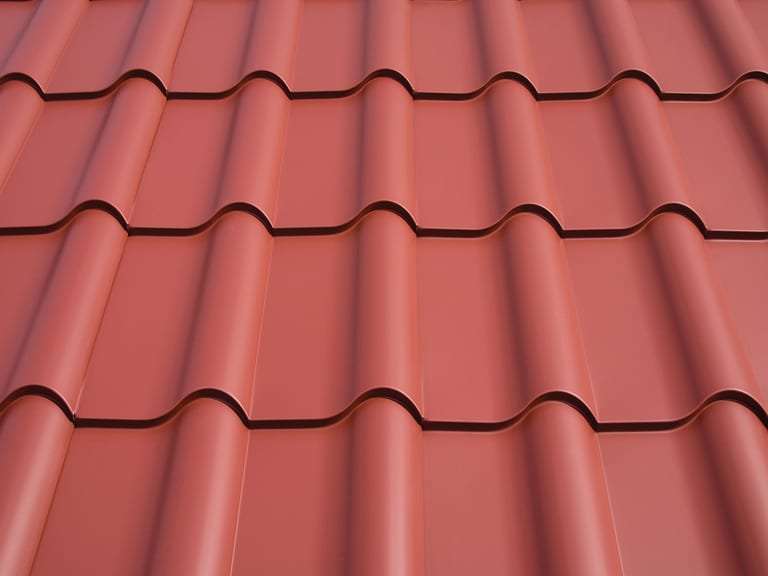 Mediterranean TileClassic barrel-tile lines without the crushing tile weight.
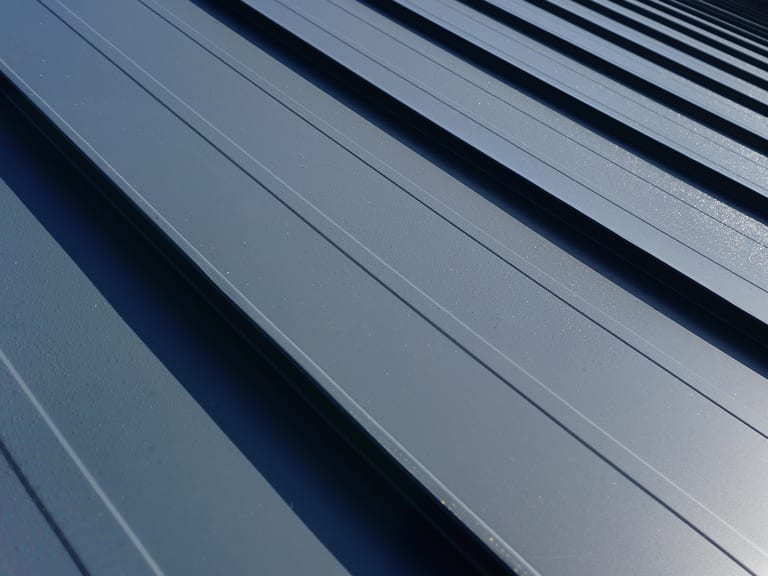 Standing SeamClean vertical lines for modern and contemporary homes.
Completed Interlock® metal roofs near Huntsville, ON
Interlock® has installed 19 lifetime aluminum metal roofs in Huntsville, Ontario, Canada since 1998. Every marker below is a real, anonymized Interlock® aluminum roof completed by a Certified Interlock Installer. Explore verified installations across Huntsville, Ontario, Canada on the interactive project map and photo grid — filter by roof profile (Slate, Cedar Shingle, Shake, Mediterranean Tile and Standing Seam), colour and year of completion.
Open Huntsville, ON on the interactive project map →Browse the Interlock® project directory for Huntsville, ON →See more Interlock® projects →
What Huntsville homeowners say
- ★★★★★
Metal Shingles Huntsville, ON Review 🇨🇦 — October 13, 2020 | Interlock®
Review: October 13, 2020Completion: September 11, 2020I don't know, it is hard to say because I was not here. I was happy overall and I did not have any problems. I am very happy with the workmanship, the follow up, and the final product.
Huntsville, ON
- ★★★★☆
Metal Shingles Huntsville, ON Review 🇨🇦 — February 9, 2020 | Interlock®
Review: February 9, 2020Completion: December 31, 2019I am still waiting for the work to be completed, I am still unable to open my gable windows, because the new roofing is restricting them from opening.
Huntsville, ON - ★★★★★
Metal Shingles Huntsville, ON Review 🇨🇦 — May 15, 2018 | Interlock®
Review: May 15, 2018Completion: May 13, 2014Our new metal roof was completed on time with very little disruption. As retired home-owners we are pleased we will never have to re-roof in our lifetime. Our new roof attracts positive comments from our neighbours and makes our old, stone house look fantastic. A great investment!!
Huntsville, ON
- ★★★★☆
Metal Shingles Huntsville, ON Review 🇨🇦 — May 7, 2018 | Interlock®
Review: May 7, 2018Completion: April 22, 2018The clean up. Our property was left with debris all over the yard and at our main entrance.. A change in weather didn't help, as snow covered the debris part way through the project; however, the crew could've cleaned up when they knew the snow was coming. We are very disappointed in how our property was left and that clean up did not appear to be a priority.
Huntsville, ON - ★★★★★
Metal Shingles Huntsville, ON Review 🇨🇦 — October 10, 2017 | Interlock®
Review: October 10, 2017Completion: September 18, 2017None
Huntsville, ON - ★★★★★
Metal Shingles Huntsville, ON Review 🇨🇦 — September 20, 2017 | Interlock®
Review: September 20, 2017I was extremely satisfied and Yves installation seems good.
Huntsville, ON
Interlock Metal Roofing (Ontario) Ltd.
5 - 2800 Argentia Road, Mississauga, ON L5N 8L2 Canada
Sales & Marketing
Customer Service
Metal roofing near Huntsville
Huntsville metal roofing FAQ
How does a metal roof handle Huntsville's heavy snow and freeze-thaw cycles?
Aluminum sheds snow efficiently because its smooth surface and thermal properties prevent ice dams that trap water on asphalt roofs. With about 193 cm of snow per year and roughly 80 freeze-thaw days in your climate, this matters: standing water on traditional roofs expands as it refreezes, driving water under shingles and into your home. Interlock's lightweight panels (the Shingle profile at 0.41 lb/sq ft) won't sag under seasonal loads, and the four-way interlocking system prevents gaps where ice can lodge. Snow guards can be added if you prefer, but the roof's geometry naturally encourages snow to slide clear once the sun hits—which happens about 2800 hours per year here.
Will freeze-thaw cycles crack or damage aluminum roofing in Ontario winters?
No—aluminum actually improves in freeze-thaw climates because the material itself is inert and does not absorb moisture. Unlike wood shingles that split and curl, or concrete tile that can spall when water freezes inside the pores, aluminum has no capillaries to fill. Your region experiences about 80 freeze-thaw cycles yearly with 193 cm of snow, yet the metal's oxide layer—which forms naturally and self-heals when scratched—protects the base alloy (3105-H24 per ASTM B209) indefinitely. The Alunar fluorocarbon coating, warranted 30 years against chalking, adds another defensive layer. Thermal stress is minimal because the panels move freely within their four-way interlocking system, so expansion and contraction never bind or crack the material.
Why choose aluminum roofing instead of steel in a snowy, wet climate?
Steel roofing will rust because iron oxidizes when exposed to moisture and oxygen—a chemical reaction that cannot be stopped, only slowed with coatings. Aluminum cannot rust because it contains no iron; it oxidizes into a self-healing oxide layer that actually protects the base metal underneath. In Huntsville's environment (858 mm of annual rainfall plus 193 cm of snow), that's a permanent advantage. Steel requires an intact coating to survive, and any scratch or fastener damage starts rust that spreads beneath the finish. Aluminum's 3105-H24 alloy paired with the 70% PVDF Alunar coating on both panel sides means corrosion is not a failure mode—it's simply not chemically possible. That's why Interlock aluminum roofing has been installed everywhere from coastal salt-air homes to Antarctic research stations.
Can metal roofing withstand Huntsville's wind gusts and storms?
Yes—the four-way interlocking aluminum panels are warranted to resist wind speeds up to 120 mph (193 km/h), well beyond Huntsville's typical wind environment. Your region averages gusts around 95 km/h, with mean daily winds near 17 km/h, so the roof's wind rating carries a comfortable margin of safety. The interlocking system means each panel is secured to its neighbors and the deck, creating a continuous stress-transfer path rather than individual fasteners bearing all the load. This redundancy is why UL testing certifies the assembly under ESR-1790 (reissued 2025 for current IBC/IRC codes). Unlike asphalt shingles, which can lift and separate, aluminum panels tighten under wind pressure—the harder the gust, the more securely locked they become.
Does aluminum roofing hold up to hail, and could it lower my insurance premiums?
Interlock aluminum roofing carries the highest available impact rating: UL 2218 Class 4, which includes a warranty against perforation from hailstones up to 1.5 inches. That resilience comes from the alloy's inherent toughness and the panel's engineered profile stiffness; the material simply will not dent or puncture under typical hail events. Many insurers recognize Class 4 roofing as a loss-prevention feature and offer discounts—discuss your specific policy with your agent, as premium reductions depend on your insurer's underwriting guidelines. In Huntsville's climate (about 80 freeze-thaw days annually), the durability benefit extends beyond hail: the aluminum won't develop stress fractures from thermal cycling, so impact resistance doesn't degrade over time. One roof install now can mean decades of claims-free operation and the peace of mind that comes with verified protection.
Is a metal roof worth the cost compared to asphalt over time?
Interlock aluminum roofing costs more upfront than asphalt shingles, but over your roof's full life span, the cost per year is substantially lower. A typical asphalt roof lasts 15-25 years and then goes to landfill, requiring a full tear-off and replacement. An Interlock aluminum roof carries a lifetime limited, non-prorated material warranty for the original owner—meaning if it fails, it's replaced free, not prorated by age. That's one roof for the life of your ownership. Factor in the fact that aluminum never rots, splits, cracks, or curls (the five modes asphalt fails), and you're buying a permanent roof, not a temporary one. The current regional promotion includes interest-free payments for 3 months and savings of at least $2499, which makes the initial investment manageable while you realize the long-term value. Over 40 years, you'll replace asphalt three times; you'll replace aluminum zero times.
What warranty comes with Interlock metal roofing, and is it truly lifetime?
The Guardian Warranty is a lifetime limited, non-prorated material warranty for the original owner, covering rusting, rotting, splitting, cracking, curling, and loss of impact resistance. Non-prorated means you never pay a percentage of the repair cost based on how old the roof is—it's covered in full. When you sell your home, the warranty transfers to the next owner for a 50-year term from completion, which adds genuine market value because buyers see protection extending decades beyond your ownership. In a climate like Huntsville's (193 cm of snow, 858 mm rain, 80 freeze-thaw cycles per year), this coverage is real assurance: you're protected against every failure mode that climate stress causes. The Alunar coating itself carries a separate 30-year warranty against chalking and fading, independently verified by Intertek per ASTM D4214 and D2244 standards. One warranty, one roof, your peace of mind.
Do metal roofing colors really reduce cooling costs, and does that apply in Ontario?
Yes—Interlock's energy-efficient colors reflect solar heat that asphalt absorbs, reducing cooling demand even in a mild climate like Huntsville's. The Aged Copper Penny finish, for example, achieves initial solar reflectance up to 0.55 and thermal emissivity of 0.84, Cool Roof Rating Council rated. Those numbers mean roughly 55% of incoming solar radiation bounces back to the sky instead of heating your attic and home. In Huntsville you get about 2800 sunshine hours per year—not desert-level sun, but enough that summer cooling adds up. Every degree you avoid inside translates to lower air-conditioning runtime, lower electric bills, and lower peak demand on hot days. The reflective benefit is permanent because the aluminum substrate never degrades or darkens; unlike asphalt, which chalks and darkens as UV breaks down the binder. Choose a light color and you're locking in energy savings for life.
How much maintenance does a metal roof really need compared to asphalt or tile?
Interlock aluminum roofing requires far less maintenance than traditional materials. Asphalt shingles need inspection every few years, debris clearance, and moss treatment in wet climates—Huntsville receives 858 mm of annual rainfall, creating conditions where algae and moss thrive on asphalt's granular surface. Aluminum is naturally antimicrobial and won't support moss growth; it sheds debris with water and needs only occasional visual inspection. Wood shakes demand regular treatment and repair of splits and curls, especially under your region's 80 annual freeze-thaw cycles. Tile requires resealing, broken-piece replacement, and moss removal. Aluminum avoids all of these: the Alunar coating is warranted 30 years and the substrate never rots, splits, or curls. Most owners simply rinse their roof with a garden hose every 2-3 years if they want it to look like new. CALGreen has verified Interlock's maintenance profile as reduced compared to standard roofing, meaning lower long-term cost of ownership.
Can a metal roof be installed over my existing shingles, and how long does installation take?
Yes—one of aluminum's defining advantages is its extraordinary light weight. The Shingle profile installs at just 0.41 lb/sq ft, the Shake at 0.58, and the Mediterranean Tile at 0.59 lb/sq ft (about 96% lighter than real tile). Because the panels weigh so little, installation over existing asphalt is approved and requires no structural reinforcement. This means no tear-off, no disposal costs, no weeks of waste removal and debris. Your existing roof becomes a second substrate layer, adding thermal mass and sound isolation. Installation timeline depends on roof complexity and crew size, but crews typically work faster because there's no tear-off phase. Interlock Metal Roofing (Ontario) Ltd. has served this region since 1998 and can walk you through the specific timeline for your home. The process is clean, your attic stays dust-free, and you can often remain in your home during installation. Ask for a site survey to confirm your roof's capacity and get an accurate schedule.
Ready for your last roof in Huntsville?
Talk to your local Interlock® team about a lifetime aluminum roof — Never Re-Roof Again®.