Midland, ON · Lifetime Aluminum Roofing
Metal Roofing in Midland, Ontario
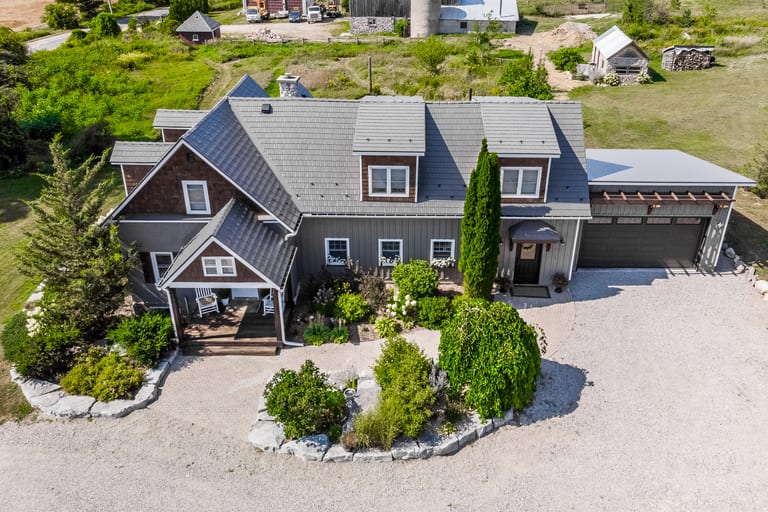
Interlock® installs lifetime aluminum metal roofing in Midland, ON — 16 roofs completed since 1999 by certified local crews, every system backed by a transferable lifetime warranty.
Why Midland homeowners choose Interlock
Interlock Metal Roofing (Ontario) Ltd., founded February 27, 1998, is a trusted metal roofing contractor and exclusive authorized installer of the Interlock® Lifetime Aluminum Roofing System serving homeowners in Midland, Ontario. Built for Ontario’s climate, Interlock’s heavy-gauge, fire‑resistant, energy‑efficient cool roofs shed lake‑effect and seasonal snows, reduce ice‑dam and freeze‑thaw damage, resist summer UV and wind-driven weather, and stand up to coastal moisture near Georgian Bay—delivering long‑term protection where Midland’s weather is most demanding. We provide roof replacement and re‑roofing throughout Midland with a range of timeless looks—slate, cedar shingles, shake, Mediterranean tile, or standing seam—backed by the Alunar® Coating System and a Lifetime Warranty for lasting performance and curb appeal.
- 16Roofs installed in Midland
- 1999First Midland installation
- 2022Most recent installation
- 8Verified local reviews
Roofing styles available in Midland
Every Interlock® system is heavy-gauge aluminum finished with the Alunar® coating — five architectural looks, one transferable lifetime warranty.
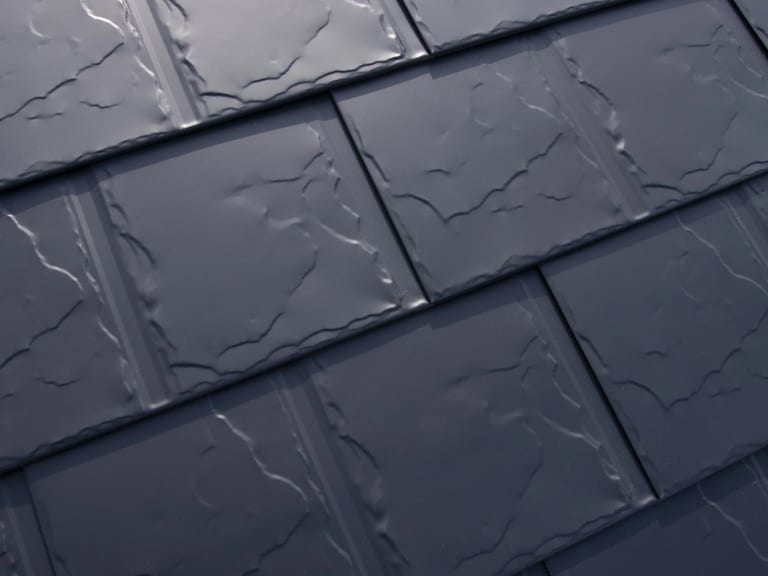 SlateThe dimensional look of natural slate at a fraction of the weight.
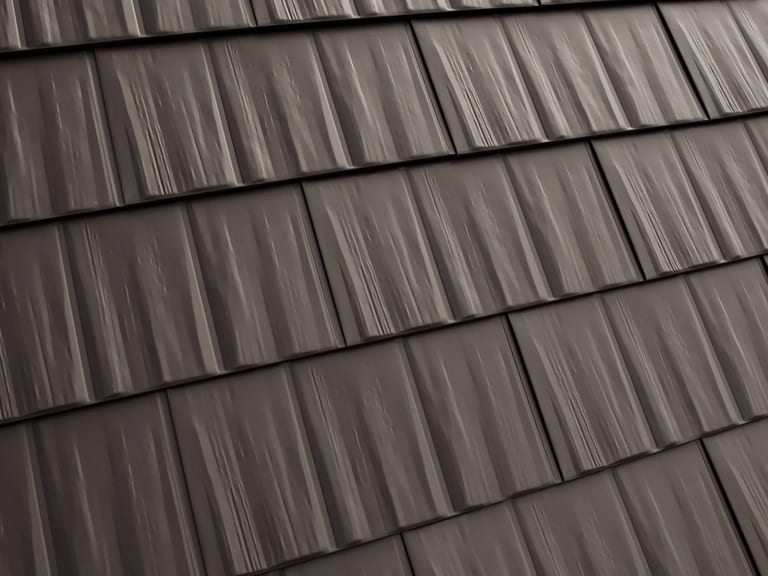 Cedar ShingleWarm cedar-shake character that never rots, splits or curls.
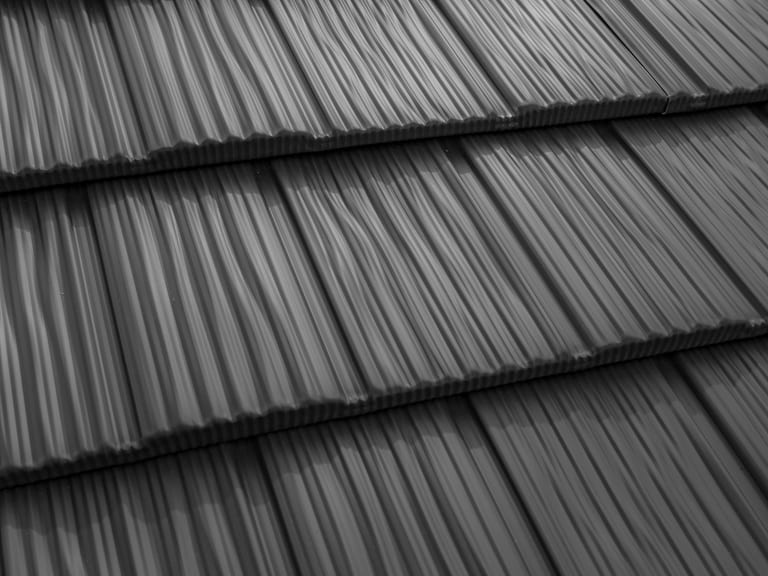 ShakeDeep, hand-split shake texture in aircraft-grade aluminum.
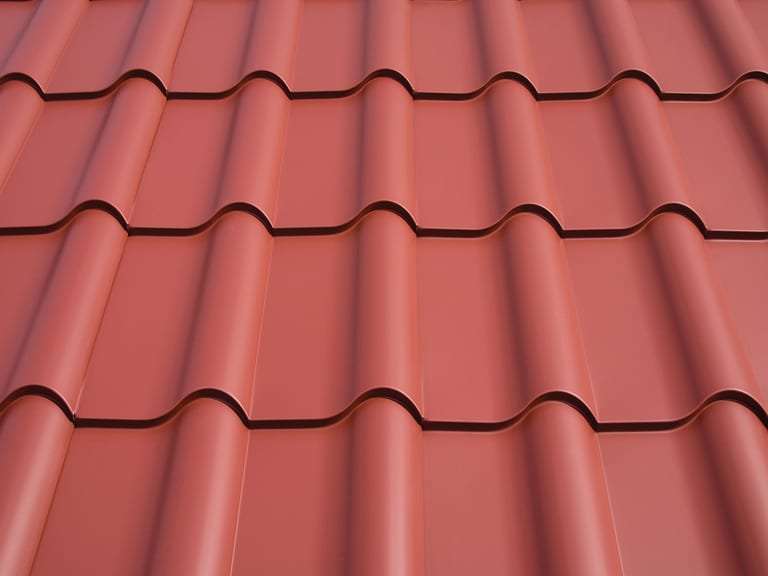 Mediterranean TileClassic barrel-tile lines without the crushing tile weight.
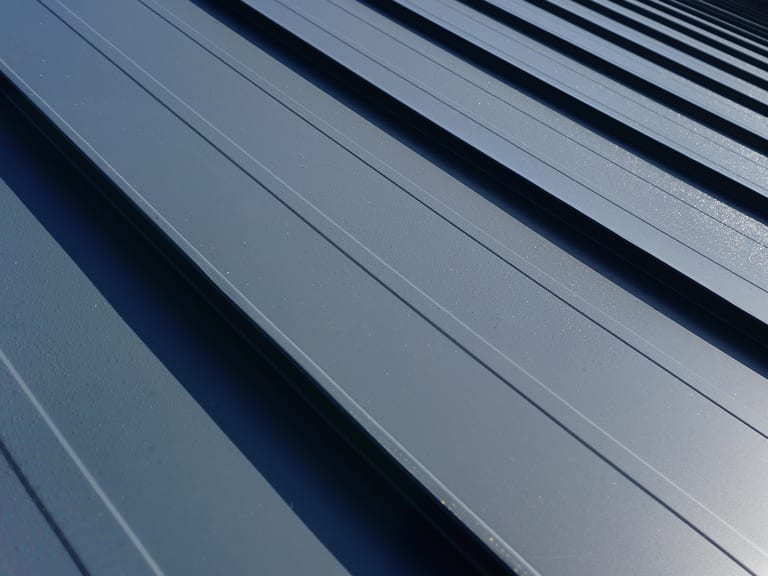 Standing SeamClean vertical lines for modern and contemporary homes.
Interlock roofs we've installed in Midland
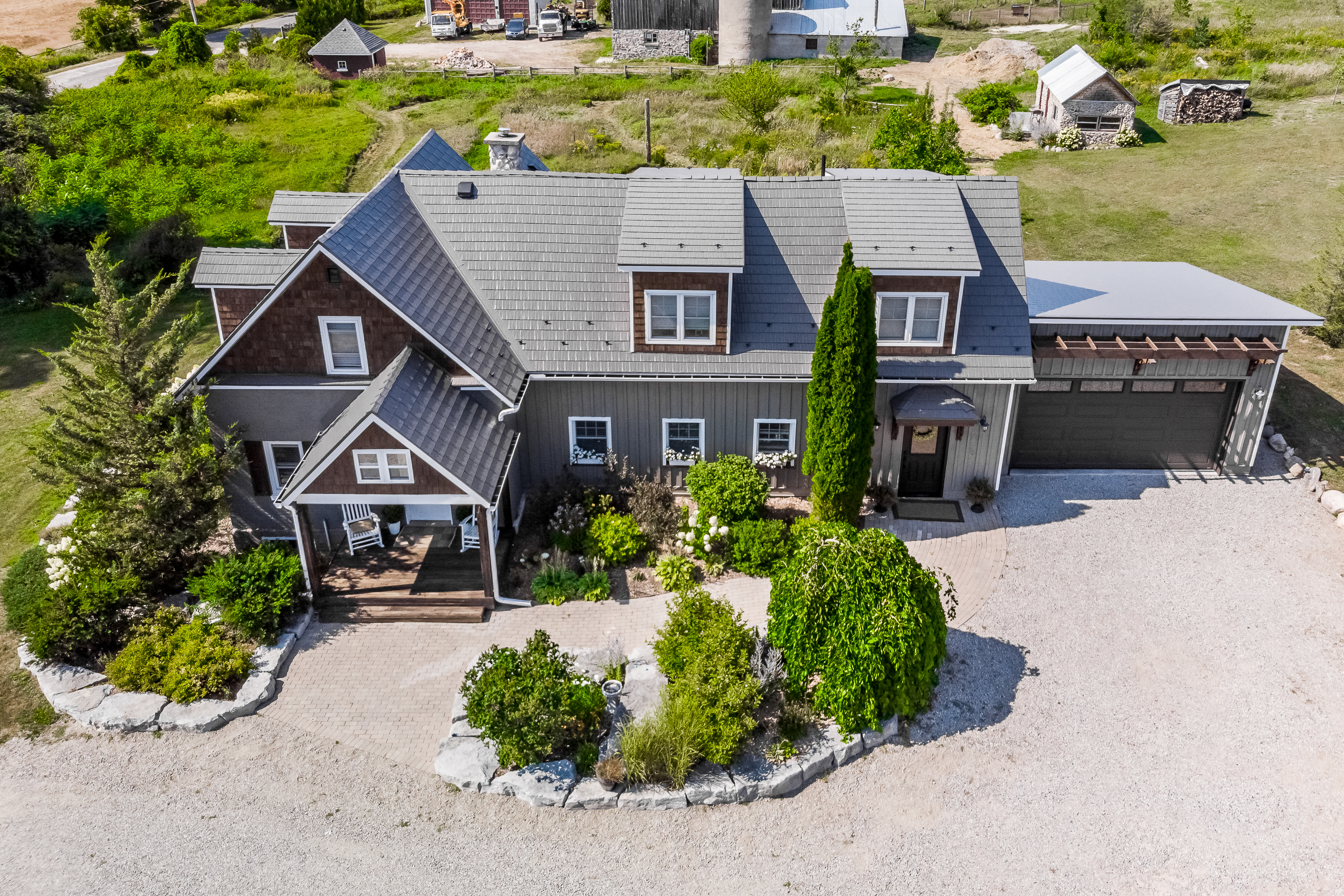
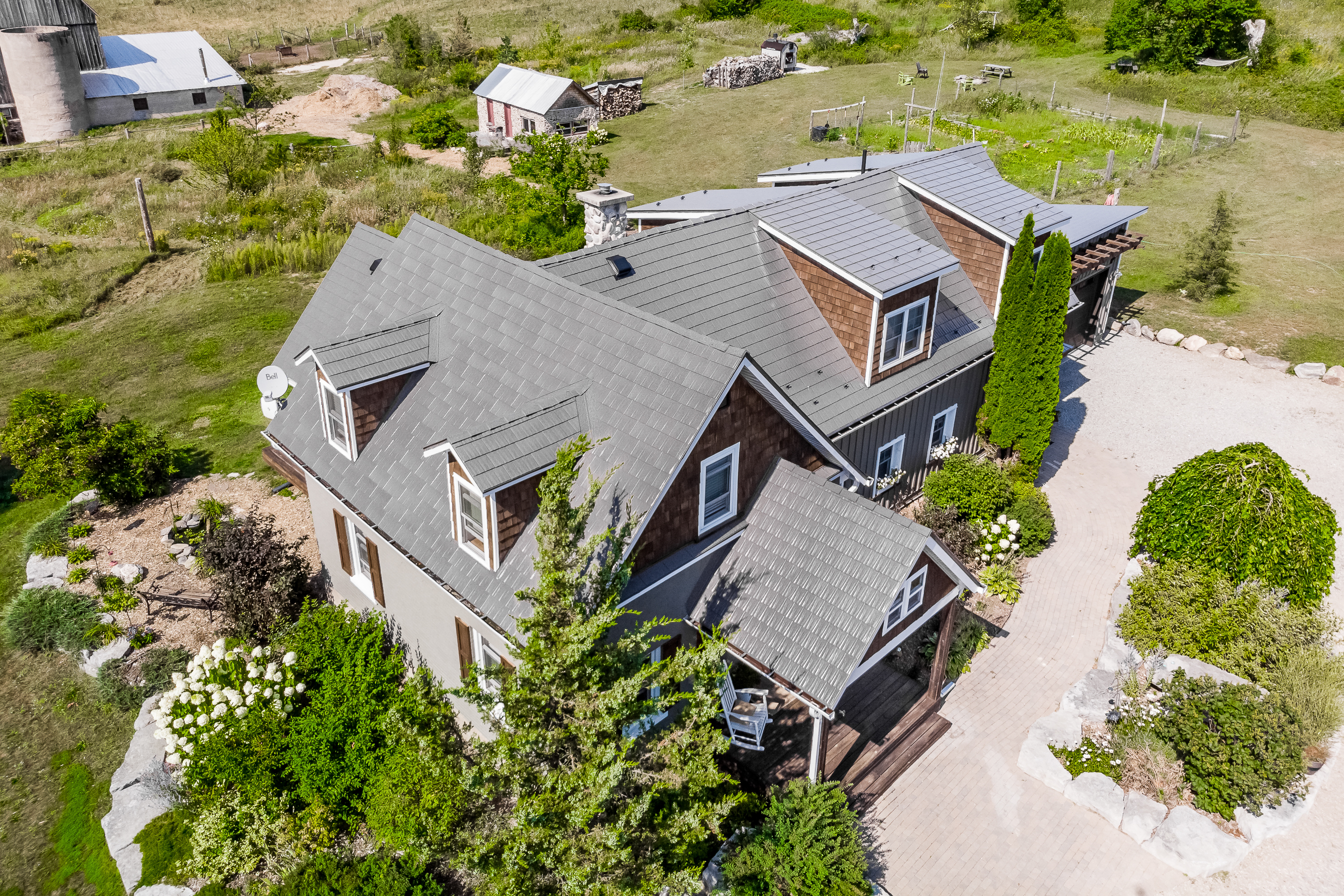
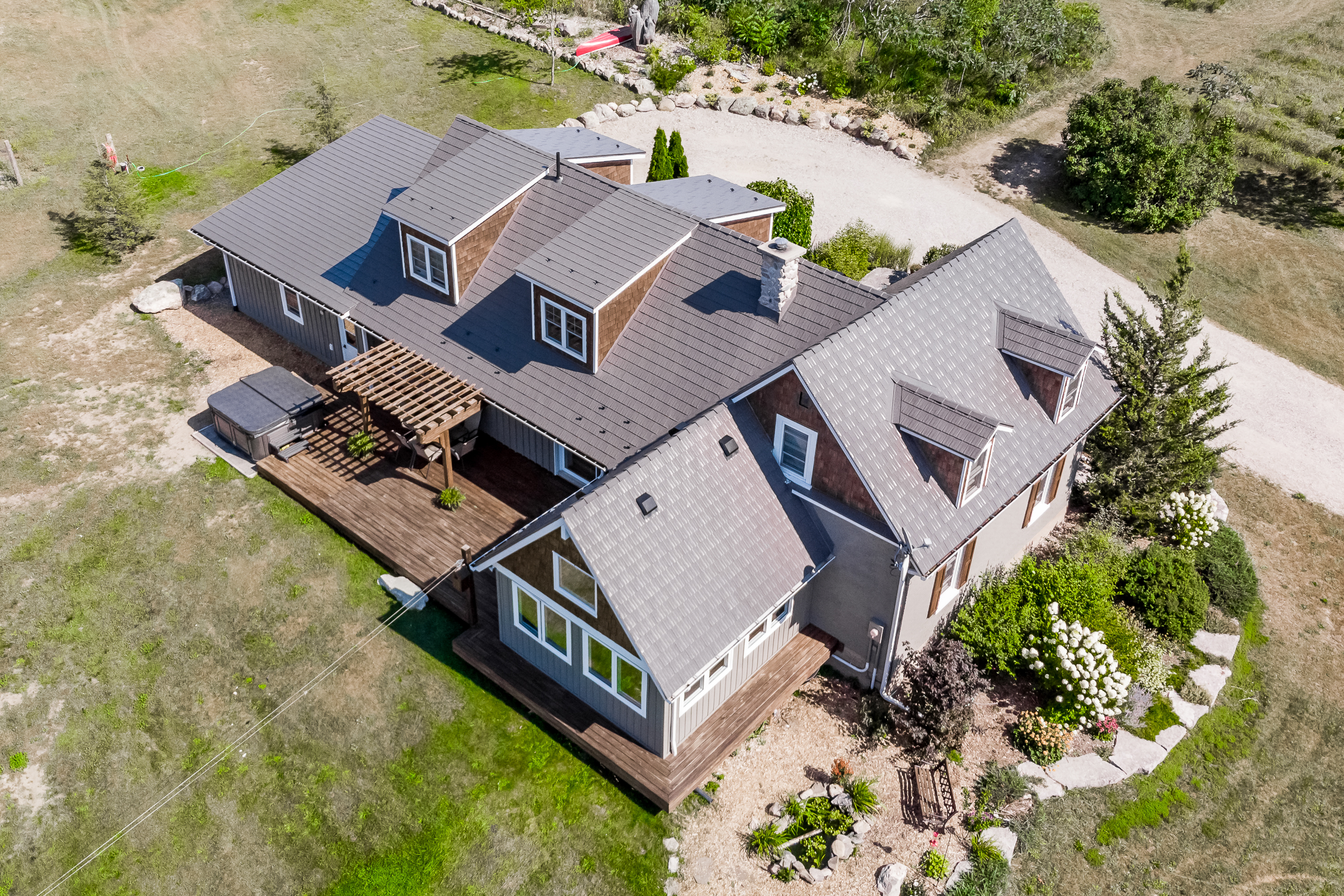
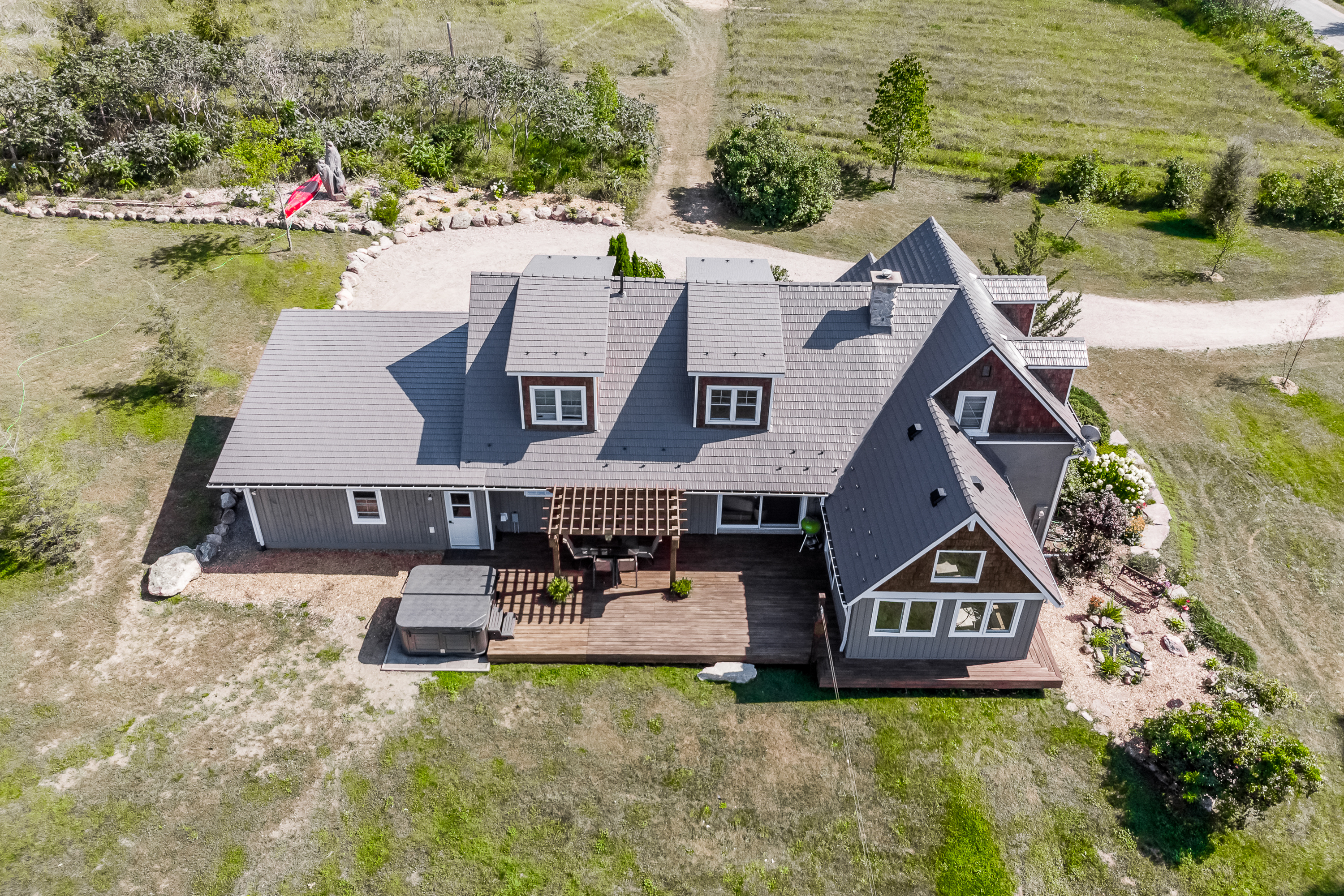
Completed Interlock® metal roofs near Midland, ON
Interlock® has installed 16 lifetime aluminum metal roofs in Midland, Ontario, Canada since 1999. Every marker below is a real, anonymized Interlock® aluminum roof completed by a Certified Interlock Installer. Explore verified installations across Midland, Ontario, Canada on the interactive project map and photo grid — filter by roof profile (Slate, Cedar Shingle, Shake, Mediterranean Tile and Standing Seam), colour and year of completion.
Open Midland, ON on the interactive project map →Browse the Interlock® project directory for Midland, ON →See more Interlock® projects →
What Midland homeowners say
- ★★★★★
Metal Shingles Midland, ON Review 🇨🇦 — September 10, 2021 | Interlock®
Review: September 10, 2021Completion: August 13, 2021Midland, ON
- ★★★★★
Metal Shingles Midland, ON Review 🇨🇦 — February 5, 2020 | Interlock®
Review: February 5, 2020Completion: December 31, 2019Not at this time
Midland, ON - ★★★★☆
Metal Shingles Midland, ON Review 🇨🇦 — October 26, 2018 | Interlock®
Review: October 26, 2018Completion: September 16, 2018Not much, but a) Did not receive advance call regarding project start; b) Project was completed around 9:00 pm, making it challenging to complete everything, clean up and load up, as it was dark. A little less time pressure allowing the crew to finish the following morning would have helped; c)The dumpster is still on site. (Still awaiting the freely transferable warranty in the name of both me and my wife (Vivian Sutherland
Midland, ON - ★★★★★
Metal Shingles Midland, ON Review 🇨🇦 — September 6, 2018 | Interlock®
Review: September 6, 2018Completion: [object Object]The gentleman was professional and there were no issues. He was informative and he did do wonderful.
Midland, ON - ★★★★★
Metal Shingles Midland, ON Review 🇨🇦 — December 7, 2016 | Interlock®
Review: December 7, 2016Completion: November 30, 2016Midland, ON - ★★★★★
Metal Shingles Midland, ON Review 🇨🇦 — November 11, 2016 | Interlock®
Review: November 11, 2016Completion: September 19, 2016They could have improved on the price.
Midland, ON
Interlock Metal Roofing (Ontario) Ltd.
5 - 2800 Argentia Road, Mississauga, ON L5N 8L2 Canada
Sales & Marketing
Customer Service
Metal roofing near Midland
Midland metal roofing FAQ
Will a metal roof hold up through Midland's freeze-thaw cycles?
Yes—aluminum's molecular structure actually improves its durability in freeze-thaw conditions. With roughly 75 freeze-thaw days per year in Midland, material brittleness is a real concern. Unlike asphalt (which cracks) or wood (which splits), aluminum expands and contracts uniformly without degradation. The roofing-grade 3105-H24 and 3003-H24 aluminum alloy is specifically engineered to withstand repeated thermal cycling. The self-healing oxide layer on the aluminum surface also resists corrosion from road salt and moisture infiltration during spring melt.
How does metal roofing handle Midland's 172 cm annual snowfall?
Metal roofs shed snow more efficiently than asphalt because their smooth, hard surface prevents snow from bonding. With approximately 172 cm of snow per year in Midland, this matters—traditional asphalt roofs hold moisture that refreezes into ice dams, whereas aluminum panels allow snow and meltwater to move freely. The four-way interlocking panels maintain their structural integrity under heavy snow loads; lightweight design (Cedar Shingle at 0.41 lb/sq ft) means no additional framing is required. Snow guards can be installed if preferred to control shed patterns on adjacent structures.
Is a metal roof secure in Midland's wind conditions?
Completely secure. Midland experiences typical daily-max winds of about 20 km/h with gusts up to 104 km/h; the Interlock metal roof is warranted to resist wind speeds up to 120 mph (193 km/h) when installed to specification. The four-way mechanical interlocking system locks each panel to its neighbors, distributing wind load across the entire roof plane rather than concentrating stress on fasteners. This distributed-load approach is why UL 2218 and ICC-ES ESR-1790 testing validates the system—the panels themselves become the primary wind-resistance mechanism, not individual screws.
Why doesn't an aluminum metal roof rust like steel roofs can?
Aluminum cannot rust because it contains no iron—rust is the oxidation of iron, which doesn't exist in the material. Instead, aluminum develops a microscopic oxide layer that actually protects the base metal and self-heals when scratched. This is why Interlock roofs install successfully from salt-air coastal homes to Antarctic research stations. Even in Midland's environment of 818 mm annual rainfall and seasonal road-salt exposure, the aluminum core remains chemically stable. The Alunar 70% PVDF coating adds a second defensive layer, warranted 30 years against chalking and fading—making the painted surface last longer than the underlying corrosion-proof metal.
Will a metal roof reduce cooling costs in summer?
Metal roofing reduces heat absorption, which lowers cooling load. energy-efficient colors achieve initial solar reflectance up to 0.55 (measured on Aged Copper Penny profile) and thermal emissivity of 0.84, meaning they reflect rather than absorb solar radiation—the opposite of dark asphalt. In Midland, where you receive about 2924 sunshine hours annually, this efficiency compounds. The Cool Roof Rating Council rating confirms measurable heat rejection. Summer cooling savings vary by home size and air-conditioning usage, but the reflective advantage persists across the roughly 170 days between late spring and early fall.
Does a metal tile roof need structural reinforcement?
No—one of metal roofing's primary structural advantages is that it requires no framing upgrades. The Interlock Mediterranean Tile profile is approximately 96% lighter than concrete or clay tile, weighing only about 0.59 lb/sq ft. This means it installs over most existing roofs without adding load to rafters or trusses. Traditional tile can weigh 10–15 lb/sq ft, sometimes requiring expensive structural bracing; Interlock metal tile delivers authentic Mediterranean aesthetics without that cost or disruption. This lightweight design is why the product suits everything from heritage renovations to new construction without engineering consultation.
What's the hail rating, and can it lower insurance premiums?
Interlock metal roofing carries the highest impact rating available: UL 2218 Class 4. The warranty even covers perforation from hailstones up to 1.5 inches. Class 4 ratings often qualify homeowners for insurance discounts because the metal resists damage that would dent or perforate asphalt or traditional materials. In Ontario, underwriters increasingly recognize that non-combustible, high-impact-rated roofs reduce claims frequency. Contact your insurance provider with the UL 2218 Class 4 documentation—many policies reward this specification. For Midland, where spring and summer severe weather occurs, this durability translates to peace of mind and potential premium savings.
What does the Interlock metal roof warranty actually cover?
The Guardian is a lifetime limited, non-prorated material warranty for the original owner—meaning coverage doesn't diminish over time and covers rusting, rotting, splitting, cracking, curling, and loss of impact resistance with no dollar caps or percentage phase-outs. It's also one-time transferable, providing the next owner 50 years of coverage from the completion date. Most roofs require complete replacement within 15–25 years; Interlock's 30-year coating warranty combined with the non-prorated lifetime term means your roof outlasts multiple asphalt cycles. This transferability is a selling point if you move—the next homeowner inherits real protection, not a pro-rated promise.
How much maintenance does a metal roof need compared to asphalt?
Metal roofing requires virtually no maintenance after installation. Asphalt shingles demand annual inspections for curling, missing granules, and punctures—damage accelerated by Midland's 75 annual freeze-thaw cycles and 172 cm snowfall. Wood shake and shingle roofs require regular moss and mildew treatment, especially in areas receiving 818 mm rain per year. Interlock aluminum is CALGreen-verified for reduced maintenance; the smooth, hard surface sheds debris and doesn't support moss or algae growth. Periodic gutter cleaning is the same across all roof types. The simplicity means lower lifetime labor costs and no emergency repairs from seasonal weather damage.
Is a metal roof really more sustainable than asphalt shingles?
Yes—aluminum roofing breaks the asphalt tear-off-to-landfill cycle. When asphalt shingles fail (typically every 15–25 years), they're stripped and discarded; Midland's climate accelerates this through 75 freeze-thaw days annually and heavy seasonal moisture. Interlock panels are approximately 95% recyclable at end-of-life, and the aluminum recycles infinitely without degradation—the same aluminum can become aircraft skin, beverage cans, or new roofing. Installation over your existing roof eliminates immediate demolition waste. The Alunar PVDF coating is also more chemically stable than asphalt sealants. Choosing metal means your roof outlasts multiple shingle replacements while remaining a valuable material resource.
Is a metal roof a good choice for Midland’s climate?
Yes. Midland averages about 172 cm of snow, 818 mm of rain, roughly 75 freeze–thaw days a year, with peak wind gusts near 104 km/h. Interlock® aluminum roofing is wind-rated to 193+ km/h (120 mph), UL 2218 Class 4 impact-rated and Class A fire-rated, and its four-way interlocking panels shed snow and resist ice dams and freeze–thaw cracking — all backed by a lifetime limited, transferable warranty.
Ready for your last roof in Midland?
Talk to your local Interlock® team about a lifetime aluminum roof — Never Re-Roof Again®.